Look, if you’ve ever tried to grow literally anything, you already know the struggle. Pests and weird plant diseases? Yeah, they’re coming for you.
Maybe it’s those nasty green aphids turning your roses into their personal salad bar, or some sneaky fungus deciding your tomatoes look like a five-star hotel. And don’t even get me started on creepy crawlies showing up inside—ugh.
Honestly, having the right stuff on hand is the difference between feeling like a garden boss or wanting to burn it all down.
So, here’s the lowdown: everything you need—gadgets, products, sneaky tricks—to slap those pests back where they came from and keep your plants (and, let’s be real, your mental health) in one piece.
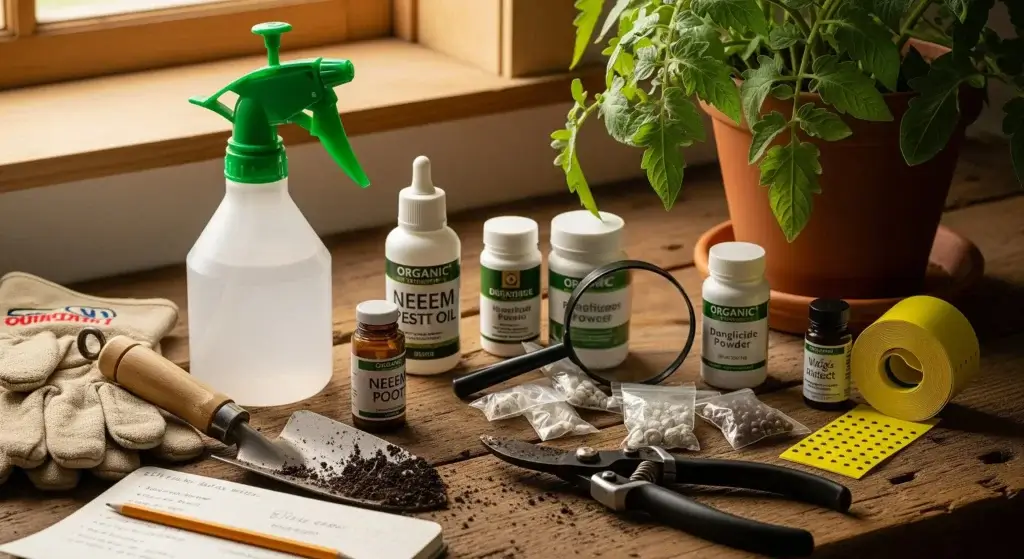
Understanding the Importance of Proper Pest and Disease Management
Before you start buying gear, you’ve gotta get why pest and disease control actually matters. The Food and Agriculture Organization says pests wipe out nearly 40% of crops worldwide every year—that’s wild.
Even in a small backyard garden, losing your plants to bugs or fungus hits hard.
Effective pest control isn’t shocking the problem when it occurs.
It’s preventing it from occurring in the first place, averting trouble before it starts, and dealing with it in smart, specific means without killing the good bugs and the environment. The right tools can help you maintain a healthy garden without creating a chemical war zone.
Essential Diagnostic and Monitoring Tools
Magnifying Glass or Hand Lens
Grab a solid 10x–20x magnifying glass or hand lens — it’s basically your garden Sherlock.
Tons of problems start with tiny pests or mites you can’t see with your eyeballs. LED lights are clutch for checking the underside of leaves or tight spots.
Pro tip: I once saved a whole basil patch because a hand lens let me spot spider mites before they turned the plants into dust.
Digital Microscope or Smartphone Attachment
If you’re getting serious, a digital microscope or a phone attachment levels you up. These let you snap pics of spores, eggs, or microscopic nasties and send them to an expert (or show off to your friends).
Many affordable options do 50x–1000x — enough to ID what’s actually munching on your plants.
Moisture Meters and pH Testing Kits
A lot of “mystery diseases” are really just bad soil conditions. Moisture meters stop you from overwatering (root rot loves overwatered soil).
pH kits tell you if your soil chemistry is sabotaging plant health. Cheap tools, huge impact — imagine fixing a problem before it ever looks like one.
Yellow Sticky Traps and Monitoring Cards
Sticky traps are both spy tools and tiny murder scenes for flying pests.
Yellow cards lure whiteflies, fungus gnats, and aphids; blue cards are better for thrips.
Put them at canopy level around the garden and check them regularly — they give you real numbers so you can see if your bug-fighting plan is working or if it’s time to change tactics.
Protective Equipment for Safe Pest Management
Quality Gloves
Gloves are non-negotiable. Trust me, skipping them is a rookie mistake you’ll only make once—hello, thorny surprise or weird rash.
Nitrile gloves? Perfect for dealing with chemicals and all the gross stuff. Heavy-duty gardening gloves? Those are your best pals for wrestling with roses or anything sharp and mean.
Respirator Masks and Safety Glasses
Masks and safety glasses—yeah, I know, they look a bit overkill until you get a face full of spray. If you’re just using mild, organic stuff, slap on an N95 and you’re good.
But if you’re breaking out the heavy-duty chemicals, don’t mess around. Get a proper respirator with cartridges.
Oh, and eye protection? Non-negotiable. One unexpected gust and suddenly you’re blinking through stinging eyes. Ask me how I know. Just wear the goggles.
Protective Clothing
Long sleeves, long pants, and closed shoes aren’t just fashion choices — they’re armor.
Get a lightweight coverall or an old set of clothes just for garden duty. It keeps chemicals off your skin and out of your house.
Trust me, you don’t want to track pesticide dust onto your couch — your pets (and your mom) will not be impressed.
Application Equipment
Pump Sprayers
Think of pump sprayers as your all-purpose weapon against pests. A 1–3 gallon hand-pump sprayer is perfect for most home gardens — it lets you mist leaves gently or blast pests with a focused stream.
Get one with adjustable nozzles and metal parts (brass or stainless steel) so it doesn’t fall apart after a few uses.
If you’ve got a big yard, upgrade to a backpack sprayer (4–5 gallons). It spreads the weight evenly and saves your arms during long jobs. Battery-powered versions? Total game-changer — no pumping, just point and spray — but they’ll cost you a bit more.
Dusters and Powder Applicators
Sometimes, powders are the move. Hand dusters or bulb dusters let you spread stuff like diatomaceous earth or sulfur dust exactly where you want it. They’re clutch for tight spots or areas that shouldn’t get wet — like inside cracks or under leaves.
Perfect for that “surgical strike” approach to pest control.
Hose-End Sprayers
For huge lawns or tall trees, hose-end sprayers make life easy. You just hook them to your garden hose, and they mix the solution as you go. Super convenient — but not as precise as pump sprayers.
They’re great for big jobs, just don’t expect sniper-level accuracy.
Treatment Products and Supplies
Organic and Natural Solutions
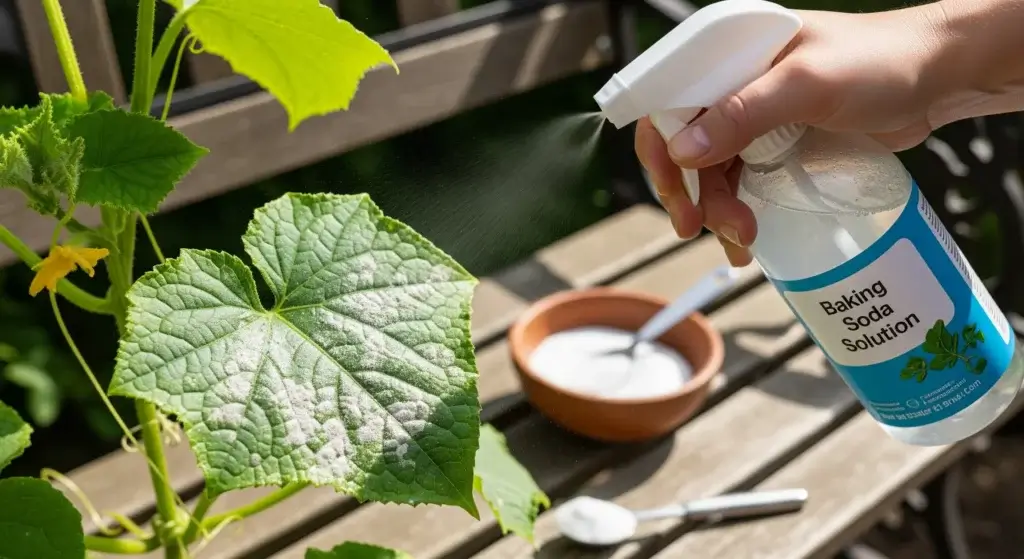
Alright, first off—don’t just nuke your garden with chemicals right out the gate. Ease into it, ya know? Neem oil is the real MVP here.
Seriously, this stuff handles bugs, fungus, mites—you name it. It’s like Windex in “My Big Fat Greek Wedding,” but for plants. Insecticidal soaps? They’re basically kryptonite for tiny jerks like aphids and mealybugs.
Bt (that’s Bacillus thuringiensis if you wanna get fancy) is a caterpillar assassin, but it leaves bees and ladybugs alone, which is honestly the dream.
Synthetic Pesticides and Fungicides
When the infestation is intolerable, bring out the big guns. Insecticides containing pyrethrin, permethrin, or imidacloprid knock most insect pests on their rear ends in a timely manner.
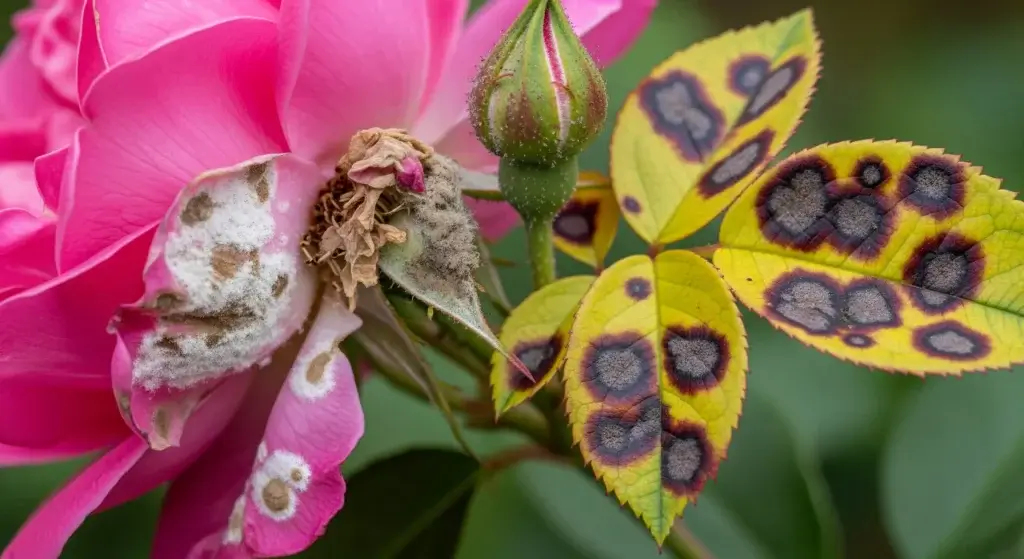
Fungicides such as copper or chlorothalonil manage fungal epidemics. The rule is thus: read the label—essentially the law and your insurance policy. Mix up products occasionally so that pests won’t develop “superbug” resistance.
Biological Controls
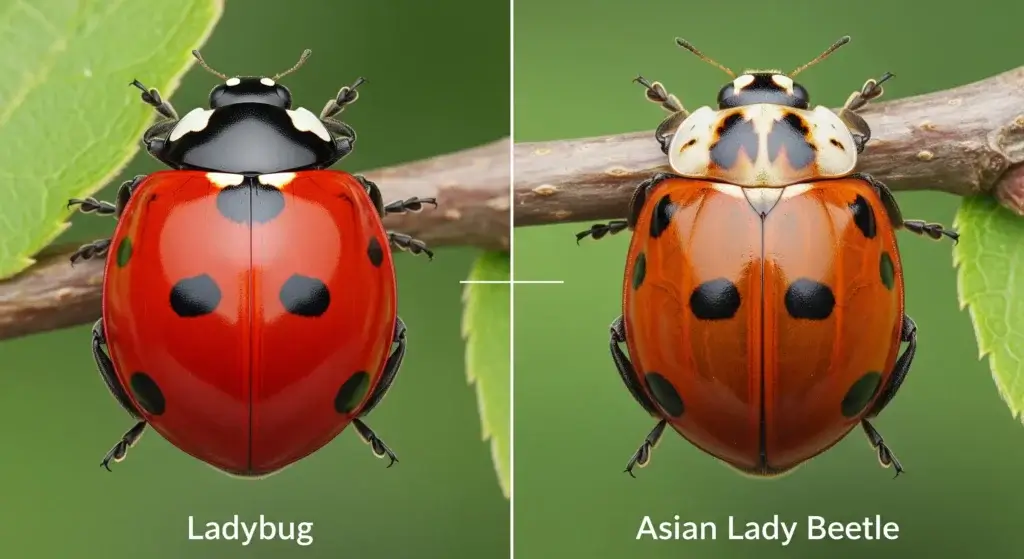
Now, about letting nature do some of the heavy lifting. Your secret weapons? Other bugs. Ladybugs, lacewings, those tiny predatory mites—they’re the muscle, devouring the pests for you.
Down in the dirt, nematodes are handling bad guys you can’t even see. Even certain bacteria (hey, Bacillus subtilis, what’s up) help keep diseases in check by just being there.
Basically, you’re recruiting a ragtag crew of garden superheroes, and they keep the peace way better than you ever could alone.
Sanitation and Prevention Tools
Pruning Shears and Loppers
Clean, sharp tools stop disease in its tracks — bypass pruners for live growth, anvil for dead wood, and long-handled loppers for big branches.
Wipe blades between plants with a 10% bleach solution or 70% alcohol.
Disposal Materials
Bag up diseased material, use tarps to haul it, and only toss stuff into compost if your pile hits 140°F+ (hot compost only). Don’t mix sick plants into regular compost — that’s how problems come back for round two.
Row Covers and Netting
Physical barriers are the lazy-genius move: floating row covers keep out flying bugs, bird netting protects fruit, and fine mesh handles tiny pests. They’re reusable, chemical-free, and basically ninja cloaks for your plants.
Storage and Organization Solutions
Locked Storage Cabinet
Rule number one: keep your pest control stuff locked up tight. Kids, pets, and chemicals don’t mix — ever. A locked cabinet in your garage or shed keeps everything safe and organized. Make sure it’s got good airflow too; some products can build up fumes if they sit in a closed, stuffy space.
Labeling and Record-Keeping System
Treat your garden like a science lab. Keep track of what pests you fought, what you used, and how it went. A notebook, spreadsheet, or app works fine — bonus points for adding photos before and after treatments.
Over time, you’ll start spotting patterns, like which sprays actually work and which were just expensive water.
Calibrated Mixing Containers
Precision matters here. Use measuring tools made just for pest control — no stealing your mom’s baking cups. Get containers with clear markings so you don’t overdo it and fry your plants (yep, I’ve done that). The right mix means the pests lose, your plants win, and you don’t accidentally nuke your soil.
Conclusion
Pest management is not about getting all the gadgets — it’s smart gizmos, safe methods, and observing.
Begin with the bare essentials (sprayer, safety equipment, monitoring equipment, and a combination of organic + chemicals), observe what functions, and don’t upgrade unless you absolutely must.