There’s something weirdly magical about watching a tomato glow up from a rock-hard green ball to a juicy red icon of snack perfection. If you grow your own—or just vibe with fresh food—you’ll want to know how that glow-up actually works. And trust me, it’s not “just wait till it turns red.” Tomatoes are basically running a whole internal science fair: changing their texture, boosting sugars, shifting acids, and flexing those sweet aromas.
Understanding the Science Behind Tomato Ripening
Tomatoes don’t just “decide” to turn red one day—they basically flip a hormonal switch. Ethylene, their built-in ripening signal, kicks off a whole chemistry party inside the fruit. The green pigment fades, revealing those fire colors—red, orange, yellow—thanks to carotenoids like lycopene. Meanwhile, the tomato softens as its cell walls loosen up, starches turn into sugars, and that signature tomato smell finally shows up.
Scientists at the University of Florida even proved that tomatoes have a comfort zone: they ripen best when they’re chilling between 68–77°F (20–25°C). Once you get how all this works, it suddenly makes sense why some tomatoes ripen fast, some drag their feet, and why temperature can make or break the whole vibe.
- Read Also: How to Revive a Fading Tomato Plant: A Step-by-Step Guide
- Read Also: Tomato Plant Health: Understanding Leaf Discoloration
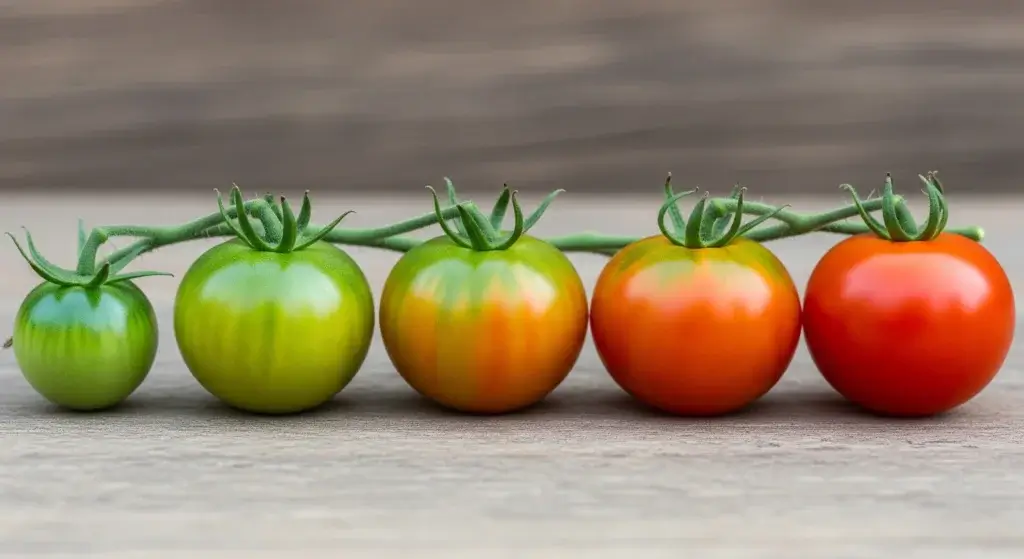
The Seven Stages of Tomato Ripening
Stage 1: Green (Mature Green)
This is the “don’t even think about eating me yet” phase. The tomato is full size, rock solid, and totally green, but the seeds inside are ready for action. Big farms harvest here because these guys travel well, but flavor-wise? They’re still in their prequel era. For gardeners, this stage matters when frost is coming or you need to ripen tomatoes indoors.
Stage 2: Breaker
This is the first little blush of color—like the tomato suddenly remembered it’s supposed to look cute. Less than 10% of the fruit shows yellow, pink, or red. It’s still firm, but ethylene is officially doing its thing, so there’s no turning back. Growers often pick at this stage because the tomato can finish ripening safely without turning to mush.
Stage 3: Turning
Now we’re at 10–30% color change. The tomato looks like it dipped its toe into the idea of being ripe. It softens slightly, sugar levels climb, and it starts to smell like a tomato instead of a plant pretending to be a rock. This is a solid stage if you want your tomatoes to last a few more days after picking.
Stage 4: Pink
At 30–60% color, this tomato is basically in its teen years—still figuring itself out but getting sweeter and softer. It’s great for people who like their tomato slices firm enough to survive a sandwich without slime-age.
Stage 5: Light Red (or Light Pink)
We’re talking 60–90% color now. This is the tomato sweet spot: soft but not squishy, flavorful, aromatic, and flexing its lycopene like a gym selfie. Most gardeners adore this stage because the tomato tastes amazing but still holds its shape.
Stage 6: Red (or Full Color)
This is the main character moment. Over 90% of the fruit is fully colored and the flavor is absolute peak—sweet, tangy, juicy perfection. Vine-ripened tomatoes at this stage have the best nutrition and taste. Bite into one, and it’s practically summer exploding in your mouth.
Stage 7: Overripe
The tomato is now in its “grandpa slippers” era—soft, wrinkly, and kinda dramatic. Too mushy for fresh eating but still great for sauces. If it smells funky or leaks weird juice, that’s your sign to yeet it into the compost.
The fun part is noticing how each stage shifts the tomato’s personality, and once you see it, you can’t unsee it.
Factors That Influence Ripening Speed
Temperature
Think of tomatoes like picky teenagers — they only perform well in their comfort zone. Their ideal “chill but not too chill” range is 68–77°F (20–25°C). Drop below 50°F (10°C), and they basically freeze up and refuse to ripen, which is why sticking them in the fridge too early ruins their flavor forever. But crank the heat above 85°F (29°C), and they start ripening weirdly or losing flavor, like someone trying to do homework in a sauna.
Ethylene Exposure
Ethylene is the tomato’s “let’s grow up faster” gas. More ethylene = quicker ripening. That’s why tossing tomatoes in a paper bag with a banana or apple works like magic. On the flip side, good airflow slows things down by letting the ethylene drift away. So ventilation = chill mode.
Light
Here’s a fun myth-buster: tomatoes don’t need sunlight to ripen. At all. In fact, direct sunlight can overheat them and cause patchy colors. They’re perfectly happy ripening in the dark — on a counter, in a bag, or anywhere that isn’t blasting them with sun like a tanning booth.
Humidity
Tomatoes love moderate humidity, around 85–90%. It keeps them plump and prevents shriveling. But crank up the humidity too much, and mold joins the party — especially on overripe fruit. So, moisture is good… just not swamp-level good.
Practical Tips for Managing Tomato Ripening
For Faster Ripening:
- Store tomatoes at room temperature in a paper bag with a banana or apple
- Keep them in a warm spot (around 70-75°F)
- Group tomatoes together, as they’ll influence each other’s ripening through ethylene
- Check daily, as ripening can accelerate quickly once started
For Slower Ripening:
- Store tomatoes in a cool (but not cold) location around 55-60°F
- Keep them in a single layer with good air circulation
- Separate tomatoes to minimize ethylene exposure
- Pick at the breaker or turning stage rather than waiting for more color
For Extended Harvest:
- Pick mature green tomatoes before frost and ripen indoors
- Harvest at various stages to create a continuous supply of ripe tomatoes
- Store different ripening stages separately to manage your supply
Common Ripening Problems and Solutions
Uneven Ripening
Those strange yellow or green shoulders? Blame the heat, genetics, or a potassium shortage. Choose heat-tolerant varieties if you live somewhere hot, and keep your plants fed properly.
Failure to Ripen
Stubborn green tomatoes that refuse to turn red were probably exposed to temps below 50°F or above 95°F — which basically shuts their ripening machinery down. Sadly, you can’t fix this after it happens. Prevention = everything.
Soft Spots or Rapid Deterioration
If your tomatoes are getting mushy too fast, they might be bruised, diseased, or just overripe. Treat them gently, check them regularly, and cook the slightly damaged ones ASAP — great excuse for pasta sauce night.
Harvesting at the Right Stage for Your Needs
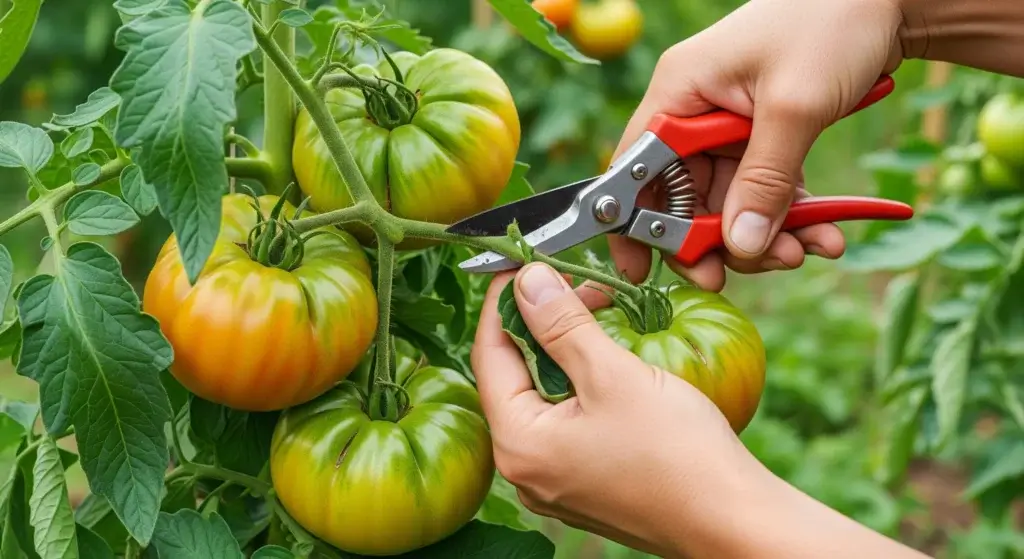
The “perfect” moment to pick a tomato totally depends on what you’re trying to do with it.
- For snacking right now: Go for the red or light red stage. That’s peak juiciness, the moment when the tomato practically screams, “Eat me, I’m glorious.”
- For salads and slicing: Light red is your friend. Still tasty, still firm enough not to turn your salad into tomato soup.
- For storage or hauling around: Breaker or turning stages are the sweet spot—they’re durable but still ripen into good flavor. Think of them as tomatoes in travel mode.
- For cooking: Fully red or even slightly overripe tomatoes are perfect. They melt down and bring major flavor energy to sauces and soups.
- For green tomato recipes: Pick them at the mature green stage—full size, zero color, ready for frying or pickling like they’re starring in their own Southern cooking montage.
Maximizing Flavor and Nutrition
Tomatoes taste best when they finish ripening on the vine. There’s solid science behind this—research shows they pack more vitamin C and lycopene when they stay on the plant until they’re fully red. Basically, the tomato’s like, “Let me finish my homework before you yank me off the desk.”
But sometimes life happens—storms, pests, your neighbor’s tomato-thieving chicken—so you have to pick them early. If you’re ripening tomatoes indoors, keep them warm (not hot), handle them gently, and please don’t throw them in the fridge until they’re fully ripe. Cold temps stop flavor development faster than a dropped phone screen cracks.
Once they’re truly ripe, refrigeration can buy you a few extra days, just let them warm back up before eating. Cold tomatoes taste like sadness; room-temp tomatoes taste like victory. days, though flavor is best when they’re allowed to return to room temperature before eating.
- Read Also: Unexpected Allies: Best Companion Planting for Your Tomatoes
- Read Also: Cracking the Code: Understanding Soil pH for Luscious Tomatoes
Conclusion: Mastering the Art of Tomato Ripening
Once you understand how tomatoes ripen, you basically unlock cheat codes for harvesting, storing, and eating them at their best. Whether you grow them yourself or snag them at the store, knowing the stages helps you pick fruit that actually tastes like something—not those sad, grainy grocery tomatoes that feel like they’ve given up on life.
A tomato’s journey from green to red isn’t random drama; it’s a full-on biochemical glow-up that changes its flavor, texture, and nutrients. When you work with that process instead of rushing it, every tomato gets a chance to hit superstar level.