There’s something low-key magical about growing your own corn. You drop a seed into warm soil, walk away, and weeks later you’re standing next to a mini jungle pulling sweet, golden ears off stalks taller than you.
It’s one of those gardening wins that makes you feel powerful. If you’re new and dreaming big, or you’ve grown stuff before and want to level up, learning how to plant corn from seed is where everything starts.
Why Plant Corn from Seed?
Corn hates being moved. Seriously. It grows a touchy taproot that throws a tantrum if you transplant it. Direct seeding skips the drama and lets the plant grow strong from day one. Plus, seeds are cheaper and give you way more choices—sweet corn, popcorn, colorful heirlooms, the whole vibe.
Gardeners who plant corn from seed consistently see better germination and tougher plants, and once you’ve watched corn explode out of the ground after a warm week, you’ll never want to do it any other way.
Understanding Corn Varieties: Choosing the Right Seeds
Before you plant anything, you’ve got to pick your corn—and this choice actually matters. Think of it like choosing a game mode before you start playing.
Sweet Corn
This is the classic “butter-dripping-down-your-arm” corn. Most gardeners grow it because, duh, it tastes amazing. Sugar-enhanced types like Bodacious stay sweet longer, which means you don’t have to sprint to the kitchen the second you harvest. Perfect for beginners who don’t want stress.
Popcorn
Yep, you can grow movie-night popcorn in your yard. Varieties like Strawberry look cool and pop hard, but they take patience. You’ve got to let them fully dry on the stalk, which feels like waiting forever—but it’s worth it.
Dent Corn (Field Corn)
This is the serious, old-school corn used for cornmeal and flour. Not snack-on-the-cob corn, but super useful if you’re into homesteading vibes and long-term storage.
If you’re just starting out, go with early-maturing sweet corn. It grows fast, forgives mistakes, and gives you a win before summer even knows what hit it.
Timing Is Everything: When to Plant Corn Seeds
Corn is a heat-lover. Cold soil equals sad seeds, end of story. If there’s even a hint of frost, corn wants nothing to do with your garden. The soil needs to be at least 50°F to wake seeds up, but 60–65°F is when they really pop off. Plant too early and you’re basically feeding seeds to rot.
Farmers used to say, “Plant corn when oak leaves are the size of a squirrel’s ear,” and weirdly… they weren’t wrong. For most places, that lands somewhere between late April and early June. Warmer areas can start earlier, cooler zones have to chill and wait.
Succession Planting Strategy:
Want corn all summer instead of one chaotic harvest? Plant a new batch every two weeks until midsummer. This keeps the corn coming like episodes of your favorite show instead of one rushed finale.
Preparing Your Planting Site
Corn eats a lot and loves the sun, so don’t half-send this part.
Sunlight Requirements
Corn needs full sun—at least 6–8 hours, and more is better. Less sun means smaller harvests. Corn does not forgive shady decisions.
Soil Preparation
Corn likes slightly acidic soil and lots of good food. Mix in compost or aged manure a few weeks before planting to give it nutrients and better drainage. Think of it as meal-prepping for your plants. Do this right, and your corn grows fast, tall, and confident—like it knows it’s winning.
The Planting Process: Step-by-Step Instructions
This is the part where you stop reading and start doing. Corn is chill, but it has rules—break them and it absolutely snitches on you later.
Step 1: Plan Your Layout
Corn is wind-pollinated, not bee-dependent. That means it needs friends nearby. Always plant in blocks, at least four rows deep. One lonely row = sad ears with missing kernels. Been there. It hurts.
Step 2: Create Your Rows
Space rows about 30–36 inches apart. This gives plants room to breathe, grow tall, and not fight each other like siblings in the backseat.
Step 3: Plant Seeds at the Correct Depth
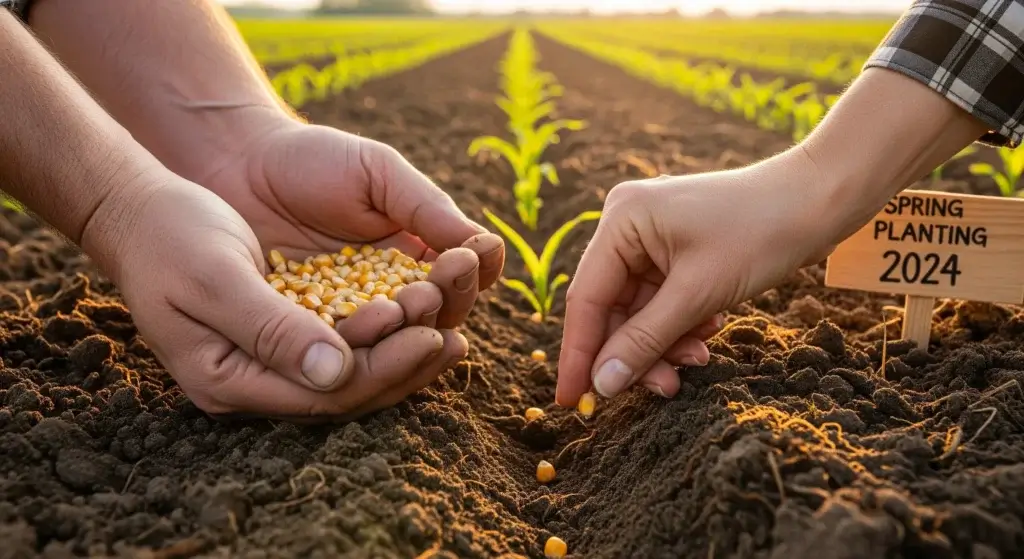
Drop seeds about 1–1½ inches deep. Clay soil? Go a bit shallower. Sandy soil? A little deeper. Too shallow and seeds dry out. Too deep and they struggle like they’re late for class.
Step 4: Spacing Within Rows
Plant seeds 8–12 inches apart. Some people plant closer and thin later, which works—but you have to be ruthless and pull the weak ones. Only the strong survive.
Step 5: Firm the Soil
Press the soil down gently, then water carefully. You want cozy contact, not a mudslide. Do this right, and you’ll see green shoots popping up like they’re racing each other.
Critical Care During Germination
The first two weeks are make-or-break. This is when corn decides if it’s going to thrive or just give up. Under good conditions, seeds pop in about a week, but cooler soil can drag that out to two. Patience helps—but attention matters more.
Moisture Management
Keep the soil lightly moist, not swampy. Think “damp sponge,” not “mud puddle.” If the soil dries out or gets soaked, germination turns uneven and messy. Corn likes consistency, not chaos.
Protecting Seedlings
Birds, especially crows, see fresh corn shoots as an all-you-can-eat buffet. A simple row cover or netting keeps them from ruining your day until plants get tall enough to fight back.
Troubleshooting Common Planting Problems
Stuff goes wrong. Even pros mess this up sometimes.
Poor Germination
Usually cold soil, bad seeds, or planting too deep. If most seeds don’t sprout, replant and move on—no shame.
Uneven Emergence
This happens when planting depth or watering is sloppy. Once it shows up, you can’t really fix it, which is why the early steps matter so much.
Seedling Diseases
Cold, wet soil is basically a spa day for diseases. Plant when it’s warm enough and you avoid most problems before they even start.
Planning for Ongoing Care
While this article focuses on planting, understanding what comes next helps you prepare properly. After emergence, corn requires:
- Consistent moisture, especially during tasseling and ear development (approximately 1 inch of water weekly)
- Side-dressing with nitrogen fertilizer when plants reach knee-high
- Weed control during early growth when weeds compete for nutrients
- Monitoring for common pests like corn earworm and European corn borer
Conclusion: Setting the Foundation for Success
Growing corn from seed isn’t complicated—but it does demand respect for the basics. Warm soil, good food, smart spacing, and steady moisture are the difference between sad plants and a flex-worthy harvest. Get those right, and you’ve already won half the battle.
The real magic isn’t just biting into sweet corn later—it’s watching tiny green shoots break the soil and turn into towering plants you grew yourself. That glow-up never gets old. Nail these fundamentals, and corn becomes one of the most satisfying crops you’ll grow, year after year.