The future of home gardening isn’t about getting dirt stuck under your nails anymore. Hydroponic kits let you grow veggies, herbs, and even fruits indoors—no soil, no mess, just straight-up plant magic. If you live in a tiny apartment, want clean, pesticide-free food, or just think “growing plants in water sounds kinda sci-fi,” these kits make it stupidly easy. Trust me, once you see lettuce growing faster than your homework pile, you’ll get why people are obsessed.
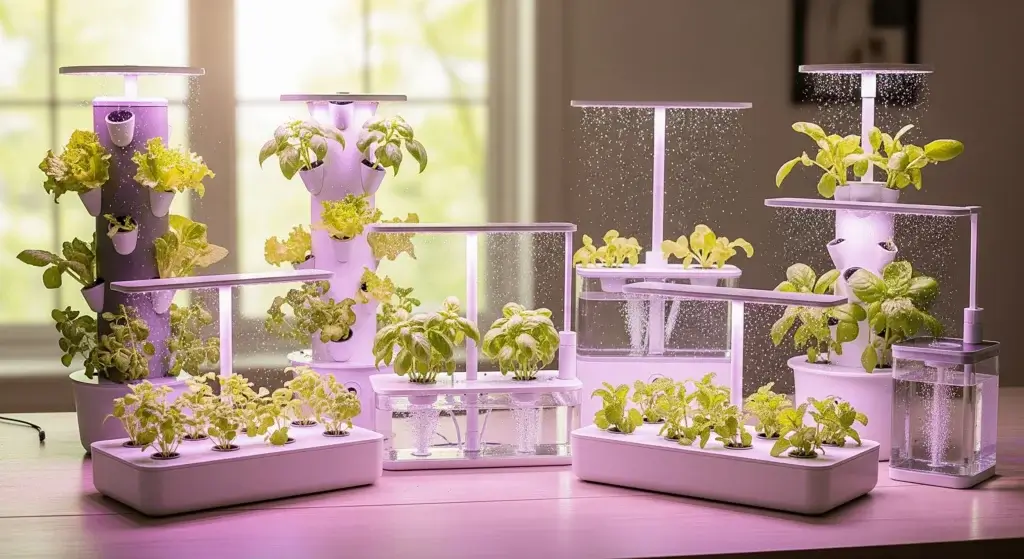
Types of Hydroponic Gardening Kits
Deep Water Culture (DWC) Systems
Deep Water Culture is basically the “training wheels” of hydroponics, and that’s why beginners love it. Picture your plants chillin’ on a floating platform, roots dangling straight into a bucket of nutrient-packed water. An air pump keeps everything oxygenated so the roots don’t suffocate. DWC setups are cheap, easy, and perfect for fast-growing greens. When I was your age, I made one out of a plastic tub and a fish-tank pump—felt like I invented futuristic farming in my bedroom.
Wick Systems
Wick systems are the “lazy genius” option. No electricity, no pumps, no drama. The nutrient solution climbs up little wicks—kind of like how your hoodie strings magically suck up water if they fall in a puddle. They can’t handle super thirsty plants, but for herbs and small veggies, they’re ridiculously easy. These are great if you want something that basically runs itself while you go live your life.
Nutrient Film Technique (NFT) Systems
NFT systems are like a tiny water slide for your plants. A thin stream of nutrients flows through a tilted tube, brushing past the roots before looping back to the reservoir. They don’t take up much space and are perfect for lightweight plants like lettuce or basil. A lot of pros use NFT setups, so running one at home kinda feels like running your own micro–urban farm.
Ebb and Flow Systems
Also known as flood-and-drain systems, these work by periodically flooding your plants’ tray with nutrients and then draining it back out. It’s like giving your plants scheduled spa treatments—nutrient bath, oxygen break, repeat. They’re super versatile and can handle everything from leafy greens to bulkier plants. My first tomato grown in an ebb-and-flow system felt like a personal victory over Mother Nature.
Aeroponic Systems
Aeroponic systems are the high-tech boss level of hydroponics. The roots hang in midair while nutrient mist gets sprayed on them like a VIP hydration treatment. Because the roots get tons of oxygen, plants grow insanely fast. They’re pricier and require more attention, but they deliver wild results. Using one feels like you’re running a secret NASA plant lab in your room.
Choosing the Right Hydroponic Kit for Your Needs
Consider Your Space
Before you bring home a hydroponic kit, grab a measuring tape. Countertop setups can be as small as a gaming keyboard, but tower gardens can stretch taller than your older cousin who won’t stop bragging about hitting six feet. And don’t forget plants grow upward too—you’ll want an extra foot or so of space above the system unless you want your basil smacking into the ceiling like it’s trying to escape.
Assess Your Budget
Hydroponic kits come in all price levels, from cheap “starter pack” vibes to full-on “I’m running a sci-fi plant lab” systems. Even if the upfront cost looks good, remember you’ll also be paying for nutrients, occasional replacement parts, and electricity for lights and pumps. When I was younger, I blew my allowance on a tiny hydro kit and then realized the nutrients cost more than my lunch money—big learning moment.
Determine What You Want to Grow
This part matters way more than people think. Lettuce and herbs? They’ll grow in almost anything, even budget setups. But tomatoes, peppers, or strawberries? Those divas need stronger systems with good support. Microgreens grow so fast it feels like cheating, but fruiting plants require patience. Growing strawberries in my first hydro rig taught me that plants will drag you into character development whether you’re ready or not.
Evaluate Maintenance Requirements
Some hydro systems need the kind of daily attention usually reserved for pets. Others can chill for a week without you touching them. If you’re busy, forgetful, or traveling for school events, look for bigger reservoirs or automation features. A lot of smart gardens even DM your phone like, “Hey, feed me.” It’s like having a needy but helpful plant roommate.
Check for Built-In Lighting
Unless your room has the sun blasting in like a spotlight, you’ll need grow lights. Many kits come with LED lights that give plants the exact wavelengths they need to thrive. LEDs last ages and don’t heat your room like older bulbs did. My first setup had LEDs so bright my whole desk looked like I was growing alien plants, which honestly made it even cooler.
Essential Components of Hydroponic Systems
Growing Medium
Even though hydroponics skips the whole “dirt under your nails” thing, plants still need something to hold onto. That’s where growing mediums come in—stuff like clay pellets, rockwool, coco coir, perlite, and vermiculite. Each one handles water and airflow differently. Some hold moisture like a sponge, others drain faster than your phone battery on 1%. I once used clay pellets and found one in my shoe weeks later—hydroponics has a sense of humor.
Nutrient Solutions
Plants can’t live on vibes alone. They need nutrients like nitrogen, phosphorus, and potassium, plus smaller players like calcium and magnesium. Hydroponic nutrient mixes pack all these into a perfect recipe, kind of like giving your plants a multivitamin smoothie. Kits usually come with starter bottles, but trust me, you’ll run out faster than you think once your plants start chugging nutrients like they’re training for a marathon.
pH Management
pH might sound like chemistry-class trauma, but it’s actually simple. Plants absorb nutrients best when the pH sits around 5.5–6.5. Go too high or too low and your plants basically stop eating. pH test kits keep everything in check, and fancy systems even auto-adjust it for you. When I first started, I ignored pH for a week and my plants threw a fit—they went from thriving to “absolutely not” real quick.
Oxygenation
Roots need oxygen just as much as people do. Air pumps, air stones, and good water flow keep roots breathing even when they’re underwater. If the oxygen dips too low, roots suffocate and rot… and nothing ruins your confidence like pulling up a plant and finding the roots smell like swamp water. Proper oxygenation keeps everything crisp, healthy, and very alive.
Getting Started With Your First Hydroponic Garden
Start Simple
Kick things off with chill plants like lettuce, basil, or mint. They grow fast, they don’t judge your mistakes, and they’ll boost your confidence. Once you get the hang of things, then you can take on the drama queens like tomatoes and strawberries.
Follow Instructions Carefully
Your kit comes with a manual for a reason. Read it. Seriously. When I skipped the instructions on my first setup, I connected a pump backward and turned my room into a tiny swamp. Knowing how every part works saves you from chaos.
Monitor Key Variables
Hydroponics is basically plant science on easy mode, but you still need to keep an eye on stuff like nutrients, pH, water temp, and light. Jotting things down helps you spot what’s working and what’s straight-up not.
Be Patient and Observant
Plants talk—just without words. Yellow leaves? They’re hungry. Brown tips? You overfed them. It takes time to learn their “language,” but once you do, you start feeling like a plant whisperer. Hydroponics rewards the people who pay attention.
Common Mistakes to Avoid
New hydroponic growers tend to repeat the same facepalm-level mistakes. The biggest one? Dumping in way too many nutrients. Plants don’t get swole from extra fertilizer—they just get burned roots and bad vibes. Skipping pH checks is another classic disaster. Even if nutrients are there, the wrong pH locks them out like the plant forgot its house key. Weak lighting makes your plants stretch out like they’re desperately reaching for a window. And if your water gets hotter than 75°F, you’ve basically created a hot tub for root diseases. I learned that the hard way when my lettuce roots turned into a mushy crime scene.
The Environmental Benefits
Hydroponics is a major win for the planet. It uses way less water, which matters a lot in places dealing with drought. Growing food at home also means you’re not relying on trucks hauling produce across the country—goodbye unnecessary emissions. A lot of hydro growers even compost the leftover plant bits, creating this cool closed-loop system that feels like eco-friendly wizardry. And since you don’t need pesticides, you’re not sending toxic stuff into streams or soil. It’s eco-conscious gardening without the preachy energy.
Conclusion
Hydroponic gardening kits are basically magic for your room—fresh herbs, veggies, and even fruits without dirt drama. They grow faster, take up less space, and let you flex your green thumb no matter where you live. Start small, learn as you go, and soon you’ll be harvesting food you actually grew yourself—plus, you’re doing the planet a solid by saving water and skipping pesticides. It’s fun, it’s rewarding, and honestly, nothing beats biting into something you nurtured from root to leaf.