Cucumber mosaic virus (CMV) ranks among the most devastating plant diseases affecting home gardens and commercial crops worldwide. This little menace doesn’t just bully cucumbers—it can take down over 1,200 plant species, which is basically half your garden’s friend group. If your plants look yellow, crinkly, or straight-up sad, CMV might be the drama.
Understanding Cucumber Mosaic Virus: What You’re Up Against
Cucumber mosaic virus is basically a plant-hacking villain. Instead of getting zapped by sprays like normal diseases, it sneaks into plant cells and rewrites their code from the inside—like a hacker who won’t log off.
Aphids are the main delivery crew for this chaos. These tiny sap-slurping bugs can pick up the virus and pass it on in seconds. And not just a few—over 80 aphid species can spread CMV, with the green peach aphid acting like the MVP of trouble. The virus can also hitch a ride on dirty tools, infected seeds, and yes… even your hands if you’re bouncing between plants like a well-meaning but chaotic garden gremlin.
CMV goes after tons of important crops—tomatoes, peppers, melons, beans, flowers—you name it. Big farms lose millions to this virus, and home gardeners? They get the emotional damage of watching an entire season’s work tank because of one microscopic menace.
Recognizing the Symptoms: Early Detection Is Critical
Catching cucumber mosaic virus early is basically the difference between “ugh, annoying” and “my garden just rage-quit life.” This virus is sneaky, and its symptoms change depending on the plant, the weather, and which CMV version you’re dealing with. Still, there are some classic red flags that should make you squint suspiciously at your plants.
Leaf Symptoms
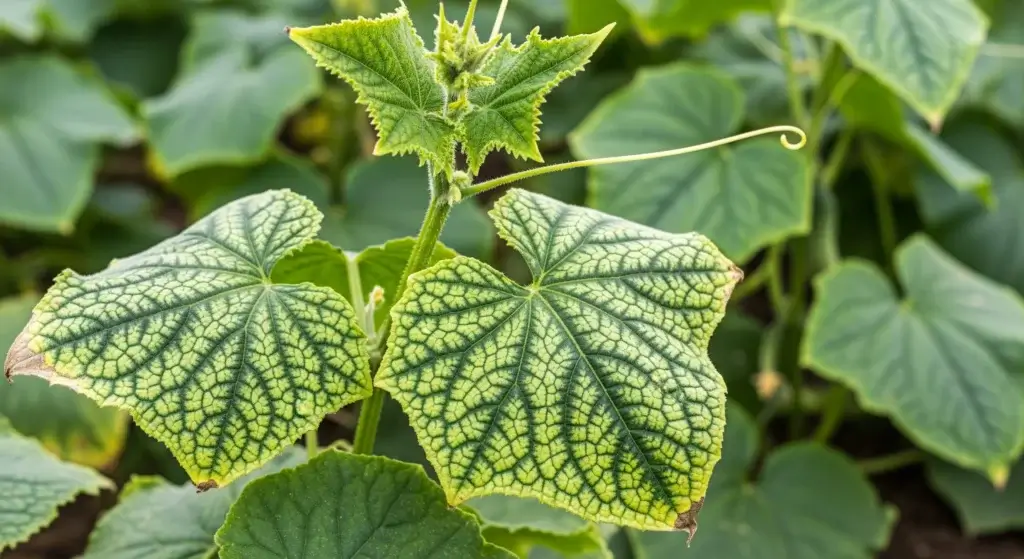
The signature move is that weird mosaic pattern—random light and dark green patches that look like your plant tried tie-dye for the first time and regretted it instantly. You might also see things like:
- Yellow or white streaks running along the veins
- Leaves curling, twisting, or looking like they’ve been crumpled up in someone’s backpack
- Tiny leaves that look like the plant hit the “shrink” button
- Brown, dead-looking spots if the infection goes hardcore
Fruit Symptoms
When the virus hits fruiting plants, the produce basically becomes a visual rant. Cucumbers can get pale mottling, turn bumpy like they’re growing acne, and sometimes taste like disappointment. Tomatoes end up with blotchy yellow patches and ripen like they can’t make up their minds. Peppers twist, warp, and show random color patterns like they’re having an identity crisis.
Overall Plant Health
Infected plants usually just… struggle. They stay small, act tired, and often skip flowering altogether. Fruit production nosedives. And if the plant catches CMV while it’s still young, it may not survive at all. Gardening teaches patience, but CMV tests your emotional endurance like a final boss.
The Hard Truth: Why There’s No Cure for CMV
Here’s the part nobody likes hearing: once a plant gets cucumber mosaic virus, that’s game over for that plant. There’s no magic spray, no DIY potion, no “plant CPR.” Nothing kicks the virus out once it moves in.
The reason is kinda wild. CMV doesn’t just hang around on the surface like fungi or bacteria. It dives into the plant’s cells and hijacks the hardware, like a malware program you can’t uninstall. At that point, the plant isn’t just infected—the virus is basically living rent-free inside its system.
But you’re not powerless. You can’t rescue the sick plants, but you can stop CMV from spreading like gossip in a school hallway. Smart prevention and fast action protect the rest of your garden and keep the virus from turning everything into chaos.
Immediate Action Steps When You Detect CMV
When you spot CMV symptoms, you’ve basically hit the garden version of an emergency alarm. The faster you act, the fewer plants get dragged into the drama.
1. Remove Infected Plants Immediately
The moment you’re sure a plant has CMV—or even if it’s just acting really sus—pull the whole thing out, roots and all. Don’t compost it unless you want your compost pile turning into a virus rave. Bag it, toss it, or burn it if your area allows. Think of it like removing a corrupted file before it wrecks your whole system.
2. Sanitize Your Tools
After touching infected plants, clean everything like you’re prepping for surgery. Tools, gloves, hands—hit them with bleach water (one part bleach, nine parts water) or 70% rubbing alcohol. CMV can hitch a ride on your gear, and trust me, accidentally spreading it because you forgot to wipe your trowel is a special kind of “oops.”
3. Control Aphid Populations
Aphids are the tiny villains here, spreading CMV faster than school gossip. Check your plants daily, especially the new growth where aphids love to party. Blast them off with water, use insecticidal soap or neem oil, or go full nature-warrior and bring in ladybugs or lacewings. Those little predators treat aphids like an all-you-can-eat buffet.
Long-Term CMV Management Strategies
Keeping CMV out of your garden long-term is kinda like protecting your Wi-Fi password—you need layers of defense, not just one trick.
Choose Resistant Varieties
Your best move is picking plants that are naturally tougher against CMV. Seed companies literally breed “CMV-resistant” varieties, so grab those whenever you can. They’re not invincible, but they shrug off the virus way better than regular plants. Think of them as the kids who never seem to catch the flu even when everyone else is coughing.
Practice Crop Rotation
Don’t plant the same vulnerable crops in the same spot every year. Rotate them around your garden every three or four years. CMV can hang around in weeds and plant debris, so switching locations makes the virus lose track of your plants like a confused NPC.
Implement Barrier Methods
Block the aphids before they even get to your plants. Floating row covers act like tiny plant force fields. Reflective mulches—a fancy name for shiny plastic or foil—mess with aphids’ navigation so they’re way less likely to land. It’s like blinding them with glitter.
Maintain Garden Hygiene
Keep your garden clean. Yank out weeds—they’re sneaky CMV hosts. Clear debris, trim edges, and don’t leave piles where aphids can chill over winter. A messy garden is basically a free Airbnb for viruses.
Control Aphids Organically
Use nature to fight nature. Plant smelly herbs like garlic and chives to confuse aphids. Invite the heroes—ladybugs, lacewings, hoverflies—by planting flowers they love. If aphids still show up, insecticidal soap or neem oil can smack them down without wrecking your garden’s ecosystem.
Source Certified Disease-Free Seeds and Transplants
Always buy seeds and seedlings from trusted suppliers. CMV can hitch a ride through seeds, so quality matters. And when you bring home new plants, let them vibe alone for a week to make sure they’re not hiding anything. It’s like a mini quarantine to protect your whole plant crew.
Advanced Prevention: Creating a CMV-Resistant Garden Environment
If you want a garden that basically shrugs at CMV like, “not today,” you’ve gotta build an environment that’s stacked in your plants’ favor from the start.
Build Soil Health
Strong plants come from strong soil. Think of soil like the gym membership your plants actually use. Add compost, keep the pH in check, and test nutrient levels once in a while. Plants growing in rich, balanced soil handle stress better—including viral drama.
Optimize Plant Spacing
Crowding your plants is like letting aphids take public transportation—way too convenient. Give each plant its space so air flows well and pests have a harder time hopping from one leaf to the next. Check the spacing on your seed packets; they’re basically cheat codes.
Monitor Vigilantly
Don’t just vibe at your garden—stalk your garden. Walk through a few times a week and actually look under leaves, where aphids hide like sneaky little goblins. Catching problems early is how you stop a tiny issue from turning into a full-blown meltdown.
Time Your Plantings Strategically
Aphids have busy seasons, usually spring and fall when temps are just right. If you can plant before or after these aphid booms, your crops dodge a huge infection window. It’s like crossing the hallway before the rowdy kids spill out of class.
What to Do When CMV Strikes: A Step-by-Step Action Plan
Even when you do everything right, CMV can still randomly spawn in your garden. Here’s how you handle it without panicking:
- Identify and confirm: Make sure it’s actually CMV and not a nutrient issue or some other look-alike problem.
- Remove infected plants: Yank the whole thing out—roots, leaves, the works. Bag it and bin it far from your garden.
- Assess surrounding plants: Check all the neighbors for early symptoms. CMV spreads fast if you don’t stay sharp.
- Intensify aphid control: Go into full pest-police mode in that section of the garden.
- Document the outbreak: Note what got infected, where it happened, and what the weather was like. Future you will thank you.
- Plan for next season: Use your notes to pick tougher varieties and tweak where you plant things next year.
Moving Forward: Living with CMV in Your Garden
Cucumber mosaic virus isn’t some boss fight you beat once—it’s more like that annoying classmate who keeps showing up no matter what. When you accept that CMV is just part of gardening life, you start building smarter, tougher habits that keep it from wrecking your whole setup.
Success comes from stacking strategies together. Resistant plant varieties, aphid control, good garden hygiene, and fast reactions when trouble pops up—none of these win alone, but together they form a defense squad that keeps CMV in check. Even big farms with high-tech gear still deal with CMV, so don’t expect total elimination at home. The goal is “manageable,” not “magically gone.”