Growing beefsteak tomatoes is like raising a heavyweight champ. If you don’t train them right, they’ll flop. These tomatoes can get huge—we’re talking “brag-to-your-friends” huge—but only if you prune them.
Skip pruning and the plant wastes energy growing leaves like it’s trying to win a jungle contest instead of making epic tomatoes.
Why Pruning Beefsteak Tomatoes Matters
Beefsteak tomatoes never stop growing on their own. They’ll keep throwing out stems and leaves until frost shuts them down. Left alone, they turn into a tangled mess that steals energy from the fruit.
Pruning is how you tell the plant, “Hey, focus. Big tomatoes only.”
Pruning opens up airflow, which keeps the plant dry and way less sick. Fungi love crowded, sweaty leaves—don’t give them that. It also forces the plant to put its energy into fewer tomatoes, making them bigger and juicier instead of sad and small.
Bonus: pruned plants are easier to tie up, check for bugs, and harvest. Less wrestling, more winning.
- Read Also: How to Revive a Fading Tomato Plant: A Step-by-Step Guide
- Read Also: Tomato Plant Health: Understanding Leaf Discoloration
Understanding Tomato Plant Anatomy
Before you start snipping, know the parts — it makes you look like you actually read the manual. Beefsteak tomatoes have three growth types to watch for:
The Main Stem
This is the plant’s trunk — the big highway for water and food. Don’t cut it. If you do, the plant will judge you.
Suckers
Tiny shoots that pop up in the V between the main stem and a leaf branch. Let them grow and you’ll have a bushy mess stealing juice from your tomatoes. Pinch them early — think of it like popping zits on a baby stem.
Leaves
Leaves make food, so keep the healthy ones. But rip off the torn or crowded lower leaves so air can move and diseases don’t throw a party.
When to Start Pruning Your Beefsteak Tomatoes
Start young — when the plant is about 12–18 inches tall and has its first flowers. Prune every week during the busy season (late spring → mid-summer). Do it in the morning so cuts dry fast and drama (aka fungal disease) is minimized.
Never prune when plants are wet or stressed by extreme heat or drought — that’s like giving someone surgery while they’re exhausted.
Step-by-Step Pruning Technique
Remove Lower Leaves
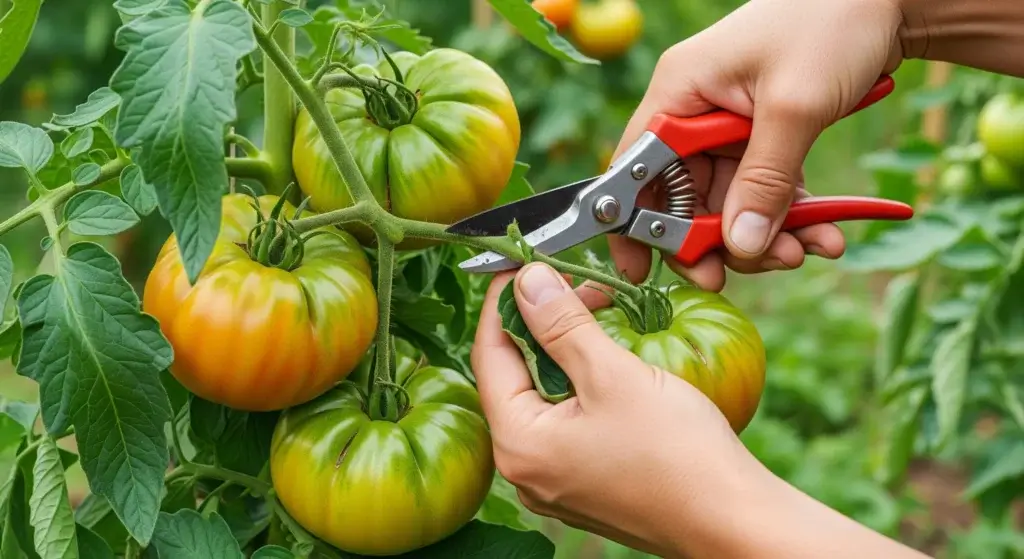
Start from the ground up. When your plant hits about 18 inches and starts making fruit, strip everything below the first flower cluster. This keeps dirt and disease from splashing up, lets air move, and tells the plant, “Stop feeding leaves.
Feed the tomatoes.” Use clean shears or just pinch small stuff off with your fingers and don’t leave little stubs — those are basically disease hotels.
Manage Suckers Strategically
This is the boss-level move. Suckers are energy thieves. You can go full minimalist and remove them all for giant, show-off tomatoes. Or, the smarter beefsteak move: keep one or two strong suckers low on the plant and turn them into extra stems. More fruit, still great size.
Kill the rest every week. Do it early when suckers are small — pinching beats surgery.
Thin the Canopy Selectively
As the plant fills out, cut yellow, sick, or ground-touching leaves. If it looks like a jungle, thin a few inner leaves so light and air can get in. Don’t go crazy though — leaves make food. Never remove more than about one-third at a time unless you want sad tomatoes.
Top the Plant (Optional)
If frost is coming, end the plant’s growth spurt. Cut the top off about a month before first frost so it focuses on ripening what’s already there. Otherwise, you’ll be staring at green tomatoes when winter shows up like a villain in the final scene.
Essential Tools and Hygiene Practices
Use the right gear or you’ll regret it. Sharp pruners for thick stems, small snips for detail work. Clean cuts heal fast; ragged cuts invite problems.
Treat your tools like surgical equipment — wipe them with alcohol or a light bleach mix between plants so you don’t spread plant diseases like gossip.
Never prune wet plants, and don’t toss sick leaves into compost unless you want those diseases coming back next season.
Common Pruning Mistakes to Avoid
Even experienced gardeners sometimes fall into pruning pitfalls. Here are the most common mistakes and how to avoid them:
- Over-pruning: Removing too much foliage, especially during peak fruit development, can actually reduce your harvest.
- Ignoring sanitation: Can turn your garden into a disease breeding ground. Always clean your tools between plants, and never work among wet plants.
- Removing flowers accidentally: Sometimes happens when you’re zealously removing suckers. Take a moment to identify what you’re cutting.
- Inconsistent pruning: Allows plants to become overgrown between sessions. Set a weekly reminder during peak season so you never fall behind.
Adjusting Techniques for Your Climate
Your climate decides the rules. In hot, sunny places, leave more leaves — they’re sunscreen for your tomatoes and stop them from getting sunburned. In humid areas, prune harder and keep things open so air can move and fungus doesn’t move in.
Short growing season? Go aggressive. Fewer stems, faster ripening, and topping late summer keeps the plant focused instead of dreaming big and failing.
Supporting Your Pruned Plants
Pruned plants grow fewer stems but carry heavier tomatoes, so support matters. Use tall, sturdy stakes or real tomato cages — not the flimsy kind.
Tie stems gently with soft stuff like twine or old t-shirts, using loose figure-eight ties so nothing gets strangled. Check ties often, because these plants bulk up fast and will snap if ignored.
Monitoring and Adjusting Your Approach
Your plants will tell you what’s working if you actually pay attention. Watch fruit size, plant health, and disease.
Tiny tomatoes? You might be cutting too much or forgetting water and food. Still seeing disease? Open the plant up more. Gardening isn’t copy-paste — it’s trial, error, and learning fast.
- Read Also: How to Care for Tomato Plants: Growing Juicy, Delicious Tomatoes
- Read Also: The Guide to Tomato Ripening Stages: From Green to Perfect Red
Conclusion: Reaping the Rewards of Proper Pruning
Pruning beefsteak tomatoes is how you level up. Cut the lower leaves, control suckers, stay clean, and tweak your method based on your climate.
Start early, prune weekly, and don’t be afraid to experiment — one stem or two, you’ll figure it out. Pruning isn’t hurting the plant; it’s coaching it. Do it right and you’ll be pulling massive, juicy tomatoes off the vine like a summer legend.