If you’ve ever walked into your garden hyped to pick beans—only to see your plants looking like someone put them through a paper shredder—yeah, that’s the Mexican bean beetle messing with you. They look cute, like diet ladybugs, but trust me, they’re the villains of the legume world and can wipe out your whole bean patch fast.
Knowing how to spot them and shut them down is basically survival mode for anyone growing beans. This guide breaks down how to identify them, stop them from showing up, and kick them out if they already moved in. It’s everything you need to keep your garden from becoming an all-you-can-eat beetle buffet.
Understanding Your Enemy: What Are Mexican Bean Beetles?
Mexican bean beetles are basically the evil twins of ladybugs—same family, totally different vibe. Instead of helping your garden, they treat your bean plants like an all-you-can-eat buffet. They started out in Mexico but spread so far across North America that they’re basically running a road trip tour from the U.S. to southern Canada.
The worst part? Both the adults and the larvae are out here chomping everything—leaves, flowers, stems, even the beans themselves. And since they can pump out two to three generations a year, their population grows faster than drama on social media. Catch them early or they’ll take over your whole garden squad.
Identifying Mexican Bean Beetles: Know What You’re Fighting
Proper ID is your first power-up here. Mexican bean beetles love pretending they’re ladybugs, which is honestly rude, so you’ve gotta know the differences or you’ll end up protecting the very thing trashing your garden.
Adult Beetles
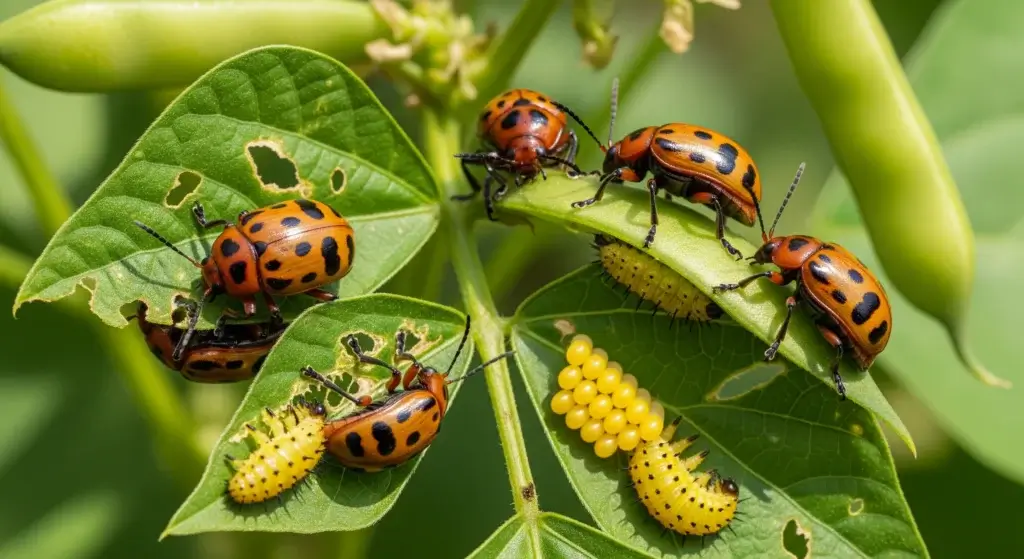
Picture a ladybug that decided to cosplay as a rusty penny. They’re about 1/3 inch long, oval-shaped, and this orange-to-copper vibe with 16 black spots lined up in three neat rows. They don’t have that glossy “fresh off the runway” shine real ladybugs have—think more “matte finish troublemaker.”
Eggs
They lay bright yellow eggs in clusters of 30 to 40 on the undersides of leaves, like someone glued tiny yellow footballs upright. When I first saw them as a kid, I thought my plant had caught some weird plant chicken pox. A single female can drop 500–600 eggs in her lifetime, which explains why things escalate fast.
Larvae
These guys are the true chaos agents. They’re yellow, chunky, and covered in spines—kinda like a tiny punk rock potato. They grow to about 1/2 inch and their spines turn black-tipped as they mature. You’ll never mistake them once you’ve seen one; they look like they’re wearing fuzzy armor.
Pupae
After stuffing themselves for a couple of weeks, the larvae chill on the undersides of leaves and turn into bright yellow pupae. They hang out for roughly five days, then boom—new adults emerge, ready to keep the family business of destruction going. The cycle restarts before you even finish complaining about it.
Recognizing the Damage: Early Detection Saves Your Harvest
Mexican bean beetle damage has a very “I took scissors to your plants for fun” vibe. The adults and larvae munch the undersides of leaves, leaving the top layer untouched, so the leaves turn see-through and lacy—like nature’s worst fashion trend. Keep ignoring it and the leaves dry out, curl up, and peace out entirely.
If things get really wild, they’ll even snack on pods and stems, but the real disaster is losing the leaf tissue your plant needs to stay alive and make food. July and August are peak chaos season because multiple beetle generations overlap like they’re having a family reunion on your beans. Spotting the damage early is everything—once the whole plant looks skeletonized, you’re basically trying to put out a house fire with a teaspoon.
Prevention Strategies: Stop Beetles Before They Start
The best way to deal with Mexican bean beetles is to straight-up not give them a chance to get comfy. Think of it like keeping annoying cousins from crashing at your place—you’ve gotta plan ahead.
Timing Your Plantings
Plant your beans early so you can harvest before the beetles show up for their annual summer rave. Or plant later so you miss the worst generations entirely. Either way, you’re dodging drama.
Crop Rotation and Location
Don’t plant beans in the same spot every year. Beetles remember where the buffet was last season, and they’ll roll up expecting seconds. Switch locations and mix beans with other crops so the beetles have a harder time finding them.
Row Covers: Physical Barriers That Work
Row covers are basically bean armor. Throw them on as soon as you plant, tuck the edges down, and you’ve got a beetle-proof force field. Snap beans need the cover lifted for harvest, but dry beans can stay protected the whole season.
Reflective Mulches
Beetles hate reflective surfaces—they get confused like they’re staring into a funhouse mirror. Metalized or white plastic mulch makes them avoid your plants, which means fewer chewed leaves and more beans for you.
Organic Control Methods: Natural Solutions That Work
If you want to stay organic while throwing hands with Mexican bean beetles, you’ve got options—powerful ones that don’t require going full “mad scientist” with chemicals.
Handpicking: Simple and Effective
This is the “grab the boss by the collar” method. Check the underside of leaves daily and pluck off adults, larvae, and eggs. Drop them into soapy water so they can’t just crawl back like tiny garden zombies. Start early before they multiply like they’re filming a reality show.
Trap Cropping: Outsmarting the Beetles
Beetles are obsessed with soybeans. Use that to your advantage: plant a small patch as bait. Once the beetles pile onto it like it’s VIP seating, yank the whole thing, bag it, and let it sit a week so every last beetle meets its destiny.
Beneficial Insects: Nature’s Pest Control
Ladybugs, lacewings, and minute pirate bugs are basically your garden’s hit squad. They eat beetle eggs and larvae like snacks. Plant stuff like dill and parsley to keep your tiny allies hanging around.
Biological Control: The Pediobius Wasp
This microscopic wasp is the beetle’s worst nightmare. It lays eggs inside beetle larvae, and when the wasps hatch… well, it’s game over for the beetles. Timing is everything, though—you’ve gotta release them when larvae are mid-sized. They don’t survive winter, so they need to be reintroduced yearly, but they’re crazy effective.
Organic Sprays and Dusts
Neem oil messes with beetles’ brains and hormones. Insecticidal soap dries them out like overcooked noodles. Diatomaceous earth slices them up on contact. Spinosad steps in when the infestation goes full apocalypse mode. All organic, all effective when used right.
Chemical Control: When Infestations Are Severe
Sometimes the beetles go full “final boss mode,” and your organic tricks aren’t cutting it. That’s when chemical insecticides step in—stuff like pyrethrin or pyrethrum that’s approved for food crops. You can use them fairly close to harvest, but you’ve gotta follow the label like it’s the law. Because it is the law. Spray the undersides of leaves, and hit them early morning or evening when the beetles are out and not hiding like little cowards.
Variety Selection and Cultural Practices
Some bean varieties just handle beetle drama better. Blue Lake 274 and Idaho Refugee tend to stay strong even without chemicals. Bush beans usually get less damage than pole beans since they grow fast and don’t give beetles as much time to throw a party. Also, don’t let your beans sit on the plant forever—keep harvesting. The longer beans stay on, the more beetles show up, like you accidentally announced free food on social media. Regular picking means better beans and fewer pests.
Creating an Integrated Pest Management Plan
The smartest way to beat Mexican bean beetles is to run a whole strategy, not just one trick. Think of it like fighting a boss fight with a full loadout. Start with prevention: rotate crops, plant at the right time, and use barriers. Check your plants twice a week during peak beetle season—yeah, it’s a commitment, but so is keeping your beans alive. When you spot beetles, start gentle: handpick, use row covers, let beneficial insects handle some of the work. Only level up to organic sprays if things start getting spicy, and save chemical stuff for when your whole crop is on life support. Keep notes so you can outsmart them even faster next year.
Regional Considerations and Seasonal Planning
These beetles show up differently depending on where you live. They hate super-dry places, so regions with more moisture get more trouble. Northern areas usually get two generations a season; southern zones get three or more, like the beetles are speedrunning the game. Knowing your local patterns helps you time your planting and defenses like a pro. And yeah—check local extension bulletins. They’re basically weather reports, but for beetle drama.
Looking Ahead: Long-Term Management Success
Winning against Mexican bean beetles isn’t about nuking every last one—it’s about keeping their numbers chill enough that your beans stay thriving. You need patience, persistence, and a willingness to switch things up until you find what works in your garden. Some damage is normal, so don’t stress every hole in every leaf. The real goal is stopping beetles from hitting that “your harvest is doomed” level.
If you stay on top of monitoring, mix your methods, and adjust as you go, you’ll still end up with healthy plants and buckets of beans. It’s a long game, but one that pays off big when you’re snacking on homegrown harvests you fought for.
Conclusion
Mexican bean beetles might be annoying little chaos gremlins, but they’re totally beatable. Once you know their habits and have your toolbox of tricks—handpicking, biological controls, timing, row covers—you’re already winning. Start early, stay alert, and keep stacking your defenses. With consistency and a little strategy, you’ll keep your beans safe and those beetles far from your garden, where they can’t ruin the vibe.