Growing sweet, crunchy carrots in heavy clay might sound impossible, but it’s not.
Clay is tough on root veggies, but if you learn how it works and tweak it with the right amendments, you can turn that stubborn soil into a carrot-friendly garden that actually delivers.
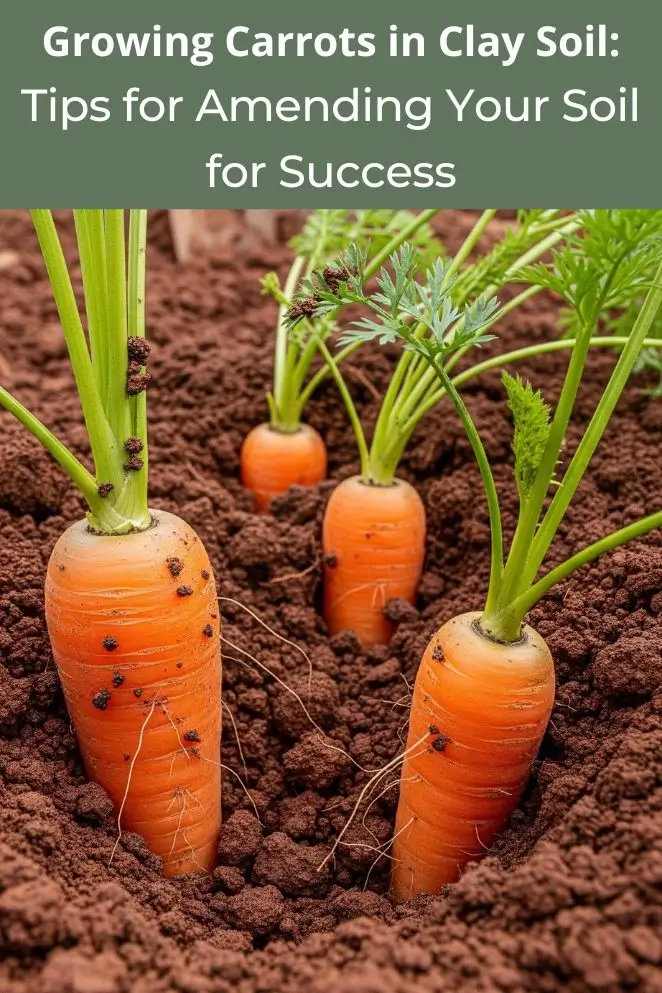
Understanding the Clay Soil Challenge
Clay soil is basically nature’s concrete for carrots. Its fine particles pack super tight, making it sticky when wet and rock-hard when dry, so carrot roots can’t grow straight.
The main headaches with clay:
- Poor drainage: Water gets trapped, roots rot.
- Compaction: Roots hit a wall, carrots turn short and stubby.
- Low oxygen: Roots need air, and clay keeps them suffocating.
- Tough to work: Too wet or dry, and you’re basically smashing soil clods.
The silver lining? Clay is nutrient-rich and holds water well. The trick is fixing its structure without losing those perks — basically turning a brick into carrot-friendly fluff.
Essential Soil Amendments for Clay
Organic Matter: The Foundation of Success
Compost, aged leaves, and pine bark are the primary organic materials that can be added to clay soil for initial remediation.
By loosening the soil, improving drainage and feeding beneficial microbes, this material is effective.
Be a lasting friend by adding it every year to prevent your clay from turning into sand.
- Compost: Your go-to fix. Work 2–4 inches into the top 8–12 inches of soil each year.
- Aged manure: Works like compost but make sure it’s fully composted, or it can burn plants.
- Leaf mold: Turns autumn leaves into crumbly magic that improves drainage.
- Pine bark: Adds structure and slowly feeds the soil.
Specialized Amendments
- Coarse sand: Helps drainage when mixed with organic matter. Keep it under 10% of the mix — fine sand will just make a cement mess.
- Perlite: White pellets that make permanent air pockets, letting roots breathe and grow straight. Mix 10–20% with organic matter.
- Gypsum: Clumps clay particles together so roots can push through easier, without messing with pH. Apply based on soil tests.
Step-by-Step Clay Soil Amendment Process
Timing Your Amendments
Never tackle clay when it’s too wet or rock-hard.
Grab a handful and squeeze — it should crumble, not form a muddy ball or concrete clump.
Late fall or early spring is prime time when the soil has just the right moisture.
Amendment Application Method
- Test your soil: Test pH and nutrients — carrots prefer slightly acidic to neutral (6.0–7.0).
- Calculate needs: For new beds for carrots, shoot for 3–4 inches of organic matter over the planting bed. For extremely dense clay, incorporate half compost before planting.
- Prep the area: Weed and clear out the area, and set out your rows or beds.
- Layer additions: Add plenty of compost, leaf mold, or pine bark — don’t be stingy, your carrots will appreciate it.
- Blend in well: Till or fork in the additions 8–12 inches deep. Avoid overworking it — excessive working can actually end up making the soil worse by compacting it.
- Let it sit: Allow soil 2–4 weeks to harden and begin to mix with the clay prior to planting. It’s a bit like letting food marinate before cooking — well worth waiting for.
Carrot Varieties for Clay Conditions
Short-Season, Stocky Varieties
If your clay soil is tough and stubborn, go for carrots that are short and stocky — they won’t get stuck or break apart underground.
- Danvers Half Long: A heritage champ, 6–8 inches with wide shoulders, perfect for clay that’s been prepped.
- Paris Market: Tiny, round, golf ball-sized carrots that actually thrive when longer carrots would flop.
- Chantenay Red Core: Broad-shouldered and 5–6 inches long, bred to push through heavier soils without drama.
Clay-Tolerant Options
Some classic carrot varieties, going back to 1947, are built for clay.
They have strong tops that make harvesting way easier.
Check seed catalogs for “clay-tolerant” or “heavy soil adapted.”
- Little Finger: Mini 3–4 inch carrots that mature fast and don’t need deep soil.
- Thumbelina: Perfectly round for shallow, heavy clay where other carrots would struggle — basically clay-friendly cuties.
Planting and Care Strategies
Soil Preparation Pre-Seeding
Create your best, fluffiest seedbed possible.
Carrot seeds are small — they require solid contact with the soil to germinate.
Dull clods, smooth rake, and think about shallow furrows or barely raised rows so water won’t simply collect around your babies.
Imagine giving each carrot a little high-rise apartment to grow tall and straight.
Seeding Techniques for Success
Carrot seeds are finicky and easy to bury too deep.
If you’re new, try pelleted seeds or seeds on tape — way easier than scattering powder.
Plant about ¼ inch deep, 1–2 inches apart, with 12-inch row spacing.
Cover lightly with fine compost or vermiculite, not clay, which can turn into a crust and trap your seeds.
Keep the soil moist but don’t drown it — sprouting takes 10–14 days, and patience is key.
Maintenance Regimen
- Mulching: Apply 2–3 inches of organic mulch across your rows. It prevents the soil from crusting, retains moisture, and continues to structure clay like a slow-release magic trick.
- Thinning: Thin to 2–3 inches apart when seedlings reach 2 inches tall. Carrots that are too crowded together are stunted carrots. Provide each root some space to expand.
- Overwatering: Clay does retain water, so apply infrequent, deep watering rather than shallow sips. Surface watering is just flirting with the roots and crusts over.
Long-Term Clay Soil Management
Annual Amendment Schedule
Rather than fixing the problem, clay soil is more of an effective skincare solution.
Washing your face once and expecting flawless skin is not a wise decision.
Adding compost or organic matter every year is crucial to maintaining the fluffy and root-friendly soil.
Fall is the optimal season because it brings with it winter rain and freeze-thaw cycles that make everything easier.
Building Soil Biology
The secret weapon for long-term soil health? Living biology.
A thriving underground city of microbes and fungi keeps your clay from turning back into brick. Here’s how to boost it:
- Mix it up: Use different compost sources so you’re not feeding the soil the same “diet” all the time.
- Hands off: Try no-till or low-till methods — constant digging wrecks the structure you worked so hard to build.
- Cover crops: Think of them as green bodyguards. They feed the soil in the off-season and keep biology alive.
- Mycorrhizal fungi: These little root buddies partner with carrots to grab more nutrients and improve soil structure. It’s basically carrots making besties underground.
Troubleshooting Common Problems
Forked or Misshapen Carrots
If your carrots come out looking like they’re auditioning for a Halloween costume contest — twisted, forked, or stubby — blame the soil.
Clay that’s too heavy, shallow, or full of rocks basically tells your carrots, “Nope, you’re not going straight.”
The fix? Add more organic matter or switch to short, chunky carrot varieties that don’t mind tough conditions.
Poor Germination
Carrot seeds are picky babies. In clay soil, the surface can crust over like dried mud after a rain, and tiny seedlings just can’t break through.
To help them out:
- Cover seeds with compost instead of sticky clay.
- Use row covers to lock in steady moisture.
- Mist the surface if it starts crusting.
- Time planting when soil moisture is consistent.
Stunted Growth
If your carrots start okay but stay mini forever, your soil’s too shallow or still compacted.
Translation: the roots literally hit a wall.
The fix? Go deeper with amendments or use raised beds so your carrots have room to stretch out.
No carrot wants to feel claustrophobic.
Measuring Your Success
Track your carrot-growing wins like you’d track progress at the gym — simple metrics tell you if your soil glow-up is working.
Log root length and diameter vs. what the seed packet promises, yield per square foot, whether the soil’s easier to dig each season, and if pests/diseases are down.
Successful clay-amendment takes time, but with yearly compost and smart techniques, your clay won’t stop being clay — it’ll just become ridiculously productive.
Keep notes each season and you’ll see the difference: straighter, sweeter carrots and less garden drama.