There’s nothing quite like biting into a thick, juicy slice of a homegrown beefsteak tomato. I’m talking drippy, messy, worth-it juice running down your wrist. These monsters can weigh a pound or more, and growing one feels like winning a small but meaningful life trophy.
Burgers, salads, straight-from-the-garden bites—beefsteaks are the main character of summer.
This guide breaks it all down—from picking the right variety to harvesting at peak ripeness—so you can grow tomatoes that make people stop mid-sentence when they take a bite.
Understanding Beefsteak Tomatoes: What Makes Them Special
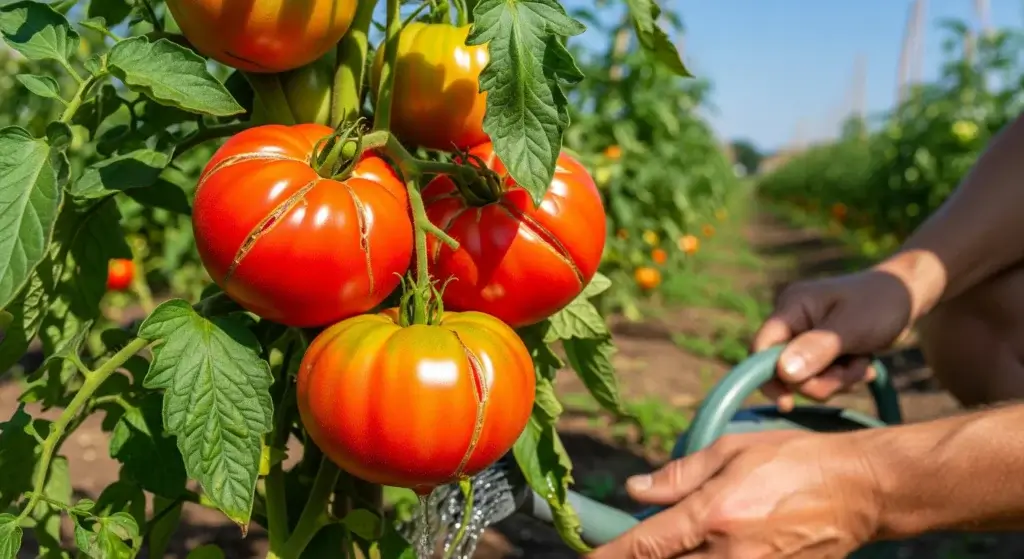
Beefsteak tomatoes are big, meaty, and built different. Most weigh between 10 ounces and 2 pounds, and some go full heavyweight champ.
They’re indeterminate, which means they keep growing and producing all season like they’re on a mission until frost shuts them down.
What really makes them special is the texture and flavor. Less watery, fewer seeds, more dense tomato goodness. They’re perfect for thick slices and real cooking, not sad sandwich filler.
That’s why gardeners keep coming back to classics like Brandywine, Cherokee Purple, Big Beef, Mortgage Lifter, and German Johnson—each with its own vibe, color, and flavor punch. Growing one of these successfully feels less like gardening and more like a flex.
Choosing the Right Location and Preparing Your Soil
Want giant, juicy tomatoes? Give them full sun — aim for 6–8 hours a day — or your fruits will sulk and stay small.
Soil matters: they like well-draining, nutrient-rich dirt with a pH around 6.0–6.8. Mix in 3–4 inches of compost and work it into the top foot of soil — think of it as giving your plants a buffet.
If you want to be extra pro, get a soil test and add specific amendments (like bone meal or greensand) so your plants aren’t starving for the good stuff.
Starting Seeds Indoors and Transplanting
Start seeds 6–8 weeks before the last frost so your plants aren’t late to the party.
Plant seeds ¼ inch deep, two per cell, keep the soil 70–80°F, and expect sprouts in 5–10 days. Give them strong light (grow lights 2–3 inches above) and water only when the surface is dry — don’t drown ’em.
Thin to the strongest seedling, feed lightly, then harden off for 7–10 days (gradually more time outside) before transplanting after frost and when soil is ~60°F. Simple routine = big rewards.
Planting Techniques for Maximum Success
Give these plants space — 24 to 36 inches apart — because beefsteaks grow like they’re training for a bodybuilding contest. Dig holes twice as wide as the roots and bury the stem up to the first real leaves.
Tomatoes grow roots along buried stems, which is basically free strength. Toss in compost and a little bone meal, plant deep, press the soil gently, and water like you mean it.
Put stakes or cages in right away — waiting is how roots get wrecked and tomatoes end up face-planting in the dirt.
Watering and Fertilizing Requirements
Water consistently, about 1–2 inches a week. Random watering is how you get cracked tomatoes and sad vibes. Always water at the soil, not the leaves, preferably in the morning. Once the soil’s warm, add mulch — it keeps moisture in, weeds out, and disease away.
Feed plants when they start flowering and again a few weeks later, but don’t go crazy with nitrogen unless you want a jungle with zero tomatoes.
Pruning and Maintenance for Better Yields
Beefsteak tomatoes grow wild if you let them, so pruning keeps things under control. Pinch off suckers (those little shoots between branches) while they’re small. I usually clear the ones below the first flower cluster and let the top grow — best of both worlds.
Cut off leaves touching the ground or looking sick, but don’t go bald on the plant. Leaves make food and shade fruit, so chill with the scissors.
Check plants often for pests like hornworms and aphids and deal with them fast before they turn your garden into an all-you-can-eat buffet.
Harvesting and Storage
Most beefsteaks are ready 70–90 days after transplanting. Pick them when they’re fully colored and slightly soft — that’s peak flavor territory. If frost is coming, grab tomatoes as soon as they start changing color and let them ripen indoors.
Never refrigerate fresh tomatoes unless you enjoy sadness and mush. Keep them at room temp, stem-side down, and eat them within a few days.
Conclusion: Your Path to Beefsteak Tomato Success
Growing beefsteak tomatoes takes effort, but the payoff is unreal. Good soil, steady care, smart pruning, and solid support turn plants into tomato machines. You’ll mess up a bit — everyone does — but each season levels you up. Take notes, adjust, and keep going.
Do it right, and you’ll be eating tomatoes so good they’ll ruin grocery-store ones forever.