Green beans are awesome—easy to grow, crazy productive, and actually good for you. But they’re not invincible. Diseases can sneak in fast and wreck your harvest if you’re not paying attention. I’ve seen a whole row of perfect-looking bean plants go downhill in a week, and trust me, that hurts.
Understanding Common Green Bean Diseases
Green beans can get hit by bacteria, fungi, and viruses that mess with everything from roots to pods. Weather, how you care for them, and even sketchy seeds all matter. The trick is spotting problems early and acting fast. Do that, and you stay ahead of the chaos instead of watching your plants tap out mid-season.
- Read Also: Fungal Diseases of Beans: Identification, Prevention, and Control
- Read Also: Protecting Your Beans: Unveiling Common Pests on Beans
Bacterial Diseases of Green Beans
Common Bacterial Blight
This one is the villain of the bean world. Warm weather, humidity, a few rainy days—and boom, it spreads like gossip at school. It starts as tiny wet spots on leaves, then turns them brown, yellow-edged, and ready to fall off. Pods get ugly blotches and sometimes crusty yellow slime. I’ve watched a healthy patch crash because someone planted sketchy seed and worked the field while it was wet. Moral of the story: clean seed only, stay out of wet plants, rotate crops, and bury old bean debris like you’re hiding evidence.
Halo Blight
Halo blight loves cool weather and makes leaves look like they’ve been outlined with a neon highlighter—greenish-yellow halos around dark spots. One infected seed can wreck an entire field, which is honestly wild. It spreads fast when plants are wet, but hot weather slows it down. The defense is boring but effective: certified seed, no overhead watering, don’t touch wet plants, and copper sprays if things get sketchy.
Bacterial Brown Spot
This one’s the least dramatic, but don’t underestimate it in a rainy year. It shows up as small brown spots with faint yellow edges after big storms. Most years it’s no big deal, but when the weather won’t chill out, it can flare up fast. Think of it as that quiet kid who only causes trouble when conditions are just right.
Fungal Diseases of Green Beans
Anthracnose
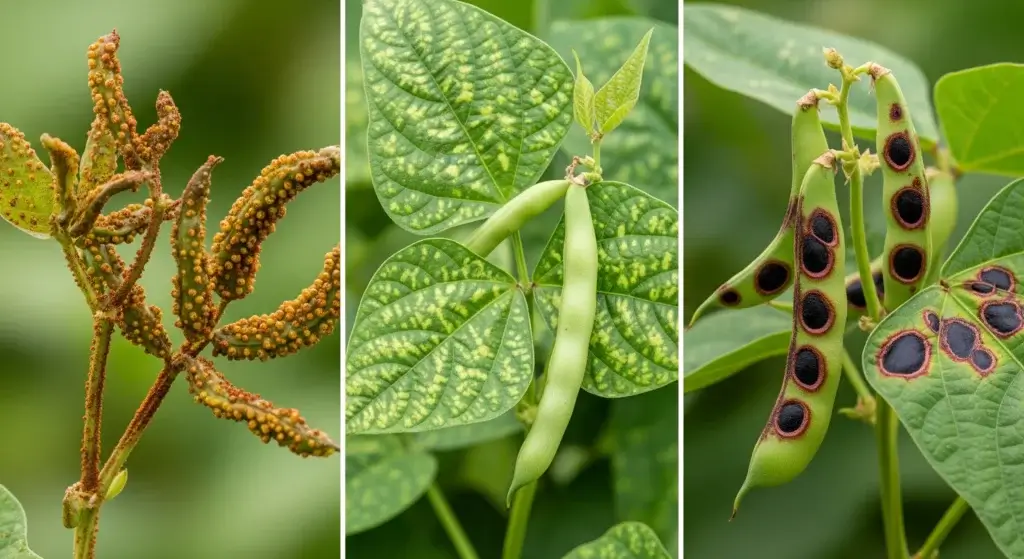
This one is straight-up brutal. Cool, rainy weather plus bad seed, and your pods start looking like they lost a fight—sunken dark spots with pink goo when it’s wet. I’ve seen entire plantings fail because someone ignored certified seed. Start clean, rotate crops, bury old debris, and never stomp through wet plants unless you enjoy spreading fungus like a villain.
White Mold
White mold is the silent killer. One day your plants look fine, the next they’re covered in fluffy white cotton and collapsing. The fungus can live in soil longer than you’ve been alive, and no bean is truly immune. Your best defense is airflow, wide spacing, chill on the nitrogen, rotate crops, and yank infected plants immediately.
Powdery Mildew
This one looks like your beans got dusted with powdered sugar—except it’s not sweet. Leaves curl, yellow, and drop, especially in cool, damp weather. Give plants space, and hit it early with sulfur before it spreads like a bad rumor.
Rust
Rust shows up as tiny bumps that explode into reddish-brown powder. Touch it and your fingers look dirty, because you are now part of the spore distribution system. Leaves drop early, yields tank. Resistant varieties and early fungicide action are your only real wins here.
Root Rot Diseases
Root rots are sneaky and ruthless. Seeds rot, roots melt, stems collapse, and plants just quit. Cold, wet soil is basically an open invite. Plant shallow, plant warm, drain well, rotate crops, and don’t rush planting unless you want your beans to fail before they even start.
Viral Diseases of Green Beans
Bean Common Mosaic Virus
This virus makes leaves look tie-dyed in the worst way—light and dark green patches, puckered, twisted, and sad. Plants stay small, drop flowers like they’ve given up, and barely set pods. It spreads through infected seed and aphids, and the earlier it hits, the harder your yield faceplants. Clean seed, resistant varieties, and keeping aphids in check are non-negotiable.
Bean Golden Mosaic Virus
This one is even more savage. Leaves turn bright yellow, curl downward, and the whole plant just stops growing like it hit a wall. Yields crash fast. Whiteflies are the culprits here, not aphids, so control them or expect chaos. Get infected early, and your harvest basically vanishes.
Integrated Disease Management Strategies
Cultural Practices
This is the boring stuff that actually saves your crop. Rotate beans like you rotate playlists—don’t repeat the same spot every year. Give plants space to breathe, line rows with the wind, keep leaves dry, and never mess with wet plants unless you’re trying to spread disease on purpose. Dirty tools move germs fast, so clean them.
Seed Selection and Quality
Bad seed equals instant regret. Certified, disease-free seed costs more for a reason—it works. Saving seed might feel smart until it wipes out your harvest. Resistant varieties help, but they’re not magic, so match them to your local problems.
Sanitation
Think of this as plant hygiene. Sick plants get removed, old debris gets buried or destroyed, and weeds don’t get a free pass to host diseases. Volunteer bean plants are basically disease hideouts—eliminate them.
Chemical Control
Sprays are backup, not the main plan. Copper, sulfur, and other fungicides work best when used early and correctly. Ignore labels and you’re asking for trouble—for your plants and yourself.
Environmental Considerations
Weather matters more than vibes. Cool and wet fuels some diseases, warm and humid fuels others. Too much nitrogen turns your plants into a sweaty jungle that diseases love. Balanced soil and smart timing keep problems from blowing up.
Monitoring and Early Detection
This is where great growers separate themselves from people who just hope for the best. Walk your beans every week like you’re checking on friends—look low on the plant, where air barely moves and trouble starts first. Catching disease early is everything. I’ve stopped outbreaks just because I noticed one weird leaf in time. Take photos, ask experts, and don’t guess—lots of diseases play dress-up and look the same at first. Write things down, too. Future-you will thank present-you.
- Read Also: How to Make a Bean Pole Teepee: Space-Saving Garden Structure
- Read Also: A Comprehensive Guide: How to Build a DIY Bean Trellis
Conclusion
Healthy beans don’t happen by accident. It’s a combo move: clean seed, smart rotations, good hygiene, regular scouting, and chemicals only when absolutely needed. The earlier you spot problems, the less damage they do. Prevention always wins—it’s cheaper, easier, and way less stressful than trying to save a crop that’s already crashing. Do it right, and green beans stay fun, productive, and honestly kind of unbeatable.