Chilli peppers are awesome—flavor bombs, cash crops, and garden flexes all in one. But here’s the brutal truth: fungi love chilli plants almost as much as we do. If you’ve ever watched a perfectly healthy plant suddenly wilt, rot, or stop producing, yeah… that’s heartbreak courtesy of fungal diseases.
Knowing how to spot, stop, and treat these infections is basically survival skills for anyone growing chillies, whether it’s one pot on a balcony or a whole field.
Understanding the Impact of Fungal Diseases on Chilli Plants
Fungal diseases are the sneakiest villains in chilli farming. They thrive in warm, humid weather—the exact vibe chilli plants want—so they blend right in like undercover agents. Left unchecked, they can wipe out 30–50% of your harvest.
I’ve seen growers go from bragging about bumper crops to staring at sad, mushy plants in weeks. Beyond lost yield, you get ugly fruit, higher costs from treatments, and infections that spread like gossip. Learn the enemies early, and you stay in control instead of reacting in panic mode.
Common Fungal Diseases Affecting Chilli Plants
Anthracnose (Colletotrichum species)
This one is the final boss of chilli diseases. It goes straight for the fruit, right when you think you’re winning.
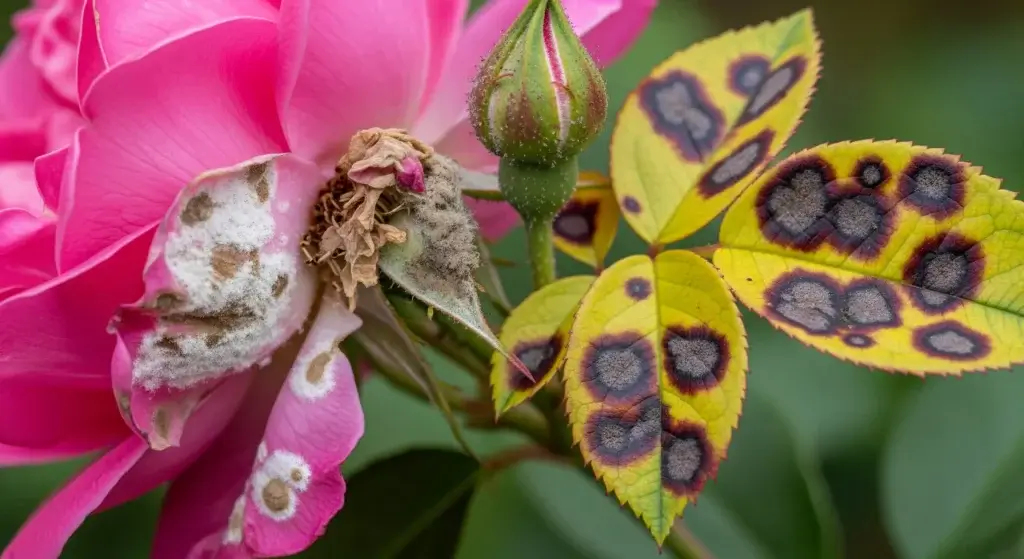
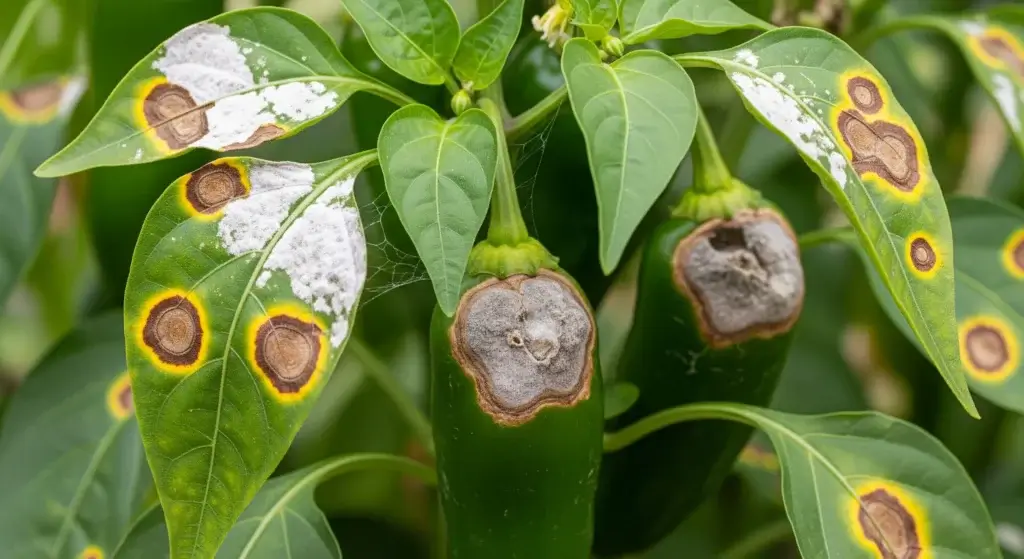
You’ll see sunken black spots that look like your chilli got burned by a tiny meteor. It loves warm, rainy weather and spreads fast through splashing water and dirty tools. Left alone, it can wipe out up to half your harvest, even after you’ve picked the fruit. Absolute menace.
Powdery Mildew (Leveillula taurica)
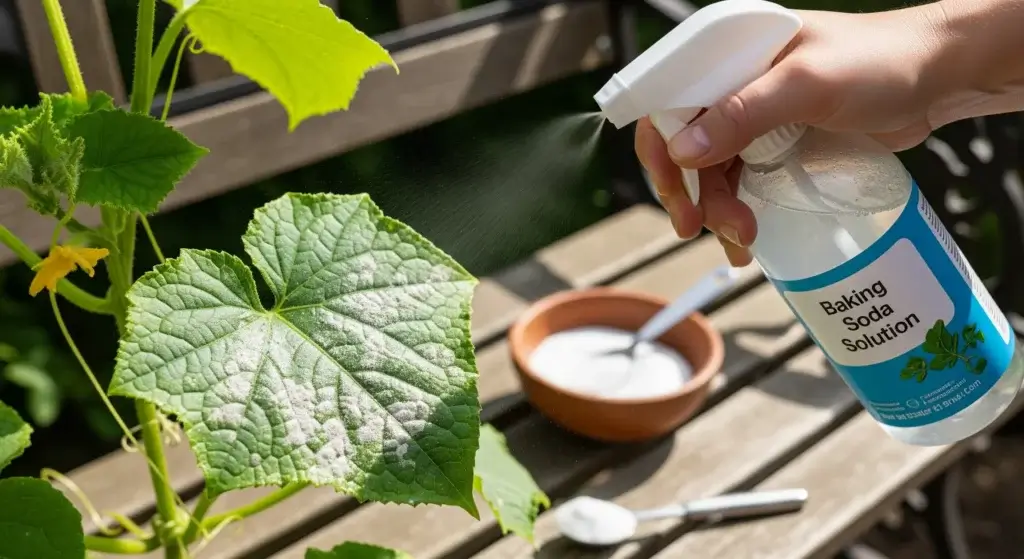
This fungus shows up looking harmless, like someone dusted your leaves with flour.
Spoiler: it’s not cute. Leaves curl, turn yellow, and drop, and your plant slowly runs out of energy. Weirdly, it doesn’t even need super-wet conditions to spread. It won’t usually kill the plant, but it will make your chillies smaller, weaker, and disappointing.
Damping Off (Pythium, Rhizoctonia, Fusarium species)
This one targets babies. Seedlings just… fall over and die. One day they’re fine, next day they look like they gave up on life. Too much water, poor drainage, and dirty trays make it explode through seedbeds. Once it starts, saving plants is almost impossible, so prevention is the only real win here.
Fusarium Wilt (Fusarium oxysporum)
This disease is sneaky and patient. Plants wilt during the day, recover at night, then slowly lose the fight. Inside the stem, the tissue turns brown—game over. It lives in the soil for years, waiting. Crop rotation helps, but this fungus plays the long game and doesn’t leave easily.
Cercospora Leaf Spot (Cercospora capsici)
This one attacks leaves first, covering them in brown spots until they drop off. No leaves means no food for the plant, and exposed fruits get cooked by the sun. It thrives in humid, crowded conditions, so packed plants with no airflow are basically inviting it over.
Effective Prevention Strategies
Here’s the truth: stopping fungal diseases is way easier than fixing them. Once fungus moves in, it’s like trying to evict a bad roommate. Prevention is cheaper, faster, and saves your sanity. Think of this as setting up defenses before the enemy shows up.
Cultural Practices
- Proper plant spacing: Crowded plants are a fungus party. Give chillies breathing room so leaves dry fast after rain. Dry leaves = sad fungi.
- Water management: Wet leaves are basically an invitation. Water at the roots, and if you must spray, do it early so plants dry fast.
- Field sanitation: Sick plants don’t heal—they spread. Pull them out, clean your tools, and control weeds that act like disease Uber drivers.
- Crop rotation: Don’t grow chillies in the same spot every year. Fungi remember. Rotate crops for a few years and break their life cycle.
Soil and Environmental Management
- Soil health: Mushy, flooded soil is fungal heaven. Well-drained soil with organic matter keeps roots strong and fungi stressed.
- Mulching: Mulch blocks dirty water from splashing fungus onto leaves and keeps soil conditions more stable. Low effort, big payoff.
- pH management: Happy plants fight back better. Keep soil slightly acidic to neutral so chillies stay strong and less disease-prone.
Resistant Varieties
Some chilli varieties are built different. Disease-resistant types don’t panic as easily when fungus shows up. They’re not invincible, but they massively reduce damage and chemical use.
Seed Treatment and Seedling Care
- Seed treatment: Dirty seeds bring problems from day one. Treat them or use hot water to wipe out hidden fungi before planting.
- Sterile growing media: Old soil is full of bad memories. Fresh, clean potting mix prevents seedlings from collapsing overnight.
- Nursery hygiene: Clean trays, space seedlings out, and let air move. Most seedling disasters happen because things were damp, dirty, and crowded.
Treatment Options for Fungal Diseases
Even with solid prevention, fungus can still sneak in. The key is catching it early. Wait too long, and you’re basically letting the disease binge-watch your crop.
Organic and Biological Controls
- Copper-based fungicides: Old-school but effective. Copper stops many fungi fast, especially if you spray early. Go easy though—too much and your plants will get cranky.
- Sulfur products: Powdery mildew hates sulfur. Spray when it’s cool, not during a heatwave, unless you want crispy leaves.
- Biological fungicides: These are the “good microbes vs bad microbes” showdown. Beneficial bacteria and fungi crowd out the villains and work best before things get ugly.
- Neem oil: Great for early infections and bonus points—it also messes with insect pests. One spray, multiple problems handled.
Chemical Fungicides
When things get serious or you’re growing at scale, chemicals step in.
- Systemic fungicides: These move inside the plant and fight fungus from the inside out. Solid choice once disease is already established.
- Contact fungicides: These sit on the leaf surface like armor. They work well but need full coverage and repeat sprays after rain.
- Fungicide rotation: Don’t spam the same product over and over. Fungi adapt fast. Rotate modes of action, follow the label, and protect yourself while spraying.
Monitoring and Early Detection
Regular crop monitoring forms the foundation of effective disease management. Inspect plants at least twice weekly, paying special attention to:
- Lower leaves where many fungal diseases first appear
- Plant stems near the soil line for damping off symptoms
- Fruits for spots, lesions, or unusual discoloration
- Overall plant vigor and any signs of wilting or stunting
Keep detailed records of disease occurrences, weather conditions, and treatment applications. This information helps identify patterns and refine management strategies over time. Many agricultural extension services offer diagnostic services to confirm disease identification when you’re uncertain.
Integrated Disease Management Approach
The smartest growers don’t rely on one trick—they stack defenses. Think of it like a game loadout. Start with strong, disease-resistant varieties and good growing habits. Layer in organic and biological controls to keep problems small.
Save chemical fungicides for real emergencies, not everyday use. This combo keeps costs down, plants healthier, and the environment less wrecked.
Conclusion
Fungal diseases are a real threat, but they’re not unbeatable. The growers who win are the ones paying attention—spotting problems early and acting fast. Prevention does most of the heavy lifting, and when disease does show up, smart, timely treatment keeps damage under control.
If you space plants right, manage water, keep things clean, and use treatments only when needed, your chillies will thrive instead of struggle. Stay curious, keep notes on what works, and ask experts when things get weird.
Healthy chilli plants aren’t luck—they’re the result of growers who know their enemies and outplay them every season.