Growing tomatoes is awesome, but trust me, those plants flop over faster than a teenager during exam week if you don’t give them solid support. Making your own tomato stakes saves money and lets you build them exactly how your garden likes it. I’ve snapped enough store-bought stakes in storms to know DIY is the move. This guide shows you how to build stakes that actually hold up so your plants stay healthy, happy, and loaded with juicy tomatoes all season long.

Why Your Tomatoes Need Staking
Tomato plants aren’t weak—they’re just dramatic. Some grow taller than your older cousin who hit puberty early, and when they load up with fruit, the branches sag like they just gave up on life. Staking keeps them upright, breathing, and way less crusty with diseases. Farmers actually found that supported plants can pump out around 20% more tomatoes, which is basically free snacks for you. Keeping the leaves off the dirt also stops a ton of pests and gross soil germs from messing things up. A little effort now means healthier plants and way more juicy tomatoes later.
- Read Also: Disease-Resistant Tomato Plants: Your Complete Guide to Grow Tomatoes
- Read Also: Composting for Tomato Plants: The Guide to Growing Tomatoes
Choosing the Right Materials for Your Stakes
Picking your tomato stake material is kind of like choosing your character in a video game—you want the one that fits your style, your budget, and how chaotic your garden tends to be.
Wooden Stakes
Wood is the classic move. Gardeners love it because it’s strong, dependable, and honestly just feels right. Hardwoods like oak, cedar, and locust are the tank characters—they last five to ten years and don’t crumble the second the weather gets spicy. Cedar even has natural oils that fight off bugs and rot, like it’s running its own private skincare routine. Pine and fir are cheaper, but they tap out after two or three seasons.
If you’re growing regular-size tomatoes, go for stakes about five feet tall. If you’re dealing with indeterminate tomatoes—the ones that act like they’re trying to climb into the stratosphere—you’ll want six to eight feet. And remember, part of the stake goes underground. Don’t be the person who forgets that and ends up with tomatoes dragging their knees in the dirt.
Bamboo Stakes
Bamboo is the eco-friendly, chill option. Light, strong, and great for smaller tomatoes or containers. Mine lasted five years, even after I accidentally used one as a makeshift lightsaber. Grab bamboo that’s around three-quarters to one inch thick, and you’re good.
Metal Options
Metal stakes are the superheroes of the garden. They basically never die, even in wild winds. Steel pipes, rebar, or fancy metal garden stakes will stick with you for decades. The trade-off? They cost more upfront, and they heat up in summer. If a leaf touches a sun-baked metal stake, you might end up with tomato fajitas before lunch.
Recycled Materials
This is where the fun begins. Old broom handles? Yes. Random tree branches? Absolutely. That pair of ski poles you found in the garage even though you’ve never seen snow in your life? Perfect. Just make sure any reused wood isn’t treated with sketchy chemicals. Your tomatoes deserve better.
Step-by-Step Guide to Creating Basic Tomato Stakes
Materials Needed
- Stakes (6 feet long, 1-2 inches diameter)
- Soft plant ties or strips of fabric
- Hammer or mallet
- Saw (if cutting stakes to size)
- Sandpaper (optional, for smoothing rough edges)
- Wood preservative (optional, for untreated wood)
Construction Process
Step 1: Prepare Your Stakes
If you’re cutting your own stakes, grab a saw and slice those boards into six-foot pieces. Sand the edges unless you enjoy getting surprise splinters mid-garden—trust me, it ruins the vibe fast. If your wood isn’t naturally tough against rot, brush a non-toxic preservative onto the bottom 18 inches. That’s the part living underground, and you don’t want it decaying like an abandoned Minecraft base.
Step 2: Mark Your Garden Layout
Before you start hammering stakes like you’re building a fortress, map things out. Tomatoes need breathing room—usually 24 to 36 inches apart. Mark each spot so you don’t end up with one tomato plant thriving while its neighbor is basically living in its lap.
Step 3: Drive Stakes Into the Ground
Put your stake three or four inches away from where the tomato seedling will live. That gives the roots space to chill without you accidentally smashing them. Then grab a hammer or mallet and drive the stake 12 to 18 inches deep. If it wiggles when you shake it, it’s not deep enough.
If your soil is basically concrete, water the spot first or drill a pilot hole. If it’s sandier than your last beach trip, go deeper—up to 24 inches—so the stake doesn’t topple over once the plant gets loaded with fruit.
Step 4: Plant Your Tomatoes
Once the stakes are steady, tuck your tomato seedlings into the ground. Tomatoes love being planted a little deeper than they were in the pot—it helps them grow bonus roots, like unlocking secret abilities.
Step 5: Attach Plants to Stakes
As the plant grows, tie the main stem to the stake every eight to twelve inches. Use something soft—old T-shirt strips, twine, plant ties—basically anything that won’t cut into the stem. Use a figure-eight shape, looping around the stake first, then gently around the plant. It keeps the plant supported without giving it a chokehold.
Advanced DIY Staking Systems
The Stake and Weave Method
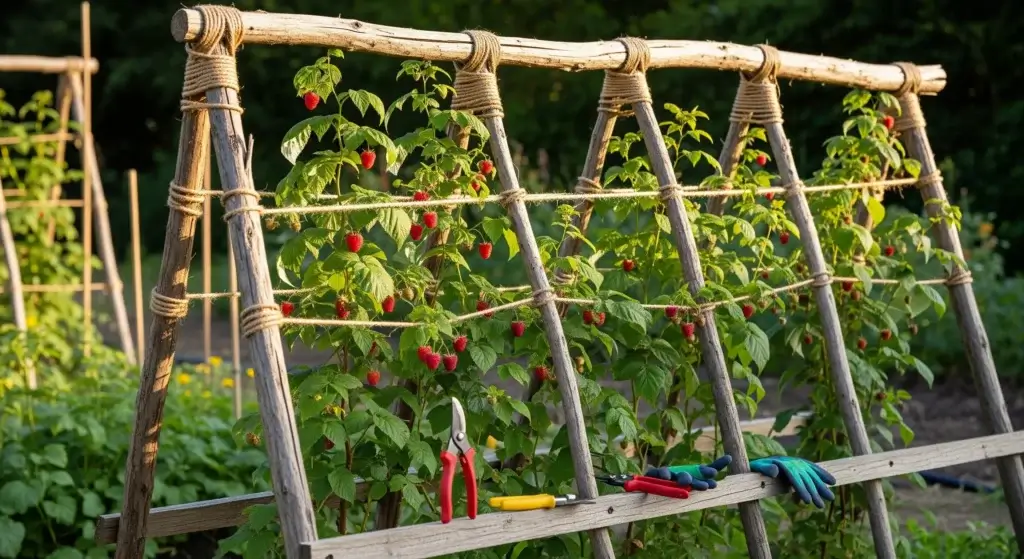
If you’re planting tomatoes in rows, this method is basically the efficiency cheat code. Stick stakes at the start and end of the row, then every eight to ten feet in between. As the plants grow, you weave twine back and forth between the stakes, like you’re building a tomato-sized hammock on each side. Every time the plants shoot up another eight to twelve inches, add a new layer of twine. It’s low-cost, sturdy, and honestly kind of fun—like crafting but with snacks at the end.
Teepee Stakes
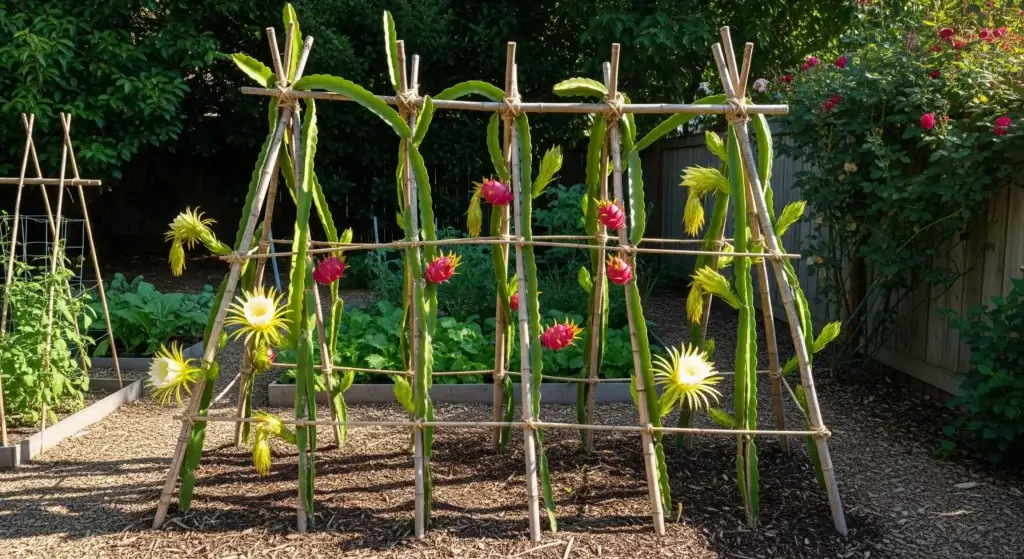
This one feels like something you’d build at summer camp, except it doesn’t collapse and send tomatoes rolling everywhere. Take three or four stakes, tie the tops together tightly, and spread the bottoms out in a circle. Boom: instant tomato teepee. It’s super stable, especially in windy spots, and the plants basically support each other like a little leafy friend group.
Florida Weave System
This is the heavy-duty, professional-level version of the stake and weave. You’ll put strong posts at the ends of your row, then add stakes every six to eight feet. As your plants grow, weave twine along the row at around twelve-inch intervals, back and forth like you’re lacing giant garden shoes. It supports the entire row at once, which feels pretty elite when you see all your tomatoes standing perfectly upright.
Maintenance Tips for Long-Lasting Stakes
If you want your stakes to last more than one season, you’ve gotta treat them right. When the tomatoes are done doing their thing, pull the stakes out and clean them with a mild bleach mix. This kills off any leftover plant funk that could spread disease next year. Let them dry completely—don’t shove them into a shed while they’re still damp unless you want mold growing like it’s starting a band.
Before every new season, check your stakes for cracks, rot, or bug damage. Trust me, nothing is more embarrassing than watching a tomato plant collapse mid-summer because a stake gave up. Wooden stakes stay healthier longer if you hit them with a natural preservative once in a while.
Common Mistakes to Avoid
A huge rookie mistake is staking too late. If you wait until the tomato roots are massive, jamming a stake in there is basically stabbing your own plant in the foot. Install stakes at planting time or right after. Another issue? Using stakes that are too short or skinny. Big tomato plants will bully weak stakes straight into the dirt.
And please—don’t tie your plants too tight. The stem needs space to thicken. Think “supportive hoodie,” not “choking hazard.” Also avoid tying directly above a cluster of tomatoes, because the weight can make the tie slip and mess everything up.
Cost Comparison and Budget Considerations
Building your own stakes is like finding the budget settings menu in real life. A whole ten-plant setup with wooden stakes usually runs fifteen to thirty bucks, depending on the wood. Bamboo is often cheaper, while metal costs more upfront but lasts practically forever.
Store-bought tomato cages? Five to fifteen dollars each. For ten plants, that’s fifty to one-fifty—basically the price of a weekend trip. Over the years, DIY stakes save way more money and let you customize everything to match your garden’s personality.
- Read Also: Best Soil for Tomato Plants: Growing Flavorful Tomatoes
- Read Also: The Ultimate Guide: Tomato Seed Varieties for Every Garden
Conclusion
Making your own tomato stakes is basically you stepping into your garden like, “I got this.” No matter what style you choose—wooden stakes, fancy weave systems, or random recycled stuff from your garage—the rules stay the same: give the plants solid support, set it up early, and use gentle ties so you aren’t strangling your tomatoes.
The effort pays off big time. Your plants stay healthier, you get way more tomatoes, and you get that smug little “I made this” moment every time you walk past your garden. Take care of your stakes and they’ll last for years, kind of like loyal sidekicks in your tomato-growing saga.