Growing tomatoes is seriously one of those “level-up your garden game” moments, but if you don’t give those plants some backup, they’ll flop over like a tired teenager after PE class. Big beefsteaks, tiny cherries—doesn’t matter. They all need support or they get messy, sick, and low-key dramatic. And guess what? You don’t need to drop cash on fancy store-bought cages. With a little creativity and stuff you probably already have lying around, you can build supports that work just as well—maybe better.

Why Tomato Plants Need Support
Tomato plants—especially the tall, never-stop-growing ones—are basically the overachievers of the garden. They shoot up to 6–10 feet like they’re trying to see over the neighbor’s fence, but without support, they flop harder than someone pretending they don’t see their crush walking by.
When tomato branches get loaded with fruit (we’re talking 10–15 pounds per plant), they snap easily. It’s like trying to carry all the grocery bags in one trip—something’s gonna give. Researchers even found that supported plants can pump out about 30% more edible tomatoes, which is basically free upgrades just for giving them something to lean on.
Letting tomatoes sprawl on the ground is a whole horror movie situation: mud, pests, rot, fungus… the works. Keeping them lifted gets the air flowing, keeps the leaves dry, and stops diseases from throwing a party on your plants.
Plus, supported plants are easier to clean up, prune, and pick from. No need to crawl around the garden like you dropped your AirPods. Life gets easier, the tomatoes stay healthier, and you feel like an absolute garden boss.
Simple Stake Systems: The Classic Approach
This is the “starter pack” of tomato support—simple, cheap, and perfect if you’re working with determinate plants or a tiny garden.
Materials needed:
- Wooden stakes, bamboo poles, or metal rebar (6 to 8 feet tall)
- Soft ties, strips of fabric, or garden twine
- Hammer or mallet
Stick it about a foot deep and a few inches from your plant. As your tomato grows, tie the main stem every 8–12 inches, but keep it loose so you don’t choke the poor thing. Old T-shirts make top-tier ties—tomatoes love that cozy vintage cotton energy.
Growers recommend this for determinate varieties because they’re like the calm cousins of the tomato family—smaller, more predictable, and not trying to take over the world.
Bonus wisdom: paint or stain your wooden stakes so they don’t rot after one season. Cedar and redwood are basically the immortals of the garden tool world.
The Florida Weave: Maximum Support for Row Plantings
If you’ve got a whole squad of tomato plants lined up, the Florida Weave is basically giving them courtside seats and bodyguards. You pop sturdy stakes every few plants, then weave twine back and forth like you’re braiding a very confused ponytail. Start once the plants are about 8–10 inches tall, and keep adding new layers of twine as they shoot upward.
It’s fast, cheap, and ridiculously efficient. Researchers in Florida even found it cuts labor by about 40%, which is wild—your tomatoes stand tall, and you save energy for literally anything else.
DIY Tomato Cages: Sturdy and Reusable
Store-bought tomato cages? Cute, but they fold faster than a cheap lawn chair in a windstorm. If you want the real deal, use concrete wire or cattle panels and make your own.
Materials needed:
- Concrete reinforcing wire (6-inch mesh) or cattle panels
- Wire cutters
- Heavy-duty gloves
Cut a big sheet, form it into a cylinder, twist the ends together, and boom—you’ve got a cage tall and sturdy enough for your most chaotic, overachieving tomato vines.
Cut off the bottom wires so you can poke the little metal “legs” into the ground, and these cages will outlive half the tools in your shed. They’re tall, tough, and built for those tomatoes that think they’re climbing Everest.
Trellis Systems: Vertical Gardening at Its Best
If you’re trying to keep your garden looking clean and squeeze every bit of space out of it, trellises are your secret weapon. They turn tomato chaos into tomato art.
A-Frame Trellis
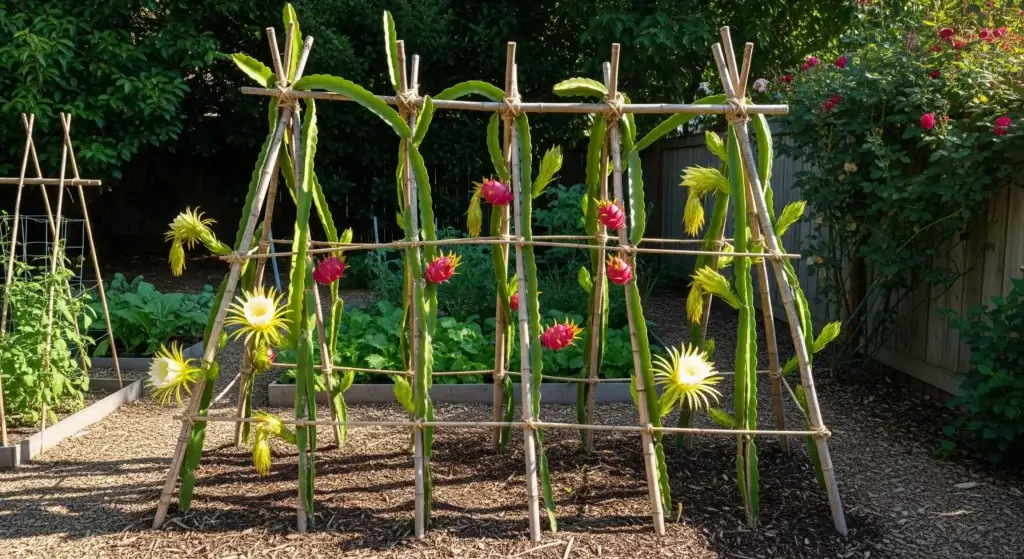
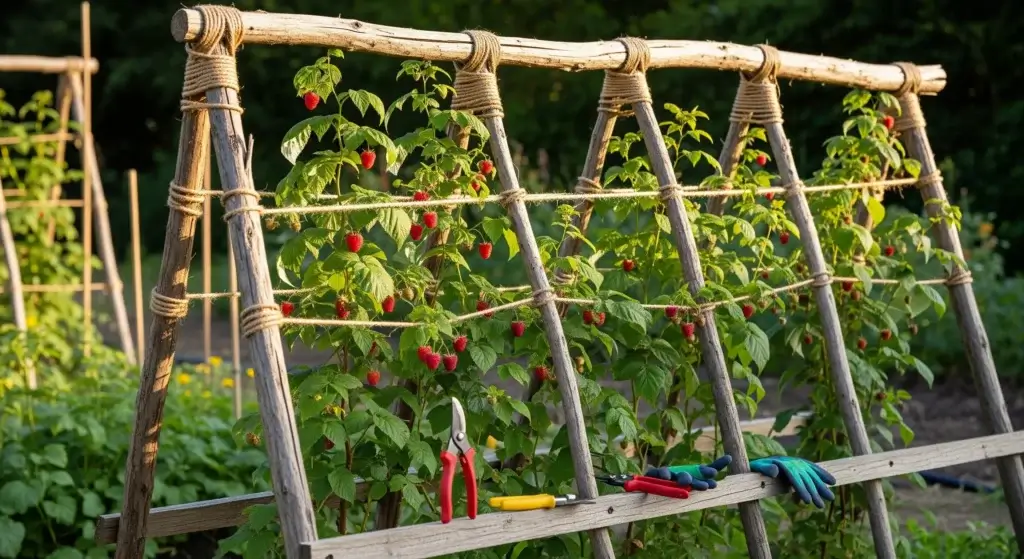
Picture two long poles leaning together like they’re sharing gossip at lunch break—that’s your A-frame. Grab two 7–8 foot pieces of lumber or bamboo, tie them together at the top, and then add crossbars or twine like ladder rungs. Plant tomatoes on both sides and guide them upward as they grow.
Once the vines take off, you get this leafy tunnel situation that looks straight up magical. Cherry and grape tomatoes especially love it. The whole structure stands firm even when the wind tries to start drama.
Wall Trellis
Got a fence or wall that’s just vibing there doing nothing? Make it earn its keep. Hook up a simple framework with wood or bamboo, run vertical lines of twine every 8–12 inches, and let your tomatoes climb like they’re trying to escape band practice.
Studies even show vertically trained tomatoes get better sun exposure, which means tastier fruit. Basically, your tomatoes become sunbathing pros, and you get bragging rights for growing flavor-packed gems.
The String Method: Professional Results on a Budget
This one makes you feel like a greenhouse pro without spending greenhouse money. You set up a strong bar or beam above your tomato row—could be a simple wooden frame, could be that old pergola you keep pretending you’ll fix—and hang a long piece of twine down for each plant.
As the tomato grows, you just twist the main stem around the string like you’re teaching it how to spiral up a phone charger. No clips, no ties, no drama. Indeterminate varieties love this because they get all the freedom to climb tall without falling over.
Farm experts in Ontario found this method can boost yields by up to 25% because it keeps the plant open, sunny, breezy, and basically living its best life. Your tomatoes get glow-up levels of light, and you get more fruit without doing extra work.
Repurposed Materials: Eco-Friendly Support Solutions
Gardeners love to act like engineers with a glue gun, and honestly? The planet appreciates it. You can turn all kinds of random stuff into serious tomato support systems while saving money and keeping junk out of landfills.
Old Ladders
That rickety ladder sitting in the shed? It’s basically begging for a second life. Set it over your tomato plants like an A-frame and let the vines climb the rungs. It looks cool, works great, and suddenly your garden has “art installation” energy.
Bicycle Wheels
If you’ve got a busted bike collecting dust, steal the wheels. Stack two or three on a pole and boom—you’ve got a circular tomato support. The spokes make perfect spots for guiding vines, like a tomato Ferris wheel.
PVC Pipe
PVC is the LEGO set of the gardening world. Chop it, connect it, build A-frames, cages, trellises—whatever your imagination cooks up. It’s not biodegradable, but it’ll last forever and you can break it down for storage. Zero drama, high durability.
Fallen Branches
If you want that “forest witch garden aesthetic,” this is your moment. Grab a few long branches, tie them together at the top, spread the bottoms out, and you’ve got a rustic tepee. It blends right into the garden like it was always meant to be there.
Choosing the Right Support for Your Tomato Variety
Tomatoes have personalities—some chill, some chaotic—and your support system has to match their vibe.
Determinate Tomatoes
These are the chill ones. They grow to about 3–4 feet, dump all their fruit at once like they’re cramming for finals, and then call it a day. Stakes or small cages work perfectly. Think Roma, Celebrity, Bush Early Girl—steady, predictable, zero drama.
Indeterminate Tomatoes
These are the overachievers who never stop. They grow and grow until frost says “enough.” They need big, serious support—tall cages, trellises, or the string method. Brandywine, Cherokee Purple, Sungold… these varieties act like they’re trying to climb out of the garden and into the sky.
Before you start building anything, look up your variety and choose something that can handle its full-grown size. Better to overbuild now than chase an out-of-control vine later.
Installation Timing and Best Practices
You want supports in place early—like, at planting time or right after. Trying to add support once the plant is big is like trying to put socks on a toddler mid-tantrum. Roots get damaged, stems get bent, nobody’s happy.
Set your stakes or cages a few inches from the stem and tilt stakes outward a bit so they don’t wobble.
When your plant hits 10–12 inches tall, start training it onto its support. Check in each week and adjust ties so the plant isn’t getting a plant-version of a too-tight hoodie. Keeping up with this small stuff saves you from midseason chaos.
Conclusion: Building Better Tomato Supports
You don’t need to be some DIY wizard to give your tomatoes the support glow-up they deserve. Whether you’re staking, weaving, trellising, or straight-up recycling random stuff from the garage, the real win is matching the setup to your tomato type and your space.
Good support means happier plants, more fruit, and way less chaos for you. A couple hours of work now saves you from wrestling a tomato jungle later. Try a method or two, swap things around next season, and tweak as you learn—gardening is basically one big science experiment you get to eat.