Are you sick of wasting cash on overpriced “organic” veggies while stressing about pesticides and the planet? Imagine growing your own food and raising fish at the same time—while using way less water than normal farming.
That’s the magic of aquaponics.
Aquaponics is basically fish tanks plus plants in a loop.
Fish poop turns into plant food, and plants clean the water for the fish.
It’s nature’s recycling system on turbo mode—smart, sustainable, and honestly kind of genius.
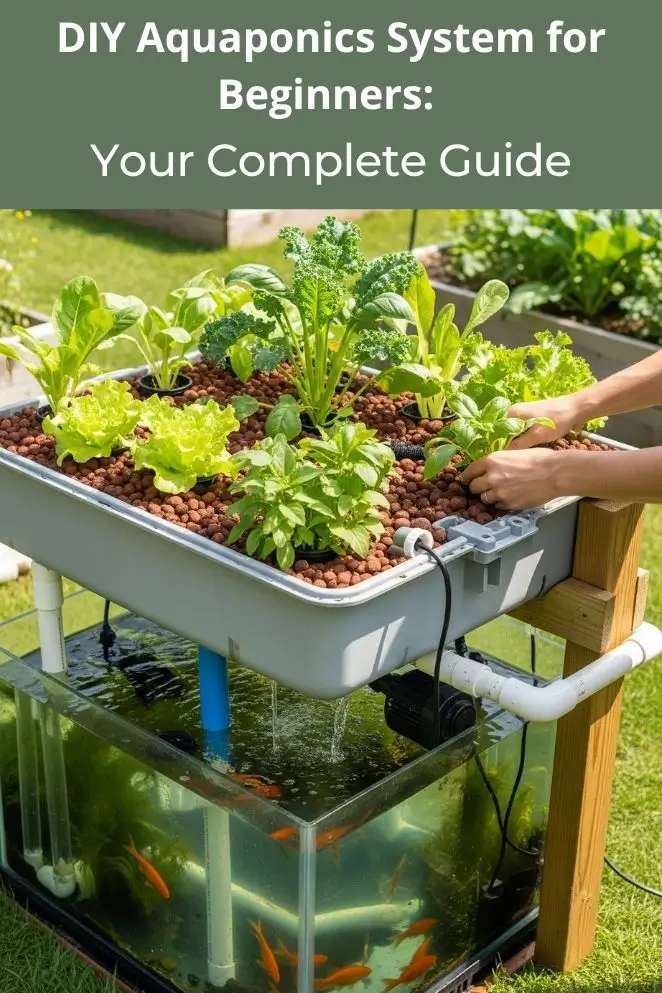
Essential Components of a DIY Aquaponics System
Fish Tank (Aquaculture Component)
This is the system’s heart. For beginners, a 50–100 gallon tank keeps fish comfortable without being a nightmare to manage.
Use food-grade, sturdy material — it has to handle constant water flow and a crew of fish that are basically producing your plant food.
Grow Bed (Hydroponic Component)
Where the plants live. The grow bed usually sits over or beside the tank and should be about one-third the volume of the fish tank.
Fill it with a drainage-friendly media (think clay pebbles) so roots get support and nutrients without drowning.
Water Pump and Plumbing
The pump is your circulatory system.
It moves water from the tank up into the grow bed, lets plants slurp up nutrients, then returns clean water to the fish.
Pick a reliable pump and simple plumbing — leaks are boring and avoidable.
Air Pump and Stones
Oxygen = survival. Air stones and an air pump keep dissolved oxygen high for both fish and the beneficial bacteria that convert waste into plant food.
No bubbles, no party.
Growing Medium
Use expanded clay pebbles, expanded shale, or clean gravel.
The medium supports roots, allows water flow, and gives beneficial bacteria a place to colonize — basically the microbial hotel that makes the whole system work.
- Read also: DIY Plant Sun Shades: Protecting Your Garden from Heat Stress
- Read also: DIY Potting Bench from Scrap Wood: A Complete Guide
Step-by-Step Guide to Building Your First System
Step 1: Planning and Site Selection
Choose somewhere that receives a good amount of light—perhaps 6–8 hours a day—or supplement with some grow lights if light is limited.
Just ensure that you have reliable access to electricity for pumps and temperature to be fairly stable.
Indoor arrangements provide more control of it all, but you will likely need to supply artificial light sources.
It’s choosing the best seat in a stadium—you have the best view to get your team to sparkle.
Step 2: Setting Up the Fish Tank
Wash the gravel really well and spread it on the bottom of your tank.
Hook up the air stone to your pump so your fish have plenty of oxygen—nobody likes a stuffy tank!
Fill it with dechlorinated water and let it chill for 24 hours before adding fish.
It’s like letting a new video game load before you jump in—patience pays off.
Step 3: Preparing the Grow Bed
Time to DIY some drainage. Drill tiny holes (1/8″ or 3/16″) every few inches so water does not collect.
In a corner, drill a larger 1/2″ hole for pump tubing. Fill with clay pebbles, gravel, or whatever medium you used.
Plant a cozy couch for your plants to relax on.
Step 4: Installing the Circulation System
Divert the pump so water flows from the fish tank to the grow bed, spreading out and then draining back to the fish.
Test it — you need the entire system cycling every 1–2 hours. Too slow = fish stew. Too fast = plant waterfall. Just right.
Step 5: Cycling Your System
Here’s where patience pays off. Before any fish or plants move in, your system needs good bacteria colonies.
Add some ammonia (fish food or the pure stuff), then babysit your water chemistry for 4–6 weeks.
Once nitrites hit zero and nitrates show up, boom — your system is alive and ready.
Best Fish and Plants for Beginners
Recommended Fish Species
- Goldfish: Basically the tanks’ training wheels. Super chill, can handle temperature swings, and don’t mind beginner mistakes.
- Tilapia: The overachievers. They grow fast, taste great, and are awesome for food production (just double-check if they’re legal in your area).
- Catfish: These guys are tanks. They adapt to almost any water setup and are solid for eating.
- Koi: The fancy cousins of goldfish. Gorgeous, tough, and they’ll turn your tank into a living art piece.
Ideal Beginner Plants
Start small with herbs — basil, mint, cilantro, parsley, dill.
They don’t hog space, grow fast, and you can keep snipping leaves without killing the whole plant.
Leafy greens like lettuce, spinach, and mint are perfect for a little desktop system.
They sprout quick, and honestly, there’s nothing cooler than eating a salad you grew in your bedroom.
System Maintenance and Troubleshooting
Daily Tasks
- Feed your fish — but don’t overdo it. Only give them what they’ll eat in 5 minutes. Any more, and you’re basically turning their home into a swamp.
- Peek at the water temp and tweak it if needed. Fish are picky about their “room temperature.”
- Watch your fish. If they’re acting weird — swimming sideways, gasping, hiding — something’s up.
Weekly Tasks
- Bust out the test kit and check your water: pH, ammonia, nitrites, nitrates. It’s like a health check-up for your ecosystem.
- Clear out dead leaves. Rotting plants = gross water and sad fish.
- Make sure your pump and air stone are doing their thing. No bubbles? No system.
- Snip those mature plants and enjoy your harvest. Nothing beats eating what you grew.
Monthly Tasks
- Give your filters and pump parts a spa day. Clean them up so they don’t get gunked.
- Trim plants that went jungle-mode. Your grow bed isn’t supposed to look like Jumanji.
- Check your plumbing connections. Leaks are sneaky little water thieves.
Common Issues and Solutions
- High ammonia levels: You’re overfeeding, or your bacteria aren’t keeping up. Feed less, add more oxygen, and check your bacterial colonies.
- Poor plant growth: Plants struggling? Test your nutrients, adjust lighting, and double-check the pH. Plants are divas about balance.
- Fish mortality: If fish are dying, don’t panic — check water quality, temperature, and your feeding routine. Usually it’s one of those three.
- Clogged drains: Growing medium clogged? Rinse it out and remove plant gunk before your system turns into a swamp monster.
Sustainability and Environmental Impact
Aquaponics isn’t just a cool science project — it’s a legit game-changer for the planet.
Big commercial setups can hit sustainability goals while pumping out healthy food with way less damage to the environment.
It saves resources, ditches chemical fertilizers, and makes local food production way more doable.
The environmental wins are huge:
- Water Conservation: Aquaponics requires only approximately 90% less water than conventional farming.
- No Toxic Pesticides: No fertilizers, no pesticides. Your food ripens naturally free from dramatic chemicals.
- Reduced Carbon Footprint: Because it’s local, you don’t need semi-trucks with lettuce transporting all over the country. Less travel = less emissions.
- Soil Conservation: No dirt required, hence no erosion of the soil or loss of nutrients. Mother Earth maintains her skin intact.
- Waste Reduction: Fish poop doesn’t go to waste — it literally powers the plants. Talk about recycling done right.
Advanced Tips for System Optimization
Enhance Productivity
- Set up a timer-controlled feeder so your fish get fed even when you’re sleeping in on Saturday. No more “oops, forgot to feed them.”
- Use LED grow lights to keep plants thriving year-round — even if it’s gloomy or winter outside.
- Keep your pH locked between 6.8–7.2. Too high or low, and your plants will throw a fit.
- Hold that water temp steady between 70–78°F. Think of it as the “goldilocks zone” where fish and plants both vibe.
Maximize Space Efficiency
Don’t think you need a giant backyard. Aquaponics can squeeze into small spaces, making it perfect for city living.
Try vertical systems or stack your grow beds like shelves to grow way more in less room.
System Monitoring
Go digital. Grab a solid pH meter, thermometer, and water testing kit to keep your system dialed in.
Pro setups even connect to your phone — so yeah, your fish can basically text you if something’s wrong.
- Read also: DIY Aromatherapy Gardens: Best Plants and Designs
- Read also: Creating a Buzz: DIY Bee-Friendly Garden Ideas
Conclusion: Your Journey to Sustainable Food Production Starts Now
Constructing your own aquaponics system is cracking codes to food — healthy fish, fresh produce, and a whole lot less damage to the planet.
Okay, sure, it takes a little learning curve, but thousands have demonstrated that it’s completely within reach.
Do it small, learn as you go, and scale up once you get the hang of it.
It isn’t just about growing food, it’s about developing a system that does not combat nature but goes with it.
You are not just giving yourself food, you are creating muscle for the future of eco-sustenance.
In two months, you could be having salad and barbecued fish from your backyard ecosystem.