Whether you’re a commercial farmer managing hundreds of acres or a home gardener working with a small backyard plot, knowing how far apart to plant your corn is basically the cheat code for getting way better harvests. Seriously—spacing can take you from “meh” corn to “why is this the sweetest thing I’ve ever tasted?”
This guide breaks down the science of plant density and shares real-world tips, plus a few classic “don’t do what I did” moments—like the time I planted corn too close and ended up with plants beefing with each other for sunlight like siblings fighting over Wi-Fi. Stick with the spacing rules, and your corn will reward you like a proud little green army showing up for duty.
Why Corn Spacing Matters
Corn spacing isn’t about cramming as many plants into the ground as possible; it’s about giving each one enough room to flex. When corn has space, its roots dig deeper, grab more water and nutrients, and basically glow up. Scientists have even found that corn hits peak performance when each plant is spaced almost perfectly—like 2–3 inches from ideal placement. Perfectionist vibes, but it works.
Pack them too tight and the plants start beefing over sunlight, water, and nutrients. That’s when you get sad, tiny corn ears that look like they gave up halfway through life. Spread them too far, and you’re wasting valuable real estate. The sweet spot matters.
Spacing also affects pollination, since corn relies on wind to get pollen from tassels to silks. Give the plants enough breathing room, and nature handles the matchmaking without chaos. Proper spacing turns your field into a well-organized corn concert instead of a messy crowd where nobody knows where to stand.
- Read Also: Companion Planting Corn: Maximize Your Harvest
- Read Also: The Ultimate Guide: Unveiling the Secret of Corn Plant Watering
Understanding Row Spacing: Commercial Agriculture
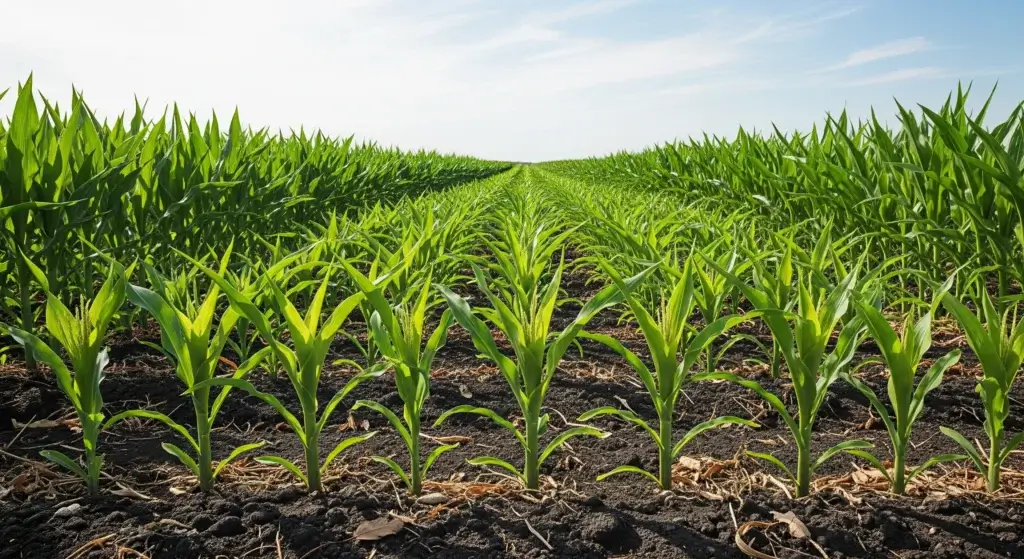
Back in your grandparents’ era, corn rows were spaced 36–40 inches apart—basically giving the plants enough room to park a truck between them. Modern farming tech leveled up, and now 30-inch rows are the norm because today’s hybrids can handle tighter crowds like champs.
The Move Toward Narrow Rows
Some farmers have been pushing things even further with 20-inch rows. The results? Kinda like trying a new haircut—works great for some, not so much for others. In super-productive fields, narrow rows can boost yields by 8–10 bushels per acre. In lower-yield fields, though, it’s basically a tie between narrow and standard spacing.
Benefits of Narrow Row Spacing
Narrow rows help the plants form a leafy “ceiling” faster, which shades out weeds and keeps moisture in the soil. They also give each plant a better spot in the sunlight lineup during key growth moments. When conditions are good, that can mean more corn and happier farmers.
Considerations Before Changing Row Spacing
Switching row spacing isn’t just a “let’s try it” kind of deal. Farmers need pricey new planters and combine heads, plus they’ve gotta adjust tractor tires so they’re not running over corn like a monster truck show. It usually takes years of consistent yield bumps to make the investment worth it. The whole decision depends on how strong the field is, what equipment you’ve got, and whether the math makes sense long-term.
Plant Population Density: Finding Your Sweet Spot
Corn isn’t shy about needing personal space, but it also likes having a crowd—as long as it’s the right size. Over the decades, farmers have been able to pack way more plants into a field because modern hybrids are basically the “stronger, smarter, faster” versions of old-school corn.
Historical Trends in Plant Population
Back in the 60s, sweet corn fields had fewer plants per acre than some school cafeterias have kids at lunchtime. By the 90s, populations jumped, and today sweet corn can hit 22,500+ plants per acre. Field corn takes it even further, hitting peak yield around 32,000 plants per acre. The cool part? Modern hybrids don’t freak out if you’re a little above or below perfect—they’re chill about it.
Economic Versus Agronomic Optimum
There’s a difference between planting for max yield vs. planting for max profit. More plants cost more money, and sometimes the extra yield isn’t worth the seed bill. Purdue researchers found that while corn hits max yield at about 32,000 plants per acre, the sweet spot for making money is closer to 27,000. It’s like buying three pizzas when two would’ve fed everyone just fine.
The best population for your field depends on seed price, grain price, your soil’s “mood,” and how often your area turns into a drought zone.
Calculating Seeding Rates
Not every seed makes it to adulthood—some get wrecked by weather, bugs, or general bad luck. Germination usually sits around 90–95%, so farmers overplant by at least 5% to hit their target. For example, aiming for 30,000 final plants with 95% success means planting about 31,600 seeds. It’s basically building in insurance so you don’t end up with sad, empty gaps like a half-finished puzzle.
In-Row Spacing: Precision Matters
Row width tells you how far the lanes are, but in-row spacing is where the real magic happens—it’s the distance each plant gets from its neighbors. This is the part that decides whether your corn squad works together or starts fighting for sunlight like kids elbowing each other at a concert barricade.
Recommended In-Row Spacing by Plant Type
Field corn usually gets 6–8 inches between plants. Any tighter than 6 inches and the plants start beefing for resources. Sweet corn gets a bit more wiggle room, around 8–12 inches in 30-inch rows, so the ears can actually develop instead of turning out sad and skinny.
The Impact of Spacing Variability
Uniform spacing matters way more than people think. Every inch you mess up costs you about 6 bushels per acre. That’s like losing snacks because you couldn’t measure straight. Most spacing issues come from tired, worn-out planter parts or planting too fast like you’re speedrunning a video game. Slowing down and keeping your equipment tuned makes a huge difference, turning your rows into a clean, organized corn army instead of a chaotic lineup.
Home Garden Corn Spacing
Growing corn in a home garden is a whole different vibe from farming hundreds of acres. Instead of long rows like a corn marathon, you’re planting in blocks—basically making a mini corn neighborhood so pollination actually works.
Optimal Garden Spacing
Start by planting seeds about 1 inch deep and 3 inches apart. Once the seedlings pop up, thin them to about 8–12 inches between plants so they’re not crammed together like commuters on a packed train. Rows can be 24–36 inches apart, with 30 inches being that sweet “I can still walk through here without tripping” distance.
The Block Planting Method
Corn is wind-pollinated, so planting one long lonely row is like expecting good Wi-Fi with one bar. Blocks of 3–4 rows boost pollination like crazy because the plants are close enough for pollen to drift where it needs to go. A 12×12 foot block beats a single 50-foot row every time if you want full, juicy ears instead of half-developed disappointments.
High-Density Garden Planting
Some gardeners go full “corn Tetris” and use tighter grids like 15×15 inches to squeeze more plants into small spaces. It can work, especially with dwarf or crowd-tolerant varieties, but only if your soil is rich enough to basically feed a small kingdom. If you dial it in, you can grow a shocking amount of corn even in a tiny garden.
Spacing Considerations by Corn Type
Not all corn grows the same, so you can’t treat every type like it’s playing by the same rules. Each one has its own vibe, its own needs, and its own drama when it comes to spacing.
Field Corn for Grain
Field corn is the workhorse—big yields, big energy. It usually thrives at 28,000–36,000 plants per acre, depending on soil and hybrid. If your field is kinda mid or prone to drought, stick to the lower end. If your soil is rich and hydrated like a skincare influencer, go higher. Modern hybrids can handle the crowd like pros at a concert pit.
Sweet Corn
Sweet corn is pickier because its spacing depends on where it’s headed. Fresh market sweet corn gets more space so the ears can grow big and pretty. Processing corn can be planted tighter because factories care more about total output than perfect aesthetics. Populations usually range from 13,000 to 26,000 plants per acre. Different hybrids have different “comfort levels,” so some can handle a crowd while others need personal space to shine.
Silage Corn
Silage corn is a different game since you’re harvesting the whole plant, not just the grain. Farmers usually plant 2,000–4,000 more plants per acre than grain corn to boost total biomass. Just don’t go too wild—super high populations can drop energy content, and nobody wants low-quality feed.
Common Spacing Mistakes to Avoid
Corn spacing isn’t the place to “wing it.” A few classic mistakes can tank your yield faster than forgetting to water your houseplants for a week.
Planting Too Close Together
The biggest mess-up is planting corn like you’re trying to fit the whole Avengers cast into a compact car. When plants are jammed together, they fight nonstop for water, nutrients, and sunlight. You end up with tiny ears, weak plants, and poor pollination because the air can’t move through the foliage. Crowded corn also traps humidity, basically creating a fungal Airbnb.
Planting Too Far Apart
On the flip side, giving your plants way too much space is like hosting a party and inviting only two people—they’ll enjoy the room, but the vibe is dead. Corn planted too far apart wastes space, lowers total yield, weakens pollination, and gives weeds VIP access to the empty gaps.
Inconsistent Spacing
Even if your average spacing looks fine, wonky gaps and clumps wreck things. Skips are wasted potential, and doubles make plants elbow each other for resources. Both cut into yield, just in different ways. Consistency is everything if you want your field looking like a disciplined army instead of a confused crowd.
Ignoring Hybrid-Specific Recommendations
Each corn hybrid has its own personality. Some like tight crowds, some need elbow room. Seed companies test this stuff for a reason. Ignoring their spacing guidelines is like ignoring the care instructions on a sweater—sure, you can, but don’t be surprised when things shrink or fall apart.
Environmental Factors Affecting Spacing Decisions
Corn spacing isn’t just a “plant it and pray” situation. The environment straight-up decides how many plants your field can realistically handle without turning into a botanical burnout zone.
Soil Type and Quality
Soil is the foundation. Sandy soil drains fast and acts like a forgetful friend—doesn’t hold water or nutrients well—so it can’t support huge plant crowds unless you’re irrigating. Clay soil hangs onto moisture but can get so compacted that roots feel like they’re trying to grow through cement. Super fertile, well-structured soil? That’s the VIP lounge where higher populations thrive like it’s no big deal.
Water Availability
Water is the real boss here. Fields with steady rain or irrigation can handle more plants. Drought-prone areas need fewer plants because every corn stalk is fighting for that limited moisture. Studies show droughty fields do best with about 5,000–10,000 fewer plants per acre so each plant actually gets a drink. If your field has wet and dry zones, variable rate seeding lets you match the vibe of each spot.
Climate and Growing Season Length
Long growing seasons give plants more time to bulk up, so higher populations work. Short seasons mean you need to back off so plants don’t run out of resources before finishing the job. Cooler northern regions often see better results with narrow rows because they snag more sunlight during their shorter window. And if your area hits extreme heat during pollination? Go lighter on population or your corn will tap out.
Field Productivity and Yield Environment
Your field’s natural yield potential sets the rules. Low-yield fields barely benefit from more plants. Medium-yield fields stay pretty steady no matter what. High-yield fields, though? They love higher populations because the resources are already on point. The better the field, the more plants it can handle without stress-melting.
Optimizing Corn Spacing for Maximum Yield
Success here is basically about not letting your corn become chaotic gremlins. Every step matters.
Pre-Season Planning
Test your soil so you actually know what your plants are working with. Corn is a nutrient hog, especially for nitrogen, so starving it is like expecting someone to run a marathon on two granola bars. Pick hybrids that fit your climate, and set your seeding rate based on how many seeds typically survive in your fields, not in some perfect fantasy world.
Planting Best Practices
Your planter is the difference between tidy rows and corn carnage. Calibrate it so it drops seeds like a machine, not like a toddler tossing Cheerios. Keep planting depth around 1.5–2 inches so your roots develop properly. And don’t plant at racetrack speeds—4 to 5 mph is the sweet spot for clean spacing instead of random gaps and doubles.
Post-Planting Evaluation
Once everything’s in the ground, walk your field. See how many plants actually came up. If the stand is way low, you might have to replant before things get worse. Keep an eye out for ugly spacing patterns—big skips, clumps—because these become yield killers later and tell you what to fix next year.
In-Season Management
Watch how your plants behave. Too many barren stalks or tiny sad ears? Your population was probably too high. Make sure your corn gets enough nitrogen, especially if you packed plants closer together. And stay ahead of pests and diseases—tight spacing can turn your field into a humidity-filled bug Airbnb.
- Read Also: Tips & Tricks: The Ultimate Guide to Spacing Potato Plants
- Read Also: Beetroot Spacing in Raised Beds: The Complete Guide
The Bottom Line: Balancing Art and Science
Figuring out corn spacing is kinda like learning to ride a bike: science tells you how it works, but you only get good by wobbling around and learning what your own “field” does to you. Big-time farmers usually roll with about 30,000–34,000 plants per acre, then tweak the numbers depending on how thirsty or tired their soil is. They test higher populations on superstar fields, follow what their seed company says, and keep their gear tuned so it doesn’t plant corn all crooked like a chaotic toddler.