The Colorado potato beetle (fancy name: Leptinotarsa decemlineata) is basically the final boss of potato pests.
This little striped tank has been wrecking potato fields — and anything else in the nightshade family — for decades, chewing through crops and farmers’ wallets worldwide.
Whether you’ve got a couple plants in your backyard or a whole field, you’ve got to know how to spot and fight this bug if you want potatoes that don’t look like Swiss cheese.
In this guide, I’ll show you how to ID them and the best ways to shut down their all-you-can-eat buffet before they trash your harvest.
Understanding the Colorado Potato Beetle
What Makes This Pest So Problematic?
The Colorado potato beetle isn’t just annoying — it’s a straight-up menace.
It evolves resistance to sprays like it’s leveling up in a video game, so chemicals that worked last season might flop the next.
To make it worse, it can go from egg to adult in just 21 days, meaning you’ll face wave after wave in a single summer.
These beetles don’t just nibble — they shred potato leaves (and their nightshade cousins) until the plants are too weak to give you a decent harvest.
Host Plants and Geographic Distribution
Sure, potatoes are their favorite snack, but they’re not picky. Tomatoes, eggplants, peppers, even petunias — all fair game.
And they’re spreading fast. Wherever nightshade plants grow, these beetles are probably packing their bags to move in, which makes knowing how to spot and control them a must for any grower.
How to Identify Colorado Potato Beetles
Adult Beetle Identification
Step one in beating these pests is knowing what you’re looking at.
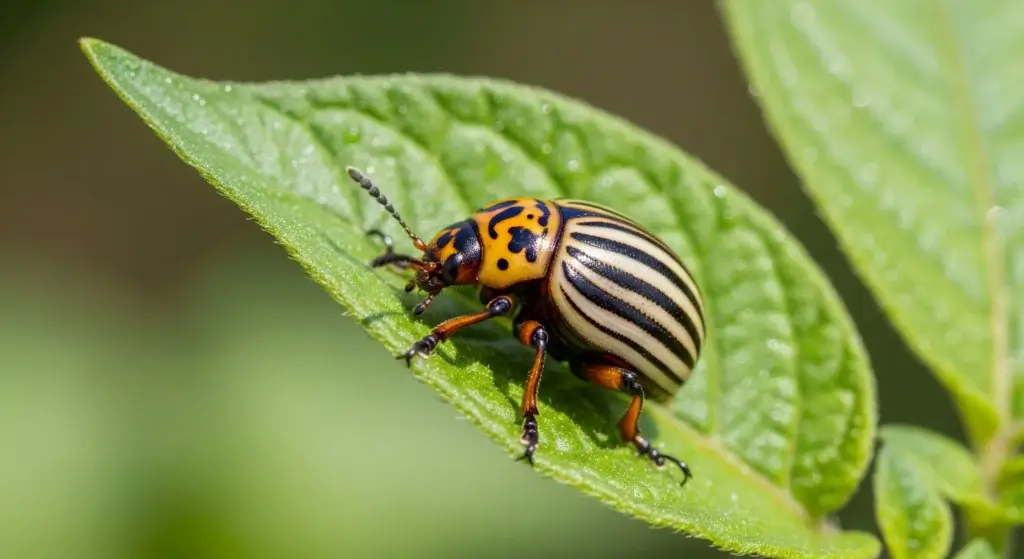
Adult Colorado potato beetles are like tiny striped tanks — oval, about 3/8 inch long, rocking a yellow-orange body with ten bold black racing stripes down their back.
Their heads are dark with random black spots, and they’ve got a hard shell covering their wings.
Even their legs and antennae are orange, so they’re not exactly subtle. If you see these flashy little bugs on your potato patch, it’s game on.
Key features of adults:
- Yellow-orange body with ten black stripes (like a bug-sized zebra in a football jersey)
- Dome-shaped, about 3/8 inch long
- Hard wing covers protecting soft wings underneath
- Dark, spotty head
- Orange legs and antennae
Larval Stage Identification
Here’s where it gets tricky — the babies look nothing like the adults.
The larvae are squishy, reddish-orange humpbacks with black heads and rows of black spots down each side.
At first glance, you might think they’re some random garden grub, but their hunchback-and-spot combo is the giveaway.
As they grow, they bulk up to about half an inch and turn into leaf-devouring machines.
Larval ID tips:
- Soft-bodied, reddish-orange grubs
- Distinct humpback look
- Black head
- Two rows of black spots along each side
- Range from tiny specks to 1/2 inch fatties when mature
Egg Stage Recognition
Want to stop them early? Spot the eggs. They’re bright yellow-orange, laid in neat little clusters of 10–30 on the undersides of leaves.
Each egg is about 1.5mm long (tiny but visible), and they darken as they get close to hatching.
Flip a few leaves over while checking your plants — finding these is your chance to break the cycle before it gets ugly.
Life Cycle and Behavior Patterns
These beetles are marathon survivors. Adults spend winter snoozing underground, then crawl out in spring, ready to snack and start families.
After a few days of feeding, they mate, lay eggs, and the cycle kicks into overdrive:
- Eggs hatch in 4–9 days
- Larvae munch leaves for 2–3 weeks
- They pupate in the soil for 5–10 days
- Fresh adults pop out and repeat the process
You usually get two full generations per season, and sometimes a sneaky third.
That’s why populations explode fast — by the time you squash one, their kids are already hatching.
Damage Assessment and Economic Impact
Recognizing Beetle Damage
Colorado potato beetles leave a very obvious calling card.
Both the adults and their grubby kids chew through potato leaves like it’s an all-you-can-eat buffet.
Classic signs of damage:
- Irregular holes and stripped leaves
- Skeletonized leaves (all veins, no leaf)
- Plants looking stunted or weak
- Smaller, lower-quality potato yield
When Damage Becomes Critical
The worst part? The larvae usually feed in gangs, and when they hit their teenage stage, their appetites explode.
Catching them early is everything, because waiting until they’re full-sized grubs means your plants can go from healthy to shredded in just a few days.
Farmers use monitoring thresholds to know when to step in:
- 25% defoliation before flowering = danger zone
- 50% defoliation after flowering but before tuber bulking = still bad news
- Any damage during tuber bulking = critical. Protect those leaves at all costs, because that’s when the plant is making your potatoes.
Integrated Pest Management Strategies
Cultural Control Methods
Crop Rotation
Colorado potato beetles (CPBs) are stubborn, but they’re not teleporters.
If you keep planting potatoes in the same spot every year, you’re basically sending them an engraved dinner invite.
Rotating crops makes it harder for them to find food.
Small garden? Even shifting your potatoes as far away as possible from last year’s patch helps cut down the first wave of beetles.
Planting Timing and Variety Selection
Plant later if your season allows — it throws beetles off their usual schedule.
Go for early-maturing potato varieties when you can, or even better, ones that are less tasty to CPBs.
The right variety can buy you some breathing room.
Habitat Modification
Don’t let “volunteer” potato plants (the random sprouts from last year) or nightshade weeds hang around — they’re basically beetle nurseries.
Clean cultivation keeps beetles from overwintering right next to their buffet.
Mulching with straw also helps, and bonus: it keeps soil cooler and moister for your potatoes.
Organic Control Methods
Physical Control Techniques
Sometimes old-school is best. Squash the adults. Rub off the eggs.
Spray organic-approved bug killers if needed. It’s not glamorous, but it works.
Hand-Picking and Removal
Still one of the most effective moves. Check plants daily, especially when beetles are most active.
Crush the eggs and larvae, toss the adults in soapy water. Do it early in the morning while they’re sluggish — easier to catch before they warm up.
Row Covers and Exclusion
Lightweight fabric row covers (Agribon, Harvest Guard, etc.) act like force fields.
Put them on before the beetles emerge in spring. Just remember to pull them off once your potatoes flower so pollinators can get in.
Biological Control Options
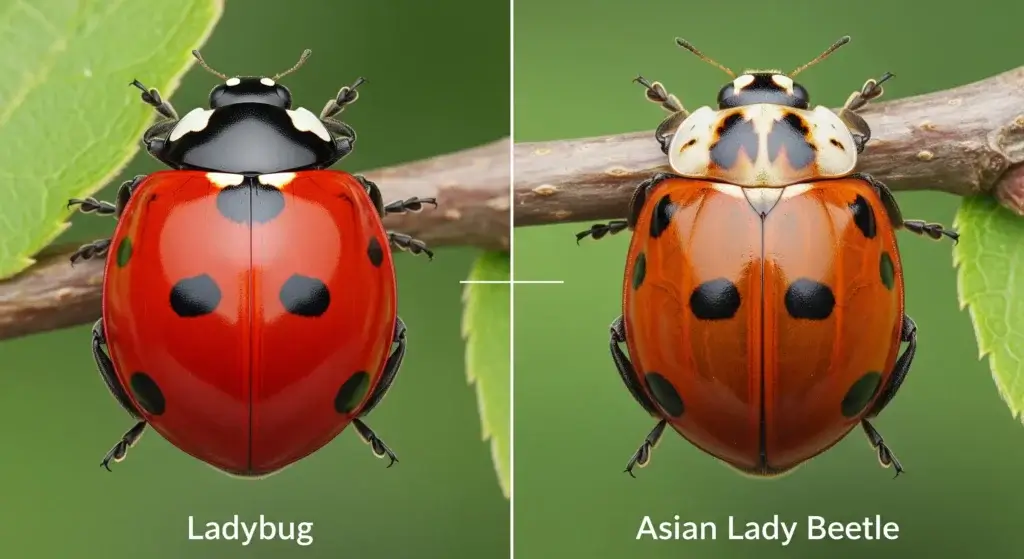
Encourage beetle predators to move in. Ground beetles, ladybugs, lacewings, spiders, stink bugs — they’re your garden’s natural security team.
Beneficial nematodes are also clutch; you apply them to the soil, and they take out larvae hiding underground.
Organic-Approved Products
Bacillus thuringiensis (Bt)
There’s a special strain (Btt) that targets CPBs.
Spray it when the larvae are small, and it’ll wreck them without harming your plants. Timing is everything here.
Neem Oil
Neem works best on young larvae, too. Spray early morning or late evening so you don’t burn your plants.
You’ll need repeat applications, but it’s a solid organic weapon if you’re consistent.
Chemical Control Considerations
If the infestation gets out of hand, sometimes chemicals are the only way to save your crop.
But CPBs are infamous for evolving resistance like they’re playing Pokémon.
That’s why you rotate insecticides (different modes of action), only spray when your threshold is hit, and avoid overusing one product.
Keep it part of a bigger plan — chemicals should be your last resort, not your first move.
Monitoring and Scouting Techniques
Effective Scouting Methods
You can’t fight what you don’t see, so scouting is step one in beating Colorado potato beetles.
Don’t just glance at a couple plants and call it a day — you’ve got to check around 30–50 plants (later in the season, stalks).
Pro tip: walk your field in a V-shape, stopping at about 10 random spots. That way you’re not just checking your “favorite” plants and missing where the real party is happening.
Scouting Protocol:
- Start in early spring once soil temps hit 50°F — that’s beetle wake-up time.
- Look for eggs and tiny larvae, not just the flashy adults. Early info = better game plan.
- Pay extra attention to field edges; that’s usually where overwintered adults crawl in first.
- Flip leaves over — eggs love the undersides.
- Write down what you find so you can spot trends instead of guessing.
What to Look For During Scouting:
- Striped adult beetles chilling on leaves
- Bright yellow egg clusters tucked under leaves
- Baby larvae chewing on foliage
- Defoliation (holes, skeletonized leaves, or sad-looking plants)
- Natural enemies like ladybugs or lacewings already doing pest control for you
Timing Critical Control Measures
Early Season Management:
Go after overwintered adults before they start laying eggs. Focus on field edges and early-sprouting plants.
Row covers or exclusion methods work best when you put them in place before beetles go wild.
Mid-Season Applications:
If you’re using sprays, hit them just after the eggs hatch when larvae are tiny — easiest stage to control.
Keep an eye out for that second generation and adjust your plan. Sometimes it’s hand-picking, sometimes it’s predators, sometimes sprays.
The trick is reacting to population levels, not just spraying because you’re stressed.
Prevention Strategies for Long-Term Success
Proactive Management Approaches
The best way to win against potato beetles? Don’t just fight them when they show up — set your battlefield so they never stand a chance.
Sanitation Practices:
- Clear out all crop leftovers right after harvest — beetles love leftovers more than I love pizza.
- Hunt down those sneaky volunteer potato plants that pop up where they’re not supposed to.
- Kick out nightshade weeds — they’re basically free Airbnbs for beetles.
- Try deep tillage in fall — it’s like flipping their beds upside down when they’re trying to sleep for the winter.
Landscape-Level Management:
- Don’t be a lone wolf. Work with your neighbors — beetles don’t respect property lines.
- Keep a buffer zone between your potato patch and spots where beetles hide out in winter.
- Ever heard of trap cropping? Plant a “sacrifice” patch of potatoes or nightshades nearby to lure beetles away from your real crop. It’s like setting up a decoy snack table.
Building Sustainable Control Programs
You’re not just trying to beat beetles for one summer — you’re building a whole system that works every year.
Resistance Prevention:
- Switch up your tactics every season. Don’t let beetles outsmart you.
- Never lean on the same chemical or product over and over. That’s how you train “super beetles.”
- Always check if what you’re doing is actually working — don’t just assume.
- Keep notes like a scientist. Trust me, “future you” will thank “past you.”
Ecosystem Enhancement:
- Create good vibes for beneficial insects — they’re your unpaid army. Ladybugs, lacewings, ground beetles? All MVPs.
- Chill with the broad-spectrum pesticides; they nuke the good bugs too.
- Plant a mix of crops or flowers nearby to attract predators that snack on pests.
- Take care of your soil — healthy soil = strong plants that can stand up to stress.
Conclusion
Beating the Colorado potato beetle is all about strategy, not panic.
Learn to ID them, scout often, and use a mix of cultural fixes (rotate, clean up volunteers), organic moves (hand-pick, encourage predators), and chemical backups only when necessary — and rotate your tactics so the beetles don’t evolve into super-bugs.
Start early, catch problems fast, and stay consistent and flexible; do that and you’ll keep your potatoes healthy without wrecking the ecosystem.