Growing dragon fruit is one of those gardening moves that makes you feel instantly cooler. You’re growing a cactus that looks like it belongs in a sci-fi movie and it gives you neon-colored fruit. Win-win.
But here’s the thing I learned the hard way: dragon fruit plants are dramatic climbers. Without a solid trellis, they flop, rot, and sulk like a plant having a bad day.
Building your own trellis is cheaper, stronger, and lets you design something that actually fits your space instead of hoping a flimsy store-bought setup survives.
In this guide, I’ll show you how to build a DIY dragon fruit trellis that’s tough enough to handle years of growth and heavy fruit—no engineering degree required.
Understanding Dragon Fruit Growth Habits
Before you grab tools, you need to understand how this plant thinks. Dragon fruit isn’t a bush. It’s a climbing cactus that wants to scale things.
In nature, it hugs trees and rocks using aerial roots, basically plant Velcro. Give it nothing to climb, and it will absolutely choose chaos.
When supported properly, dragon fruit can stretch 15–20 feet long, and those thick stems get heavy—like “wow, this cactus lifts” heavy. Fruit grows along the stems, so a good trellis means more sunlight, better airflow, fewer pests, and way easier harvesting.
Keep the stems off the ground and your plant stays healthier, happier, and way more productive. Think of the trellis as a gym rack for your cactus: without it, things collapse fast.
- Read Also: Building Upwards: A DIY Garden Trellis for Cucumbers Guide
- Read Also: A Comprehensive Guide: How to Build a DIY Bean Trellis
Choosing the Right Trellis Design
There are several popular trellis designs for dragon fruit, each with distinct advantages:
- Single-Post Design: This is the simplest and most space-efficient option, featuring a single vertical post with a circular or square support structure at the top.
- T-Post Design: It provides more support area than a single post and works well for 4-6 stems.
- Multi-Post System: For larger operations or multiple plants, a fence-like structure with multiple posts connected by horizontal wires allows you to grow several plants in a row.
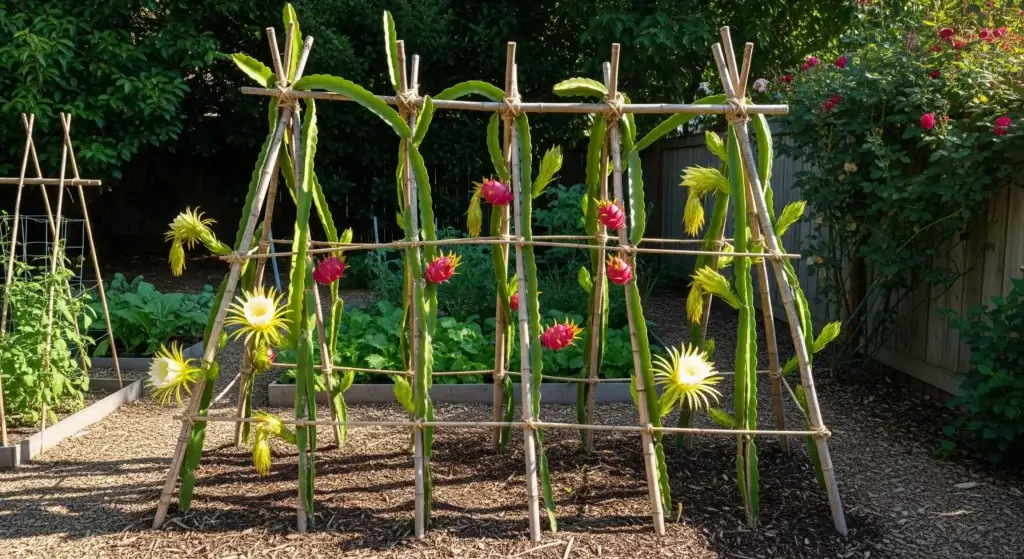
- Tripod or A-Frame Design: This freestanding structure offers excellent stability without requiring concrete installation and can be moved if needed.
For most home gardeners, the single-post or T-post design offers the best balance of simplicity, cost-effectiveness, and functionality.
Materials You’ll Need
Gathering quality materials is crucial for building a durable trellis. Here’s what you’ll need for a standard single-post trellis:
- One 8-foot pressure-treated 4×4 post or galvanized metal pipe (3-4 inches diameter)
- Concrete mix (one 50-pound bag)
- Tire rim, bicycle wheel rim, or 2-3 feet of rebar bent into a circle (for top support)
- Galvanized screws, bolts, or welding materials (depending on your design)
- Gravel for drainage
- Level
- Post hole digger or auger
- Measuring tape
- Safety equipment (gloves, safety glasses)
Pro tip: Avoid using untreated wood, as it will rot quickly when exposed to moisture and soil contact. Pressure-treated lumber or metal posts will last significantly longer, with galvanized metal offering the longest lifespan—often 20+ years according to agricultural extension studies.
Step-by-Step Construction Guide
Step 1: Choose Your Location
Think of this like picking a throne for your dragon fruit. It wants sun—lots of it. Aim for 6–8 hours a day. I once put one in “partial shade” and it grew like it was grounded for bad behavior. Warm, sunny, well-drained is the vibe.
No puddles, no swamp vibes, and make sure you can actually reach it to water and harvest without doing parkour.
Step 2: Dig the Post Hole
This is the workout part. Dig about 2–3 feet deep. Rule of thumb: bury about one-third of the post so it doesn’t wobble later when the plant gets swole. Toss some gravel at the bottom so water drains instead of turning your post into a soggy disaster.
Step 3: Set the Post
Drop the post in and make sure it’s straight. Not “good enough” straight—actually straight. A leaning post now becomes a collapsing nightmare later. I’ve learned this lesson so you don’t have to. Brace it or grab a friend to hold it steady.
Step 4: Pour the Concrete
Mix the concrete, pour it in, and keep checking that the post stays level. Poke around to pop air bubbles, then slope the top slightly so rain runs away. Let it sit for a couple days. Yes, waiting is annoying. No, skipping it is not worth it.
Step 5: Attach the Top Support Structure
This is where it starts to look cool. Add a tire, bike rim, rebar circle, or even a square frame at the top. This part holds all the future chaos—heavy stems, big fruit, main-character energy. Make sure it’s tight and level. Loose = regret.
Step 6: Add Additional Support (Optional)
If you want bonus points, add wires or crossbars along the post. Young plants love extra help climbing. Think of it as training wheels before the cactus goes full jungle mode.
Planting and Training Your Dragon Fruit
Now the fun part. Plant your dragon fruit about 6–12 inches from the post—close enough to climb, not so close it feels cramped. As it grows, gently tie the main stem to the post using soft ties or fabric strips. Never wire. That’s how you hurt the plant and your soul. Think “guiding,” not “strapping it down.”
Once the stem hits the top, let it flop over and hang. This looks messy, but it’s actually genius. Dragon fruit loves to fruit on hanging stems. The more it drapes like a green waterfall, the more fruit you’ll get. Trust the process.
Most plants start fruiting in a year or two, and by year three, they’re basically showing off.
Maintenance and Long-Term Care
Regular maintenance will keep your trellis functioning optimally:
- Inspect annually for signs of wood rot, rust, or structural weakness. Address issues promptly to prevent failures when the plant is heavy with fruit.
- Prune strategically to prevent your dragon fruit from becoming too heavy for the trellis. Remove dead or damaged stems and thin overcrowded growth.
- Reinforce as needed by adding additional support structures if your plant outgrows the original design.
- Monitor plant attachment to ensure stems are properly secured to the trellis, especially before and during fruiting season when weight increases significantly.
Cost Analysis and Return on Investment
Here’s the wild part: this whole trellis usually costs $30–75, especially if you recycle stuff like old tires.
Store-bought systems can hit $300, which is… unnecessary. Dragon fruit sells for serious money, and one healthy plant can pay back its trellis fast. After that, it’s just free fruit flexing on everyone.
- Read Also: DIY Tomato Trellis Ideas: Make Your Garden a Blast from the Past
- Read Also: DIY Raspberry Trellis: Building the Perfect Support System
Conclusion
Building a DIY dragon fruit trellis isn’t just a project—it’s setting up your plant for its best life. A strong post, good top support, sunshine, and drainage are the non-negotiables. Get those right, and your cactus will reward you for years.
This works whether you’re brand new or already deep into gardening. Build it once, build it right, and future-you will be eating dragon fruit like a legend.