When summer hits and your garden starts acting feral, zucchini is usually the ringleader. This squash doesn’t just grow—it shows off. And no, it’s not just that boring dark green log from the grocery store.
Zucchini now comes in wild colors, cool shapes, and flavors that actually make cooking fun. Whether you’re growing it, eating it, or just zucchini-curious, knowing the varieties opens a whole new level of garden and kitchen chaos (the good kind).
Whether you’re a gardener trying to level up your harvest or a home cook bored of the same old recipes, zucchini varieties can seriously change the game. Picking the right one can mean better flavor, easier growing, and way more “wow, I grew this?” moments.
Understanding Zucchini: More Than Just a Green Squash
Zucchini’s real name is Cucurbita pepo, which sounds fancy but is basically a summer squash that’s picked young while it’s still soft and snackable. Unlike winter squash that armor up and last forever, zucchini is meant to be eaten fresh—fast, tender, and juicy.
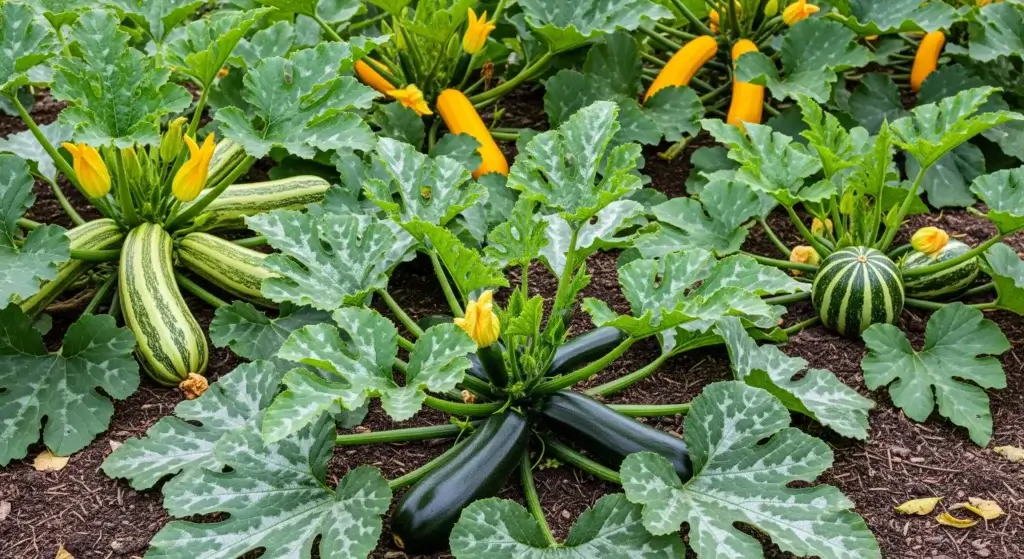
The cool part? Zucchini comes in everything from neon yellow to pale white, striped like a racetrack, and even compact plants that thrive in small spaces.
Plant breeders have been busy. Choose the right variety, and your garden (and your taste buds) will absolutely thank you.
Classic Green Zucchini Varieties
If zucchini were a school popularity contest, these would be the kids everyone knows.
Black Beauty
This is the OG. Introduced in the 1950s and still undefeated. Dark green, almost black, grows fast, and pumps out zucchini like it’s showing off.
Harvest it at 6–8 inches and it tastes clean, mild, and perfect for basically everything—grilling, baking, spiralizing, you name it. If zucchini had a default setting, this is it.
Dark Green Zucchini
Think Black Beauty’s slightly lighter cousin who’s just as reliable. Straight, glossy fruits, tender inside, and tough against diseases. Gardeners love it because it keeps producing for a long time without drama.
Costata Romanesco
Now we’re getting fancy. This Italian heirloom has ribbed, striped fruit that looks like it belongs in a food magazine. Slice it and it makes star shapes—no joke.
Flavor is nutty and rich, way more interesting than basic zucchini. Bonus flex: the giant flowers are amazing stuffed and fried.
Yellow and Golden Zucchini Varieties
Same zucchini energy, way louder colors.
Gold Rush
Bright yellow, super easy to spot in the garden (no accidental baseball-bat zucchini). It resists disease like a champ and stays tender instead of turning bitter. It’s the kind of plant that makes you feel like a successful gardener even if you’re winging it.
Golden Zucchini
Slightly sweeter than green types and keeps its sunny color when cooked. It’s perfect when you want your food to look cool—grilled veggies, salads, gratins, even pickles. Yellow zucchini just feels happier on a plate.
Striped and Patterned Varieties
Zucchini, but make it fashion.
Cocozelle
An Italian heirloom from the 1880s that’s still crushing it. Dark and light green stripes, slightly chunky shape, and bold flavor.
Great for stuffing, grilling, or classic Mediterranean dishes. This one’s for people who actually like zucchini, not just tolerate it.
Zephyr
Half green, half yellow, all cool. It fades from pale green to bright yellow like a color gradient. Mild, sweet, tender, and super photogenic.
Chefs love it, gardeners love it, and it grows straight and strong without being fussy.
Compact and Container-Friendly Varieties
Small space? No problem. These zucchini don’t need a giant backyard to flex.
Eight Ball
This zucchini said “what if… round?” It grows like a green baseball, which makes it perfect for stuffing whole.
Scoop it out, fill it, bake it—instant main character energy. The plant stays compact, so it works great in pots. Pick it when it’s tennis-ball sized or it gets weird.
Raven
Built for small gardens but still delivers full-size zucchini. Dark green, great flavor, easy to harvest, and way less drama with diseases like powdery mildew. Raven is proof that small plants can still go hard.
Specialty and Heirloom Varieties
These are for when you want to feel like a zucchini scholar.
Tromboncino
This one’s wild. Long, twisty, sometimes several feet long, and technically not even the same species—but it cooks like zucchini.
It grows as a vine, loves a trellis, laughs at squash vine borers, and keeps producing into fall. You can eat it young like summer squash or let it mature into winter squash. Overachiever.
Cocozella di Napoli
A rare Italian heirloom with pale green, ribbed fruit and a sweet, delicate flavor. It’s smaller, super tender, and best picked young. Fancy chefs love it, and once you taste it, you’ll get why.
Round Zucchini Varieties
Floridor
Floridor is a French round zucchini variety that produces spherical fruits with mottled light and medium green coloring. These attractive squash are perfect for stuffing and have a slightly firmer texture than cylindrical varieties. Floridor plants are productive and disease-resistant.
One Ball
Similar to Eight Ball but with slightly different characteristics, One Ball produces uniform, globe-shaped fruits ideal for individual servings. The variety matures early and produces consistently throughout the season.
Choosing the Right Variety for Your Needs
When selecting zucchini varieties for your garden, consider these factors:
- Climate and growing conditions: Some varieties perform better in specific climates. Heat-tolerant varieties like Gold Rush excel in hot summers, while others prefer moderate temperatures.
- Space availability: Compact bush varieties work well in containers or small gardens, while vining types like Tromboncino need room to sprawl or structures for vertical growing.
- Culinary preferences: Consider how you’ll use the harvest. Round varieties are perfect for stuffing, while long, straight varieties are ideal for spiralizing or uniform slicing.
- Disease resistance: Look for varieties with resistance to common problems in your area, such as powdery mildew or bacterial wilt.
- Days to maturity: Early-maturing varieties produce harvests sooner, while mid-season varieties often produce over longer periods.
Growing Tips for All Varieties
Regardless of which zucchini variety you choose, certain growing practices ensure success:
- Plant in warm soil: Wait until soil temperatures reach at least 60°F before planting
- Provide adequate spacing: Most varieties need 3-4 feet between plants for proper air circulation
- Ensure consistent moisture: Zucchini requires regular watering, especially during fruit development
- Harvest regularly: Pick fruits when young and tender to encourage continued production
- Monitor for pests: Watch for squash bugs, cucumber beetles, and squash vine borers
Conclusion: Embracing Zucchini Diversity
Zucchini isn’t boring—you’ve just been hanging out with the wrong varieties. There’s a whole squad out there: classic green, bright yellow, striped, round, weird, twisty, and honestly kind of awesome. Way more options than gardeners had back in the day.
Trying different zucchini means longer harvests, cooler-looking gardens, and food that actually feels exciting to cook and eat.
You can play it safe with a classic like Black Beauty or go full adventurer with something like Tromboncino. Either way, homegrown zucchini hits different all summer long.