Growing green beans is one of those gardening wins that makes you feel way more skilled than you actually are—and that’s the magic. They’re tasty, healthy, and surprisingly chill to grow once you know the basics.
Whether you’re squeezing bush beans into pots on a tiny balcony or letting pole beans climb like they’re in a jungle movie, this guide gets you to a solid harvest without the stress.
Why Green Beans Deserve a Spot in Your Garden
Green beans (Phaseolus vulgaris) are basically overachievers. They love warm weather, grow fast (you’ll be picking pods in about two months), and pack vitamins like A, C, and K into every crunchy bite.
They don’t hog space, they keep producing if you keep harvesting, and they actually help your soil by adding nitrogen—yes, plants can be team players. For beginner gardeners, green beans are that first success story that makes you think, “Okay… I might be good at this.”
Understanding the Two Main Types of Green Beans
Before you plant anything, you need to know which kind of green bean you’re dealing with—because they behave very differently, like siblings with opposite personalities.
Bush Beans
Bush beans are the low-maintenance legends. They stay short (about knee-high), don’t need cages or trellises, and are perfect for pots or small spaces. They grow fast and then dump all their beans at once. Great if you want a big harvest quickly or plan to freeze or can them like a gardening pro.
Pole Beans
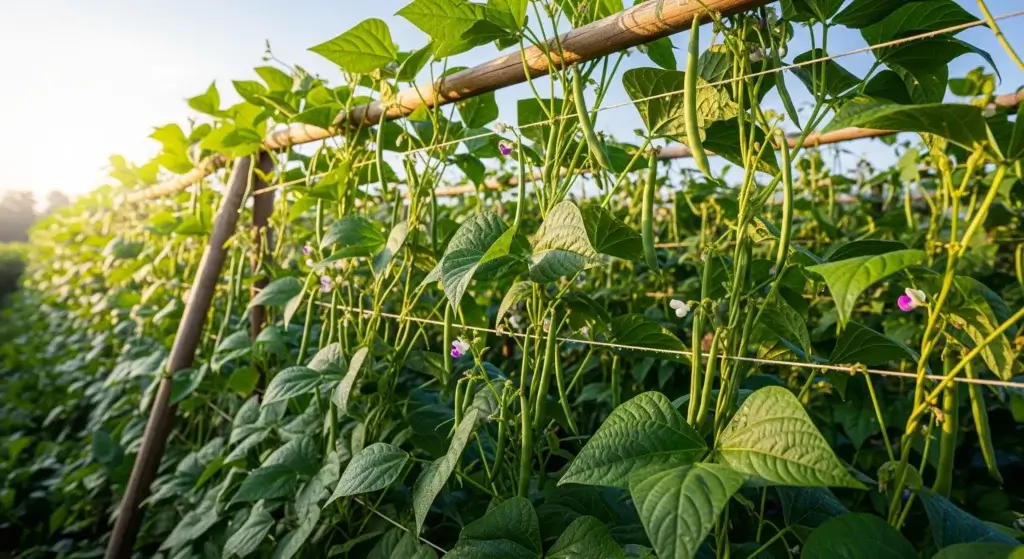
Pole beans are the climbers. They shoot up 6 to 10 feet and need something to grab onto—fences, poles, trellises, whatever you’ve got. They take a bit longer to start, but once they do, they just keep going all season. If you like harvesting beans over and over, these are your guys.
Choosing the Perfect Location and Soil Preparation
Green beans are sun addicts. They want 6–8 hours of direct sunlight every day, especially in the morning. No sun = sad plants.
Soil matters too. Beans like loose, well-draining soil that isn’t too acidic or too alkaline. Mix in compost or old manure before planting to give them a comfy home.
Just don’t go crazy with fertilizer—too much nitrogen makes giant leaves and barely any beans. Beans already handle their own nitrogen like responsible adults.
Planting Green Beans: Timing and Technique
Green beans hate the cold. Like, dramatically. If you plant too early, the seeds just sit there and rot. Wait until frost is gone and the soil feels warm—60°F minimum, warmer is better.
Plant bush beans about an inch deep, a few inches apart. Pole beans get the same depth but need more space and something to climb.
Watering Requirements for Healthy Bean Plants
Beans are thirsty—but picky. They want steady water, not random droughts followed by flooding. Aim for about an inch of water a week and soak the soil deeply so roots grow strong.
Water at the base, early in the morning. Wet leaves at night are basically an invitation for plant diseases to throw a party. When flowers and pods show up, don’t slack—mess up watering here and your harvest will absolutely judge you.
Mulching and Weed Management
Mulch is like armor for your soil. A few inches around your bean plants keeps moisture in, weeds out, and dirt from splashing disease onto leaves. Use straw, dried leaves, grass clippings, or compost—nothing fancy.
Just wait until the soil is warm and plants are about six inches tall. When weeds pop up, pull them gently. Bean roots are shallow and fragile, so don’t go in swinging like you’re mad at the ground.
Supporting Pole Beans Properly
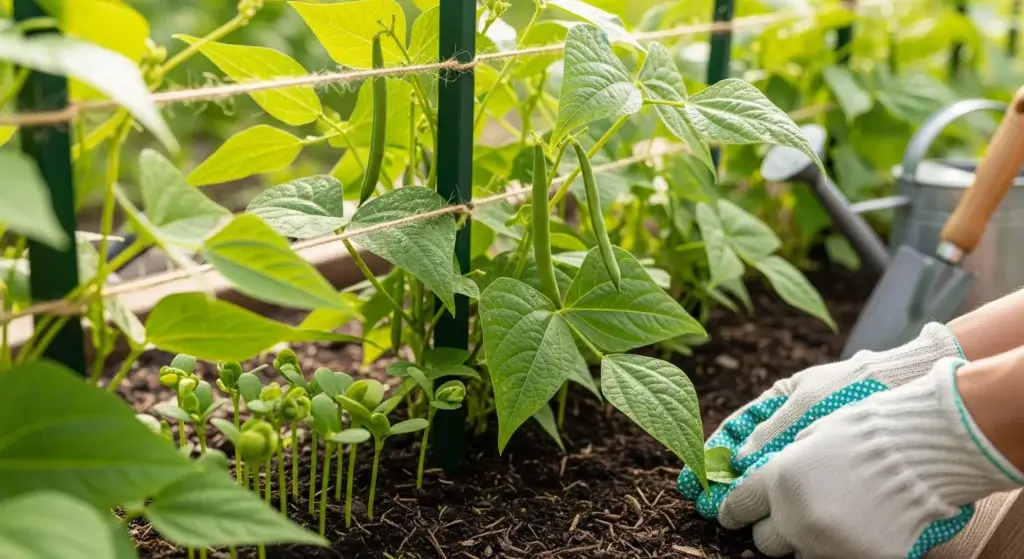
Pole beans need something to climb, and they need it early. Set up poles, trellises, or teepees before they really get going, or you’ll wreck the roots later. Go tall—at least 6–8 feet—because these plants will absolutely use all that space.
Once the vines start growing, guide them toward the support and step back. They’ll grab on and climb like it’s their life’s mission.
Fertilizing Green Beans: Less is More
One of the beautiful aspects of growing green beans is their minimal fertilizer requirements. As legumes, beans form symbiotic relationships with Rhizobium bacteria in the soil, which convert atmospheric nitrogen into a form plants can use.
At planting time, work a balanced, slow-release fertilizer into the soil or use compost. Throughout the growing season, avoid high-nitrogen fertilizers, which promote excessive foliage growth at the expense of bean production.
If plants show signs of nutrient deficiency, such as yellowing leaves, a light side-dressing of compost or a balanced fertilizer can help.
Phosphorus is particularly important for root development and flower formation in beans. A soil test can determine if your soil needs phosphorus amendments before planting.
Fertilizing Green Beans: Less is More
Here’s the wild part: green beans don’t want you hovering over them with fertilizer like an overprotective parent. They’re legumes, which means they team up with helpful soil bacteria to make their own nitrogen. Basically, they’ve got a built-in food system.
When you plant, mix in some compost or a balanced, slow-release fertilizer and then chill. Too much nitrogen just gives you huge leafy plants with barely any beans, which is honestly heartbreaking.
If leaves start turning yellow, a light sprinkle of compost can help. Phosphorus matters for roots and flowers, so if your soil is struggling, a soil test before planting is the smart move.
Common Pests and Disease Management
Green beans are pretty tough, but they’re not invincible. Some bugs will absolutely try it.
Common Pests
Mexican bean beetles (they look like fake ladybugs), aphids, spider mites, and Japanese beetles are the usual troublemakers. Bean beetles are ruthless—pick them off by hand and don’t feel bad about it.
Aphids can be blasted off with water or handled with insecticidal soap. The real secret weapon is checking your plants often. Catch problems early and they’re way easier to deal with.
Fungal Diseases
Powdery mildew, rust, and bacterial blight show up when plants stay too wet or crowded. Give your beans space, water at the soil instead of the leaves, and yank out sick plants fast. Don’t plant beans in the same spot every year—rotate crops like a responsible gardener.
Disease-resistant varieties and cleaning up plant debris at the end of the season go a long way toward keeping your beans drama-free.
Harvesting Your Green Beans
Picking beans at the right time is everything. You want pods that are firm, crisp, and full-sized—but not chunky. If the seeds inside start bulging, you waited too long. Harvest in the morning when it’s cool, not during midday heat when plants are already tired.
Hold the stem with one hand and pull the bean with the other so you don’t accidentally rip the plant apart. Check bush beans every few days and pole beans even more often. The more you pick, the more beans you get. Skip harvesting and the plant basically goes, “Cool, I’m done.”
Conclusion: Your Path to Green Bean Success
Growing green beans isn’t complicated—it’s just about paying attention. Give them sun, decent soil, regular water, and a little pest control, and they’ll show up for you all season. Start small, learn as you go, and level up each year.
There’s nothing better than grabbing warm beans from your garden and eating them the same day. That moment hits different—and once you feel it, you’re officially a gardener.