Growing cucumbers in containers is clutch when space is tight—but without support, those vines go full chaos mode. A simple DIY trellis turns a messy pot into a vertical, cucumber-making machine. Balcony, patio, tiny yard—doesn’t matter.
Give cucumbers something to climb and they’ll absolutely show up for you.
Why Your Potted Cucumbers Need a Trellis
Cucumbers are climbers by nature. If you don’t give them a trellis, they sprawl everywhere like they own the place—and your harvest pays the price.
Space Efficiency
I’ve watched one cucumber plant try to take over an entire patio like a green octopus. Left alone, vines spread 6–8 feet. A trellis keeps them growing up, not out, so you get big harvests without sacrificing your whole space.
Improves Air Circulation
When cucumbers sit on the ground, moisture sticks around and fungus throws a party.
Growing them vertically lets air flow through the leaves, helping prevent nasty diseases like powdery mildew. Healthier plant, less drama.
Produce Straighter Shaped Fruit
Hanging cucumbers grow straight thanks to gravity doing its thing. On the ground, they bend, curl, and look weird—still edible, but not exactly Instagram material.
Harvesting Becomes Easier
Instead of digging through a jungle, your cucumbers hang right in front of you like “hey, I’m ready.” It’s faster, cleaner, and way more satisfying. Plus, you’ll spot pests early before they ruin your vibe.
Choosing the Right Container for Your Cucumber Trellis
If your cucumber pot is too small, the plant will struggle no matter how cool your trellis is. Think of the container as the plant’s house—tiny house, tiny results.
Minimum Container Size
Go big or go home. Five gallons is the bare minimum, but 10–15 gallons is where cucumbers really flex.
More soil means more water, more nutrients, and a pot that doesn’t tip over when your vines get ambitious.
Drainage
No drainage holes = dead cucumber. I’ve learned this the hard way. Roots hate soggy feet, so make sure water can escape. Decorative pot? Drill holes. No excuses.
Material Choice
Terracotta looks cool but dries out fast. Plastic holds water better but can tip in wind. Fabric grow bags drain great but need extra support. Pick your fighter based on your space and weather.
Weight Distribution
Cucumbers plus a tall trellis can turn into a plant skyscraper. If the base isn’t wide and stable, it will fall over. Secure everything like you’re building for a storm.
Essential Materials for Building Your DIY Cucumber Trellis
Before you start, grab your supplies so you’re not mid-build yelling “where’s the zip tie?!”
Basic Wooden Stake Trellis
For a basic wooden stake trellis, you’ll need:
- Two to four wooden stakes or bamboo poles (6 to 8 feet tall)
- Garden twine, jute string, or plant netting
- Zip ties or wire for securing connections
- Drill with bits (if creating mounting holes)
- Scissors or wire cutters
PVC Pipe Trellis
For a PVC pipe trellis system, gather:
- PVC pipes (1/2 inch to 1 inch diameter)
- PVC connectors (T-joints, elbow joints, and cross connectors)
- PVC cement or zip ties for assembly
- Nylon netting or garden mesh
- Measuring tape and PVC pipe cutter or saw
Wire Cage Trellis
For a wire cage trellis, you’ll need:
- Welded wire fencing or cattle panel (4 to 6 feet tall)
- Wire cutters
- Zip ties or wire for securing to container
- Work gloves for handling wire edges
Step-by-Step: Building a Bamboo Teepee Trellis
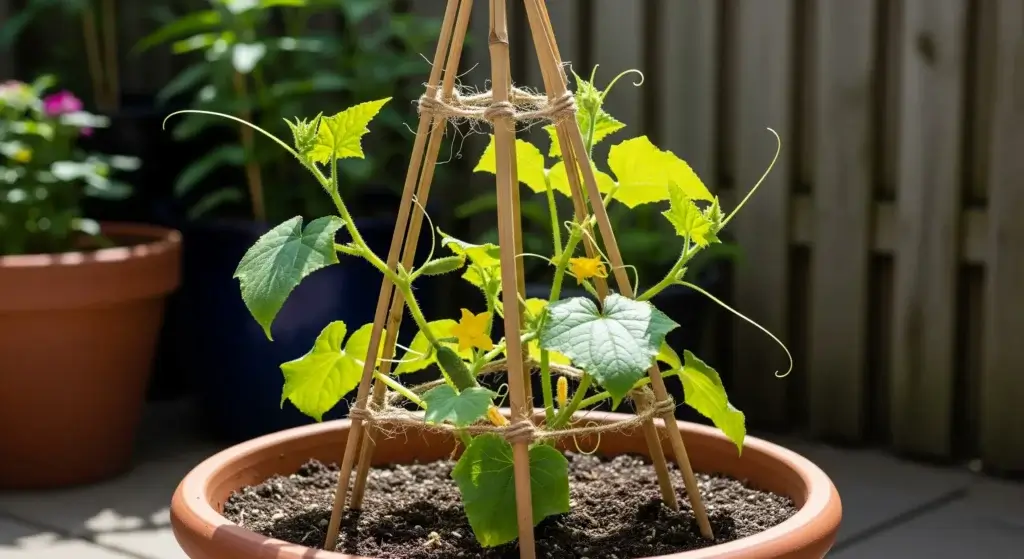
The bamboo teepee trellis is a fan favorite for potted cucumbers, and for good reason. It’s strong, looks cool, and takes maybe 15 minutes to build. I’ve made these in flip-flops and still got monster harvests—so yeah, it’s beginner-friendly.
Step 1: Prepare Your Container and Soil
Fill your pot with good potting mix, stopping about 2 inches from the top. Water it really well. Damp soil is easier to work with and keeps your poles from wobbling like a bad Jenga tower.
Step 2: Position Your Bamboo Poles
Grab three or four bamboo stakes, 6 to 8 feet tall. Push them 4–6 inches into the soil around the edge of the pot. Space them evenly. Tilt the bottoms slightly out, then bring the tops together like you’re making a tiny plant tent.
Step 3: Secure the Top
This part matters. Tie the tops together tightly with twine, wire, or zip ties. Wrap it a lot—10 to 15 times. Future cucumbers are heavy, and you don’t want the whole thing collapsing mid-season. Learned that one the hard way.
Step 4: Add Horizontal Support
Wrap string around the teepee every 6–8 inches to make climbing rungs. Or throw garden netting over the whole thing and zip-tie it in place. The more grip points, the happier your cucumber vines will be.
Step 5: Plant Your Cucumbers
Plant one or two seedlings near each pole, about 4 inches away. As they grow, gently guide them toward the bamboo. After that, they’ll grab on and climb like they were born for it.
Creating a Simple A-Frame Trellis for Containers
The A-frame trellis is perfect if you want to grow a lot of cucumbers in a tight space. It’s basically a ladder the plants can race up—and they will race.
Creating Two Identical Rectangular Frames
Cut four vertical pieces (about 5–6 feet tall) and four horizontal pieces to match your container width. Screw, nail, or zip-tie them together into two rectangles. Don’t overthink it—plants are forgiving.
Stand the Two Frames Upright
Place them in the container like an upside-down V, forming an “A” shape. The bottoms sit inside the container edges, and the tops lean together. Aim for about a 60-degree angle so it doesn’t tip.
Secure the Apex
Tie or screw the tops together where they meet. Zip ties work great. This connection is what keeps the whole thing from turning into a sad pile of sticks.
Add Climbing Surface
Stretch netting, chicken wire, or string between the two sides. Secure it every 6–8 inches from bottom to top. This is the jungle gym your cucumbers have been dreaming about.
Plant Cucumbers
Plant seedlings along both sides of the container, about 8 inches apart. Train the vines up each side. Soon, they’ll meet at the top and turn your trellis into a leafy, cucumber-producing wall. It’s wildly satisfying to watch.
Building a Cost-Effective PVC Pipe Trellis System
PVC trellises are the underrated MVPs of container gardening. They’re cheap, tough, don’t care about rain or sun, and you can build one for less than $20. I’ve used the same PVC trellis for years while everything else gave up. PVC does not quit.
Begin With Your Base Structure
Cut two PVC pipes to match your container width (usually 18–24 inches). Cut two more for height—5 to 7 feet is perfect. Use T-connectors to snap everything into a big rectangle.
For extra stability, add short PVC “legs” pointing down into the pot so the frame doesn’t wobble like a shopping cart with one bad wheel.
Create Stability Stakes
Cut four short PVC pieces (8–12 inches) and attach them to the bottom corners. Push these deep into the soil. This is what keeps your trellis upright once your cucumbers start gaining weight like they’re bulking for the gym.
Add Cross-Supports
Add horizontal PVC bars every 12–18 inches. Use connectors or zip ties. These bars give cucumber tendrils tons of places to grab and spread the weight so nothing snaps mid-season.
Attach Climbing Surface
Drape garden netting over the frame and zip-tie it down. Or make a grid with string. Either way, you’re basically building a climbing wall for plants—and they love it.
PVC is modular, which is a fancy way of saying you can keep upgrading it. Taller vines? Add height. Bigger pot? Add another frame. No rules here.
Training and Maintaining Your Trellised Cucumbers
The trellis isn’t magic by itself. You’ve gotta coach the plants a little—think of yourself as a very chill plant personal trainer.
Initial Training Starts Immediately
Right after planting, guide the main stem toward the trellis. Cucumbers don’t magically know where to climb. Wrap the stem gently or loosely tie it. After that, the plant figures it out.
Cucumbers grow tendrils every couple of inches—tiny curly grabby things that latch onto anything nearby. Check your plants every few days and redirect any vines trying to escape. They’re adventurous like that.
Pruning Improves Air Circulation and Productivity
Remove leaves touching the soil. They’re basically disease magnets. As the plant grows, trim a few lower leaves to improve airflow. Don’t go wild with pruning, though—container plants don’t have room for drama.
Secure Heavy Fruit
Big cucumbers get heavy, and sometimes the vine needs backup. Use old pantyhose, mesh bags, or DIY slings to hold the fruit. Yes, your plant will look ridiculous. No, it will not care.
Container cucumbers are thirsty. Like, always. Check soil daily in hot weather. Keep it evenly moist. Letting it dry out leads to bitter cucumbers and sad vibes. Water consistently, and your plants will reward you with crunchy, glorious cucumbers.
Choosing the Best Cucumber Varieties for Container and Trellis Growing
Here’s the truth: the right cucumber variety makes this whole thing way easier. Pick the wrong one and you’ll be working against the plant instead of with it.
Bush Cucumber Varieties
These are the short, compact kids of the cucumber world. They’re bred to stay small, which sounds great for containers—but they don’t climb much, so trellises don’t help them a ton.
Varieties like Bush Champion, Spacemaster, and Salad Bush are fine if you want low effort, but they won’t go full jungle mode.
Vining Cucumber Varieties
These are the climbers. They want a trellis. Give them one and they’ll take off like they’ve got something to prove. They grow longer, produce more, and make better use of vertical space. Solid picks include:
- Marketmore 76 – reliable, tough, and cranks out classic slicing cucumbers
- Straight Eight – an old-school favorite with clean, straight fruit
- Diva – no pollination needed, sweet, and seedless (yes, it’s that good)
- Suyo Long – long Asian cucumbers that look wild and taste amazing
- Armenian cucumber – technically a melon, but don’t tell it that—it climbs like a champ
Think about where you’re growing, not just what you’re growing. No bees on your balcony? Go with parthenocarpic varieties like Diva or Socrates that don’t need pollination. Lots of disease where you live? Resistant types like County Fair and Excelsior save you a lot of frustration.
Troubleshooting Common Issues with Trellised Container Cucumbers
Even when you do everything right, cucumbers still find creative ways to test your patience. Here’s how to deal with the usual chaos.
Trellis Instability
If your trellis wobbles, it will fall. Add stakes, anchor it to something solid, or put weight in the bottom of the pot. Bricks, stones, or grouping pots together works. Stability is non-negotiable.
Poor Climbing Behavior
If your cucumbers refuse to climb, it’s usually a design issue. Tendrils can’t grab thick or slick supports. They like skinny, slightly rough stuff. Add string, netting, or twine—and guide the plant at first so it knows the plan.
Yellowing Leaves
This is usually a hunger problem. Containers wash nutrients out fast, and cucumbers eat a lot. Feed them every two weeks with a balanced fertilizer or use slow-release food from the start. Yellow leaves are basically your plant asking for snacks.
Few or No Cucumbers
Lots of flowers but no fruit? That’s a pollination issue. High balcony? No bees? Time to play matchmaker. Use a small paintbrush and move pollen from male flowers (skinny stem) to female flowers (tiny baby cucumber at the base). Or skip the drama and grow no-pollination varieties.
Blossom End Rot
If the ends of your cucumbers turn dark and sad, it’s usually uneven watering—not enough calcium getting to the fruit. Water consistently and add crushed eggshells or gypsum to the soil. Steady moisture fixes most problems faster than anything else.
Maximizing Your Cucumber Harvest from Potted Trellis Systems
If you want nonstop cucumbers instead of one giant “what do I do with all this?” moment, you’ve gotta play it smart all season long.
Succession Planting
Don’t plant everything at once. That’s rookie behavior. Plant new seeds or starts every 2–3 weeks.
This keeps cucumbers coming for months instead of all showing up at the same time like an uninvited group chat. Containers make this easy—just add another pot when you’ve got space.
Consistent Harvesting
Pick your cucumbers early and often. Once fruit starts showing up, check daily.
If you leave big, overgrown cucumbers on the vine, the plant thinks, “Mission accomplished,” and slows down. Harvesting tells the plant to keep producing. It’s basically positive reinforcement.
Proper Fertilization
Container cucumbers are hungry. Water washes nutrients out fast, so you’ve gotta feed them.
Once flowers appear, switch to a fertilizer higher in phosphorus and potassium—not nitrogen. Too much nitrogen gives you a jungle of leaves and barely any cucumbers. A 5-10-10 mix is a solid choice.
Companion Planting
You can sneak in a little plant teamwork. Dill or marigolds near the base may help keep pests away.
Radishes around the edge can help with soil and bugs too. Just don’t overcrowd—your cucumbers still need their space to shine.
Winterizing and Storing Your Cucumber Trellis
One of the best parts of DIY trellises? You don’t have to rebuild them every year—if you treat them right.
At Season’s End
Pull off all the old cucumber vines. If a plant was sick, don’t compost it. That’s how diseases come back next year like a sequel nobody asked for. Healthy vines can be composted or dried and used as mulch.
Clean Your Trellis Thoroughly
Scrub off dirt and plant gunk. Wood gets soap and water. PVC and metal get a quick diluted bleach wash. Let everything dry completely—wet storage is how rot and rust start.
Inspect for Damage
Check for cracked poles, loose ties, or weak joints and fix them now. Doing repairs in the off-season is way easier than mid-summer when plants are depending on the structure.
Store Disassembled Components
Keep everything dry and protected. Wood lasts longer indoors. PVC can go outside but hates nonstop sun. Roll up netting and string and keep it away from rodents—because apparently, twine is premium nesting material.
Conclusion
A DIY cucumber trellis turns container gardening from “I’m out of space” into “why do I have so many cucumbers?” Whether it’s bamboo, an A-frame, or PVC, going vertical gives you healthier plants, better-looking fruit, easier harvesting, and way bigger yields in the same tiny area.
The setup takes a little effort, but you reuse it for years—total win. Pick the right varieties, take basic care, and guide the vines, and even the smallest space can pump out fresh cucumbers all season. Build the trellis, let the plants climb, and enjoy watching your garden level up fast.