Every gardener wants that magic, chocolate-cake soil that makes plants go wild. Reality check: most of us start with sad clay bricks, washed-out sand, or dirt that looks alive but grows nothing. Been there.
The good news is you don’t need fancy store-bought stuff to fix it. Homemade soil amendments can turn trash into plant fuel, save cash, and make your garden actually fun to grow in.
Understanding Soil Amendments and Why They Matter
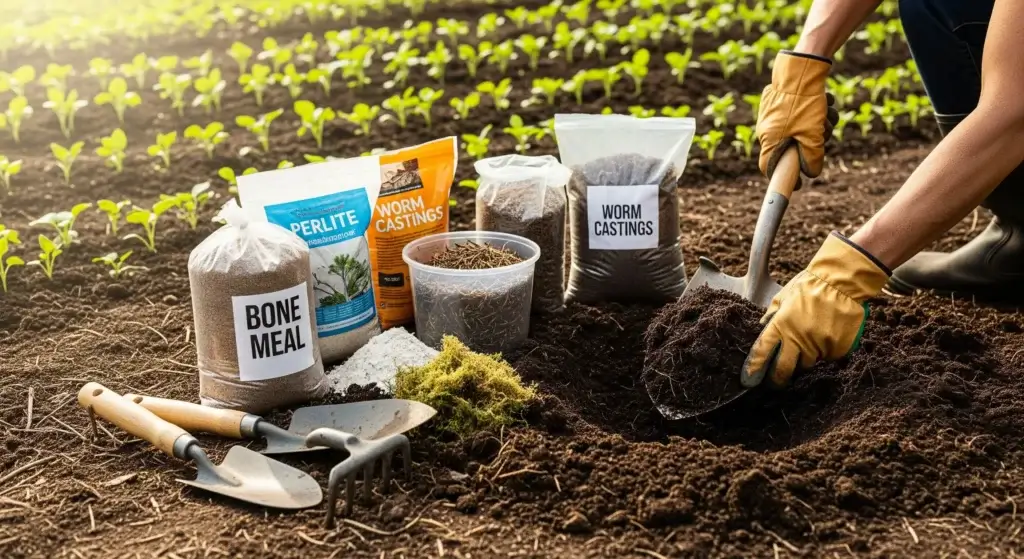
Think of soil amendments as therapy for dirt. Fertilizers are like energy drinks for plants, but amendments fix the soil itself—better texture, better nutrients, better vibes for roots and microbes.
When soil is healthy, roots spread out, water behaves, and plants stop struggling like they’re in survival mode.
Healthy soil is basically a balanced hangout: minerals, air, water, and a little organic matter all doing their thing. When that balance is off, plants suffer—either drowning, starving, or stuck in hard ground.
Homemade amendments fix this naturally while cutting waste and skipping mystery chemicals. Bonus: once you start making your own, you actually get your soil—and that’s when gardening stops being luck and starts being skill.
Composted Kitchen Scraps: Black Gold for Your Garden
Compost is basically a glow-up for dirt. It turns banana peels and old leaves into dark, crumbly “black gold” that plants absolutely love. It helps sandy soil hold water, loosens up stubborn clay, and feeds plants slowly so they don’t crash later.
It’s like upgrading your soil from fast food to a balanced meal.
Making compost is just about balance: greens like veggie scraps, coffee grounds, and grass clippings mixed with browns like dry leaves, cardboard, or newspaper.
Think three scoops of brown for every one scoop of green. Keep it damp—not soggy—and flip it now and then so it can breathe. In a few months, it smells earthy, not gross, and that’s how you know you nailed it.
Spread a few inches in your garden each year and your soil keeps getting better, season after season.
Coffee Grounds: The Morning Brew Your Garden Craves
Used coffee grounds are not trash—they’re plant snacks. They’ve got nitrogen, tiny nutrients, and they attract earthworms, which are basically free underground construction workers for your soil.
Bonus: used grounds aren’t super acidic, so most plants are totally fine with them.
Sprinkle them lightly on soil, mix them into compost, or tuck them around plants like blueberries that enjoy slightly acidic soil. Just don’t dump them on in thick layers or they’ll turn into a weird crust.
Pro tip: local coffee shops give this stuff away for free. Your morning caffeine habit can literally power your garden. That’s elite multitasking.
Crushed Eggshells: Calcium Powerhouse for Plant Health
Eggshells are sneaky powerful. That crunchy trash from breakfast is basically calcium armor for your plants. Calcium helps plants build strong cells, fight disease, and stops disasters like tomatoes getting that gross black rot on the bottom.
I learned this the hard way after losing a whole batch of tomatoes—never again.
Rinse the shells, dry them, then crush them into dust. The finer, the better. Mix a spoonful into planting holes, sprinkle some into garden beds, or soak them in water to make a DIY calcium drink for container plants. It’s simple, free, and your plants absolutely notice the upgrade.
Wood Ash: Ancient Amendment with Modern Applications
Wood ash is old-school gardening magic, but it’s strong stuff—more like seasoning than sauce. Ash from clean, untreated wood adds potassium and calcium and raises soil pH, which is great if your soil is too acidic.
Use it lightly and only where it belongs. Cabbage, asparagus, and fruit trees love it. Blueberries and potatoes? They hate it.
Dumping ash everywhere can mess up your soil fast, so go easy, wear gloves, and store it dry. Used right, wood ash turns fireplace leftovers into a legit soil power-up.
Grass Clippings and Leaf Mold: Free Resources Right in Your Yard
Your yard is secretly a supply store. Fresh grass clippings are packed with nitrogen and break down fast, which makes them perfect mulch or compost fuel. Just spread them thin—learned the hard way that thick layers turn into a gross, smelly mess plants hate.
Leaf mold is even lazier gardening, in the best way. You pile up damp leaves and… wait. No turning, no effort.
Months later, you get dark, crumbly stuff that holds crazy amounts of water and makes soil way better. It’s a lifesaver for dry or sandy soil and works great mixed into beds or spread around plants.
Banana Peels: Potassium Boost for Blooming and Fruiting
Banana peels are like a hype coach for flowers and fruit. They’re loaded with potassium, which helps plants bloom harder, grow stronger, and fight stress. Instead of tossing peels, chop them up and bury them near plants, or soak them in water to make a quick nutrient tea.
Roses, tomatoes, and peppers especially love this treatment. It feels slightly unhinged the first time you feed plants banana water—but when they start flowering like crazy, it suddenly makes perfect sense.
Getting Started: Creating Your Soil Amendment Strategy
Fixing soil isn’t a one-weekend glow-up—it’s more like training a Pokémon. Start by testing your soil so you actually know what you’re working with. Once I stopped guessing and tested mine, everything made way more sense.
Clay soils need stuff that loosens them up, sandy soils need help holding water, and pH problems usually just need the right scraps added at the right time.
Add amendments in spring or fall and mix them into the soil, not just on top. Think of it like stirring ingredients into batter—plants do better when everything’s blended. Do this consistently and you’ll see real changes way faster than you’d expect.
Conclusion: Cultivating Success Through Sustainable Practices
Homemade soil amendments aren’t just cheap—they’re smart. You’re turning leftovers and yard mess into plant power while cutting waste and helping the planet. That’s a win on every level.
Start small with what you already have, then level up as you see results. Soil building is a long game, not a one-time fix. Stick with it, pay attention to how your plants react, and even the worst dirt can become rich, productive soil. The tools are already around you—you’re just learning how to use them like a pro.