Whether you’ve been gardening forever or you just planted your first seed and now check it like it’s a baby, this choice actually matters. Pole beans vs bush beans can decide whether your garden feels chill and easy—or like a jungle gym that never stops producing food.
Pick the right one, and growing beans goes from “meh” to kinda magical.
What Are Pole Beans and Bush Beans?
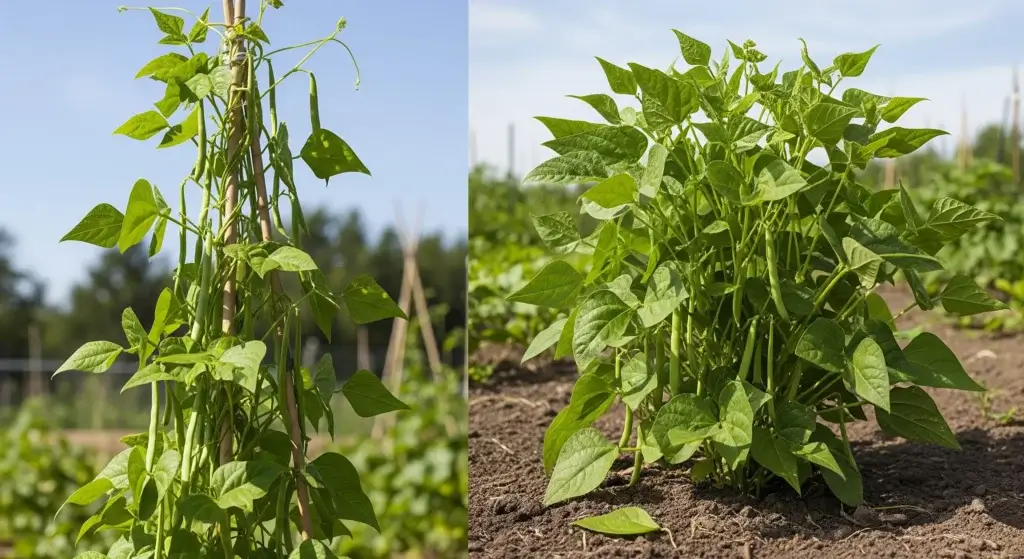
Think of them as the same plant with totally different personalities. Same species, Phaseolus vulgaris, but bred to grow in very different ways—like siblings who turned out nothing alike.
Bush Beans
These are the low-maintenance kids. They stay short (about knee-high), don’t need support, and pump out beans fast—all at once. Perfect if you want a quick win or you’re impatient (no shame). Plant them, wait a bit, harvest, flex.
Classic varieties include Blue Lake Bush, Contender, and Provider.
Pole Beans
These are the overachievers. They climb, sprawl, and just keep going—sometimes taller than you.
You’ll need a trellis or poles, but in return they keep producing beans all season long. If you like steady snacks and dramatic garden vibes, pole beans like Kentucky Wonder, Blue Lake Pole, and Scarlet Runner are your crew.
- Read Also: A Comprehensive Guide: How to Build a DIY Bean Trellis
- Read Also: How to Make a Bean Pole Teepee: Space-Saving Garden Structure
Space Requirements: Maximizing Your Garden Real Estate
This is where beans show their true personalities. One sprawls like it owns the place. The other climbs like it’s training for a ninja movie.
Bush Beans: Horizontal Space Users
Bush beans stay low and wide. They need elbow room—both between plants and between rows.
If you’re feeding a whole family, you’ll end up using a decent chunk of garden space, and you’ll probably replant a few times. They’re generous, but in short bursts. Think: bean explosion, then silence.
Pole Beans: Vertical Gardening Champions
Pole beans grow up, not out. Same spacing at the base, but then they climb like champs.
One trellis can feed multiple plants, which is clutch if your garden is small or stuck on a balcony. Bonus: picking beans standing up feels elite. They also crank out way more beans from the same patch of soil.
Space Efficiency Winner
Pole beans win for small spaces. Bush beans are fine if you’ve got room to spare.
Growth Patterns and Harvest Timing
This part decides whether you want all your beans at once… or a steady drip of snacks all summer.
Bush Bean Characteristics
- Maturity time: 50 to 60 days from planting
- Harvest period: 1 to 2 weeks of concentrated production
- Growing pattern: Determinate (stops growing at a certain height)
- Succession planting: Required every 2 to 3 weeks for continuous harvest
Bush beans grow fast and then stop. You get a big harvest over a week or two, which is awesome if you want to freeze or can a ton at once. Downside: once they’re done, they’re done. You’ll need to replant if you want more.
Pole Bean Characteristics
- Maturity time: 60 to 70 days from planting
- Harvest period: 6 to 8 weeks of continuous production
- Growing pattern: Indeterminate (continues growing throughout season)
- Succession planting: Not necessary for extended harvest
Pole beans take a little longer to start, but once they do, they just keep going. You can grab a handful every few days all the way until cold weather shuts them down. One planting, long-term rewards. Very main-character energy.
Harvest Convenience Winner: Bush beans if you want a big haul all at once. Pole beans if you want fresh beans showing up like clockwork.
Support Structures and Maintenance
This is the “how much work do you actually want to do” part. Beans either chill… or demand a whole construction project.
Bush Bean Support Needs
Bush beans are independent. They stand on their own and don’t ask for much.
- Easier to plant in traditional row gardens
- Less expensive to grow (no trellis investment)
- More portable if using container gardening
- Simpler to manage for beginning gardeners
Pole Bean Support Requirements
Pole beans are climbers, and they will flop over without help. They need something solid to grab onto—poles, trellises, fences, even those cool bean tunnels you can walk through.
- Teepee structures: Traditional and attractive, using 6 to 8 foot poles
- Trellis systems: Wire or netting stretched between posts
- Cattle panel arches: Create walkable bean tunnels
- Existing fences: Utilize permanent garden structures
The initial investment in support structures can be significant, but they’re reusable for multiple seasons. Research from extension services at Penn State suggests that sturdy, well-built supports can last 5 to 10 years with proper care.
Ease of Setup Winner: Bush beans require less initial work and investment in infrastructure.
Harvesting Experience and Accessibility
The physical act of harvesting differs substantially between pole and bush beans, which can impact your long-term satisfaction with your choice.
Bush Bean Harvesting
Harvesting bush beans requires bending or kneeling to reach beans that grow close to the ground. This can be challenging for gardeners with:
- Back problems or mobility issues
- Limited flexibility
- Concerns about pest encounters (slugs, beetles at ground level)
However, bush beans do offer the advantage of easier harvest during wet conditions, as you can access them from the side without walking between rows.
Pole Bean Harvesting
Pole beans offer significant ergonomic advantages. Most beans grow at waist to shoulder height, making them:
- Easier to spot when they’re ready to pick
- More accessible for people with mobility challenges
- Pleasant to harvest without excessive bending
- Less prone to soil splash and ground-dwelling pests
The University of Maryland Extension notes that the improved air circulation around pole beans also reduces disease pressure, resulting in cleaner, healthier pods.
Harvesting Comfort Winner: Pole beans are more ergonomic and accessible for most gardeners.
Yield Comparison and Productivity
This is the part where pole beans kind of flex.
Bush Bean Yields
- Produce 1/2 to 1 pound of beans per foot of row
- Shorter production window means lower total yield per plant
- Require multiple plantings for season-long harvest
- Generally produce 1 to 2 harvests before declining
Pole Bean Yields
- Produce 1.5 to 2 pounds of beans per foot of row
- Extended harvest period increases total yield per plant
- Single planting can produce all season
- Can produce 10 to 15 harvests from one planting
Productivity Winner: Pole beans offer superior yields, especially in limited spaces.
Climate Considerations and Growing Conditions
Both bean types thrive in warm conditions, but there are subtle differences in their adaptability.
Bush beans tend to perform better in:
- Hot, dry climates with shorter growing seasons
- Areas with strong winds (lower profile means less wind damage)
- Regions where early maturity is advantageous
Pole beans excel in:
- Moderate climates with longer growing seasons
- Areas with consistent moisture
- Locations where vertical growing reduces ground-level disease pressure
Cost Analysis: Initial Investment vs. Long-Term Value
Let’s break down the economics of growing each bean type.
Bush Bean Costs
- Seeds: $3 to $5 per packet
- Infrastructure: Minimal to none
- Succession plantings: 3 to 4 plantings needed = more seed costs
- Total seasonal cost: $10 to $20 in seeds
Pole Bean Costs
- Seeds: $3 to $6 per packet
- Infrastructure: $20 to $100 for initial trellis setup
- Succession plantings: Typically just one planting needed
- Total first-year cost: $25 to $106
- Subsequent years: $3 to $6 (structures reusable)
While pole beans require higher initial investment, their reusable infrastructure and higher yields make them more economical over multiple seasons.
Making Your Decision: Which Bean Type Is Right for You?
After examining all factors, here’s a quick decision guide to help you choose:
Choose bush beans if you:
- Have limited time for garden maintenance
- Want to preserve large quantities at once
- Have plenty of horizontal garden space
- Prefer a simpler, low-infrastructure approach
- Garden in containers or raised beds without trellis options
- Have a shorter growing season
Choose pole beans if you:
- Have limited garden space
- Want fresh beans continuously throughout summer
- Prefer easier, more ergonomic harvesting
- Can invest in support structures
- Have back or mobility concerns
- Want maximum yield per square foot
- Have a longer growing season
Consider growing both if you:
- Want the best of both worlds
- Have moderate garden space
- Want beans for both fresh eating and preservation
- Enjoy variety in your harvesting experience
Tips for Success With Either Variety
Regardless of which type you choose, these best practices will ensure a successful bean harvest:
- Soil preparation: Beans prefer well-drained soil with pH 6.0 to 7.0 and don’t require heavy fertilization
- Planting timing: Wait until soil temperature reaches at least 60°F (15°C)
- Watering: Provide 1 inch of water per week, especially during flowering and pod formation
- Pest management: Watch for Mexican bean beetles and aphids on both varieties
- Harvesting technique: Pick regularly (every 2 to 3 days) to encourage continued production
- Disease prevention: Practice crop rotation and avoid working with plants when wet
Conclusion: The Verdict on Pole vs Bush Beans
There’s no “correct” bean—just the one that fits your vibe.
Bush beans are fast, simple, and low-effort. They grow quick, dump a big harvest, and are perfect if you want to freeze or can a ton at once. Pole beans are the overachievers: they save space, make way more beans, keep producing all season, and don’t wreck your back when it’s time to harvest.
Honestly? The real power move is growing both. Bush beans give you an early win, pole beans keep the snacks coming all summer and into fall. That combo means steady beans and zero regret.