If you’ve just planted asparagus crowns or you’re thinking about starting an asparagus bed, congrats—you’ve officially signed up for the long game. Asparagus isn’t a quick snack crop; it’s more like a lifelong friend.
Treat it right in year one, and it’ll feed you for 15–20 years. Mess it up, and it’ll hold a grudge. The first year is all about patience, care, and resisting the urge to harvest too soon. Think of it like training for a marathon, not sprinting for clout.
Understanding Asparagus Growth Cycles
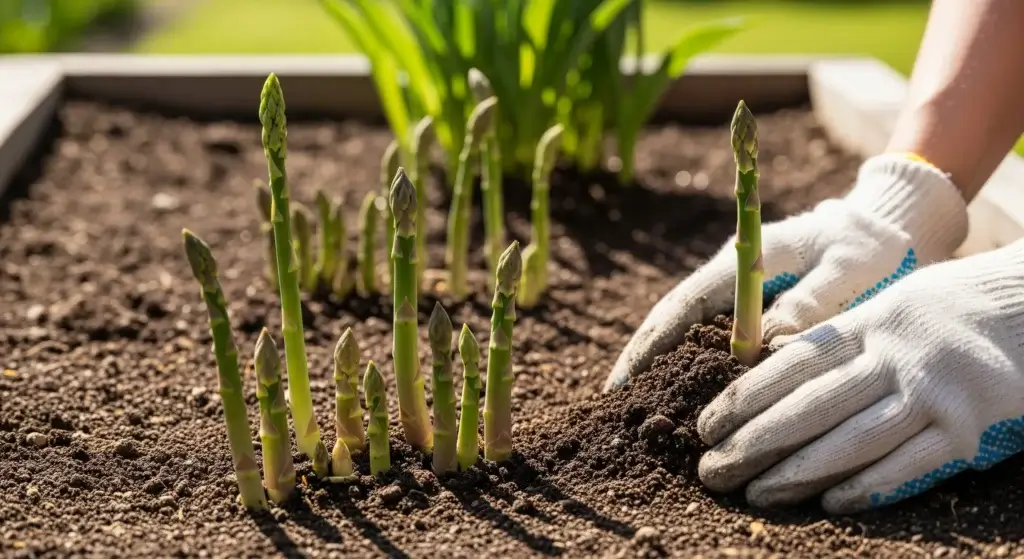
Asparagus plays by different rules than most veggies. It’s a perennial, which means it’s building an underground power system before it ever goes full send on production. In the first year, those skinny spears grow into tall, fluffy ferns—and no, they’re not useless.
Those ferns are basically solar panels, pumping energy down into the roots and crown. That stored energy is what makes next year’s spears thick and tasty. Skip harvesting now, let the plant do its thing, and you’re setting yourself up for a future harvest that actually slaps.
Planting Your Asparagus Crowns Correctly
Planting asparagus is one of those “do it right once or regret it for years” situations. I learned this the hard way after rushing my first bed and ending up with sad, skinny spears. Take your time here—future-you will thank you.
Optimal Planting Time
Get those crowns in the ground in early spring, as soon as the soil isn’t frozen or muddy. If the soil feels like it’s finally awake, you’re good. In warmer places, fall works too. The goal is simple: give the roots time to settle in before the weather goes feral.
Planting Depth and Spacing
Dig deep trenches—about 6 to 8 inches—and give them space to breathe. These plants are not introverts. Space crowns 12 to 18 inches apart and spread the roots out like tiny octopus arms.
Cover them lightly at first, then slowly add more soil as they grow. This keeps the crowns happy and not soggy, which is asparagus’s personal nightmare.
Watering Requirements for First Year Asparagus
Water is non-negotiable in year one. No water = weak roots = disappointment.
Watering Schedule
Right after planting, water them like you mean it. After that, aim for about 1 to 2 inches of water each week. Rain counts. Hose counts. Neglect does not.
Best Practices for Watering
Water deeply, not every five minutes. Hit the soil, not the leaves. Morning is best. Mulch is your secret weapon—it keeps moisture in and weeds out. Stick your finger a few inches into the soil; if it’s dry, it’s time to water.
In summer heat, they’ll drink more—but don’t drown them. Asparagus hates wet feet almost as much as it hates being rushed.
Fertilization Strategy for Establishing Asparagus
Year one is all about feeding the plant so it can bulk up underground. Think of fertilizer like protein for asparagus—no gains, no glory.
Initial Fertilization
Before you plant, mix compost or aged manure into the trench. This is the slow, steady fuel that keeps the plant happy. Toss in a balanced fertilizer too. Nothing fancy—just enough to say, “Hey, welcome to your new home.”
Mid-Season Feeding
By mid-summer, when the ferns are tall and looking confident, hit them with a nitrogen boost. This keeps the ferns growing strong and packing energy into the crown. More fern = more future spears. Simple math.
End of Season Care
Stop fertilizing after mid-August. Late feeding is like giving caffeine before bedtime—it messes things up and makes plants weaker going into winter.
Weed Control and Mulching
Weeds are freeloaders. In year one, you can’t let them steal food and water from your asparagus.
Mulching Benefits
Lay down a thick layer of mulch once the spears pop up. Mulch keeps weeds down, moisture in, and soil chill. Just don’t pile it right on the spears—plants need air, not a blanket over their face.
Manual Weeding
Pull weeds by hand and be gentle. The roots are still figuring life out. Later in the season, the tall ferns will throw shade and handle a lot of the weed drama on their own.
The Golden Rule: Don’t Harvest First Year Asparagus
This is the hardest rule, and yeah, it feels cruel. You see spears, your brain says “food,” and your hand reaches out. Stop. First year asparagus is off-limits.
Why No Harvesting?
Every spear is basically a battery charger for the plant. Let it grow into a fern and it sends energy down to the roots like savings for the future.
Cut it now, and you’re stealing from your own harvest later. I’ve seen people ignore this and end up waiting extra years for decent spears. Painful.
What About the Second Year?
Second year, you can taste a little—just a short, light harvest. Think snack, not feast. Year three is when the plant is ready to go full main character and give you a real season. Patience here turns into flex-level harvests later.
Pest and Disease Management
While established asparagus is relatively pest-resistant, first year plants can be vulnerable to certain issues.
Common Pests
- Asparagus beetles: These orange and black insects can defoliate ferns. Hand-pick adults and eggs (found on ferns) or use organic insecticides if infestations are severe
- Slugs and snails: Can damage young spears. Use organic baits or beer traps for control
Disease Prevention
- Crown rot and fusarium wilt: Prevented primarily through proper drainage and avoiding overwatering
- Rust: A fungal disease causing orange pustules on ferns. Remove and destroy infected ferns, ensure good air circulation
The best defense against pests and diseases is healthy, vigorous plants. Proper watering, fertilization, and weed control create conditions where asparagus naturally resists most problems.
End of Season Care
When fall hits and your asparagus ferns turn yellow and flop over, don’t panic. They’re not dying—they’re going to sleep. Totally normal.
Fall Cleanup
Once the ferns are fully brown, cut them back close to the ground. Don’t compost them. Toss them. Old ferns can hide bugs and disease, and nobody wants that drama next spring.
Winter Protection
After cleanup, pile on mulch like you’re tucking the plants in for winter. This protects the crowns from freezing and thawing over and over, which is especially important in year one when roots are still leveling up.
Soil Testing
Fall is also soil-check season. Asparagus likes slightly alkaline soil. If your soil is too acidic, add lime now so it has all winter to work. Think of it as prepping the bed while the plant naps.
Monitoring and Record Keeping
Yes, this sounds boring. It’s secretly powerful.
What to Record
Write down when you planted, watered, fertilized, and anything weird you notice. Bugs, bad weather, growth spurts—all of it. Future-you will feel like a genius.
Setting Yourself Up for Long-Term Success
Year one is pure setup mode. No harvesting, lots of care, and a little patience. Asparagus is not fast food—it’s a slow-burn investment. Treat it right now, and in a few years you’ll be hauling in armfuls of spears like a garden legend. The wait makes the win way sweeter.