Every homeowner wants that perfect, flex-worthy green lawn—but here’s the plot twist: the biggest villain is invisible.
Fungal diseases are tiny freeloaders that can wreck a lawn fast, even if you’ve been doing “everything right.” Turf scientists say fungi cause more lawn damage than anything else combined. Translation: your grass isn’t weak, it’s under attack.
Understanding Fungal Disease in Grass: The Basics
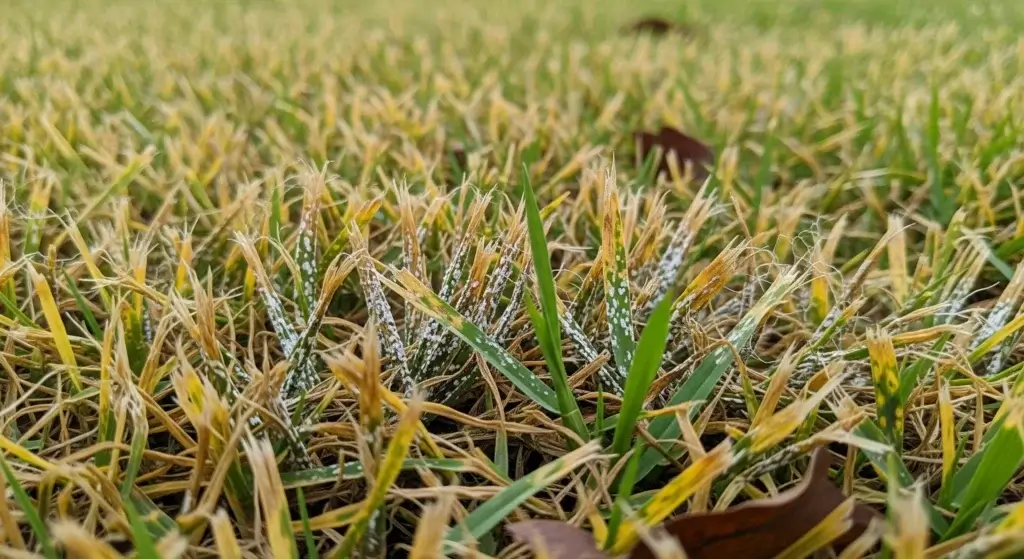
Here’s the deal. Fungi are basically everywhere, just waiting for the right combo of moisture, warmth, and stressed-out grass to go full menace mode. Their spores float around like bad vibes—on air, water, shoes—and once they land, they start munching on grass tissue.
Most won’t instantly kill your lawn, but they’ll drain it slowly, making it easier for drought, foot traffic, and other problems to finish the job. The real win isn’t panic treatments—it’s growing grass so healthy that fungi don’t stand a chance.
- Read Also: Beat the Blight: Identifying Fungal Diseases of Eggplant
- Read Also: The Silent Saboteurs: Unveiling Fungal Diseases of Cabbage
Common Types of Fungal Diseases in Grass
Brown Patch Disease
Brown patch is the lawn equivalent of waking up with mystery bruises. One hot, humid week and boom—big brown circles show up like crop circles for grass. It loves sweaty weather and hits grasses like tall fescue and St. Augustine the hardest, especially when nights stay warm.
Morning dew makes it look extra dramatic.
Dollar Spot
Dollar spot is petty but relentless. It starts as tiny silver-dollar spots, then gangs up into bigger patches if your lawn is low on nutrients. This fungus thrives in humid, dewy weather and absolutely bullies lawns that aren’t getting enough nitrogen. Feed your grass or it will snitch on you.
Powdery Mildew
Powdery mildew looks like someone spilled flour on your lawn. It hangs out in shady, stuffy areas with bad airflow and doesn’t even need wet grass to cause problems. If your lawn lives in the shadows and never gets a breeze, this fungus moves in rent-free.
Red Thread and Pink Patch
These two show up during cool, wet weather and make your lawn look sunburned or cotton-candy pink. They love low-nitrogen lawns but usually won’t kill the grass—just embarrass it for a few weeks. Think of it as your lawn crying out for a snack.
Fairy Ring
Fairy rings are the weird kids of lawn diseases. Dark green circles, mushrooms, sometimes dead grass—very “fantasy novel but cursed.” They can stick around for years and mess with how water moves through the soil. Not usually deadly, just annoyingly stubborn and impossible to ignore.
Identifying Fungal Disease in Your Lawn
Catching fungus early is the difference between a quick fix and a full-blown lawn meltdown. I’ve seen lawns go from “nice” to “what happened here?” in a week. The clues are usually right in front of you—you just have to know what you’re looking for.
Visual symptoms to monitor:
- Discolored patches that turn yellow, brown, or tan
- Weird shapes like circles, streaks, or random blobs
- Grass blades with spots, stripes, or sick-looking marks
- Actual fungus showing up as powder, pink threads, or mushrooms
- Thin areas where grass just gives up and stops growing
Timing matters. Check your lawn early in the morning when dew is still hanging around. That moisture basically turns on the neon sign for fungus. If you really want to play lawn detective, look closely at the blades—tiny patterns can reveal what’s causing the damage.
Environmental Conditions That Promote Fungal Growth
Fungal diseases don’t appear out of nowhere. They show up when conditions are basically a luxury spa for fungi.
Moisture and Humidity
Too much water is enemy number one. Wet grass for half the day is like an open invitation for fungus to move in and redecorate.
Temperature Fluctuations
Some fungi love the cold, others live for the heat. Knowing your local weather helps you predict which troublemakers are likely to show up.
Poor Air Circulation
Still air traps moisture. Lawns boxed in by fences, walls, or thick plants dry slower and get hit harder.
Soil Conditions
Compacted, soggy soil stresses grass roots and makes disease way more likely. Bad drainage and off-balance soil turn healthy grass into an easy target.
Prevention Strategies for Fungal Disease in Grass
Here’s the blunt truth: stopping fungus is way easier than fixing it. Most lawn diseases happen because we accidentally make life too comfy for fungi. Your job is to make the lawn a five-star resort for grass and a total nightmare for fungus.
Proper Watering Techniques
Stop sprinkling like you’re misting a houseplant. Water deep, once or twice a week, so roots grow strong and grass dries faster. Always water in the early morning. Night watering is basically tucking fungus in with a blanket and a bedtime story.
Mowing Best Practices
Grass likes a decent haircut, not a buzz cut. Keep it tall enough to stay strong, and never chop off more than a third at once. Sharp mower blades matter more than people think—dull blades rip grass open and invite disease like an unlocked door.
Fertilization and Soil Health
Feed your lawn, but don’t overdo it. Too little fertilizer makes grass weak; too much turns it into a fungus magnet. A soil test every few years keeps nutrients and pH in check so grass can actually defend itself.
Improving Air Circulation and Reducing Shade
Still, damp air is fungus heaven. Trim trees and shrubs so sunlight and airflow can move through. If grass keeps failing in deep shade, don’t force it—use shade-friendly plants instead.
Core Aeration and Dethatching
Compacted soil and thick thatch trap moisture like a sponge. Aerate once a year so roots can breathe and water can drain. If thatch gets too thick, clear it out before fungus turns it into a luxury condo.
Treatment Options for Active Fungal Infections
Sometimes fungus still shows up, even when you did “everything right.” Don’t panic. This is where you switch from defense to damage control.
Cultural Adjustments
First move: stop helping the fungus. Cut back on watering, fix soggy spots, and pause nitrogen fertilizer until things calm down. You can even knock morning dew off the grass by dragging a hose across it—yes, it looks weird, but it works. Just don’t spread the disease to healthy areas like a lawn villain.
Fungicide Applications
If the fungus isn’t backing off, fungicides step in. Preventive ones go down before trouble starts and block spores from growing. Curative ones are for when the disease is already active and need to shut it down from inside the plant. They cost more, but sometimes you need the big guns. Read the label like it’s a cheat code—timing and dosage matter.
Organic and Natural Treatment Alternatives
If chemicals aren’t your vibe, organic options exist. Neem oil, compost tea, and beneficial bacteria can help slow disease, especially when soil health is solid. They’re not instant magic, but over time they help your lawn build its own immune system and fight back naturally.
Long-Term Lawn Health Management
Think of your lawn like a living system, not a one-time project. The healthiest lawns I’ve seen weren’t perfect—they were smart. Long-term success is about stacking small wins that make fungus struggle to survive.
Choose Disease-Resistant Grass Varieties
When you reseed or start fresh, pick grasses bred to fight disease. It’s like choosing a character with higher defense stats—less drama later.
Promote Biodiversity
A lawn with more than one grass type is tougher. If one gets sick, the others pick up the slack. Monoculture lawns are basically putting all your eggs in one very fragile basket.
Practice Integrated Pest Management
Don’t jump straight to chemicals. Healthy soil, smart watering, and good mowing habits do most of the work. Products are backups, not the main plan.
Monitor Regularly
Walk your lawn once a week and actually look at it. Early problems are way easier to fix than full-on lawn chaos.
- Read Also: Fungal Diseases of Beans: Identification, Prevention, and Control
- Read Also: Cucumber Killers: Common Fungal Diseases of Cucumber
Conclusion: Creating a Resilient, Disease-Resistant Lawn
Fungal disease happens to everyone—even the lawn care pros. The goal isn’t a flawless lawn, it’s a resilient one that bounces back fast. When grass is healthy, fungus has a hard time taking over.
Focus on the basics: water correctly, mow smart, feed in balance, and keep the soil healthy. When disease pops up, stay calm, fix conditions first, and only treat when you really need to. Do that consistently, and your lawn won’t just survive—it’ll flex through whatever nature throws at it.