Asparagus is basically the long-term relationship of vegetables. We’re talking 15–20 years of production if you show up for it. Fall is when the plant stocks up energy like a phone charging overnight.
What you do in autumn decides whether your asparagus wakes up strong in spring or hits snooze and disappoints. This guide breaks down exactly how to handle your asparagus in fall so future-you can flex at harvest time.
Understanding the Asparagus Growth Cycle
Here’s the underground drama you don’t see. All summer, those tall, fluffy ferns are acting like solar panels, turning sunlight into stored energy in the roots. The longer they stay green in fall, the more power gets banked for next year.
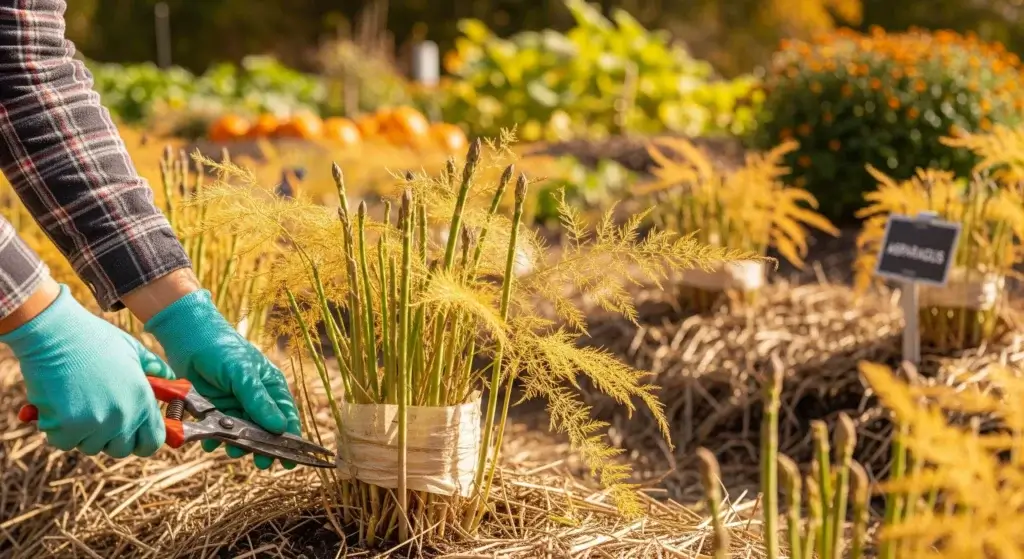
When the ferns finally turn yellow and flop over, that’s the plant saying, “I’m done, going dormant.” Your job isn’t to rush it—it’s to let the process finish so spring growth comes back loud, fast, and thick.
When to Cut Back Asparagus Ferns
This is the part where a lot of gardeners panic and grab the scissors way too early. Don’t.
Cutting asparagus ferns too soon is like unplugging your phone at 20% and hoping it lasts all day. The rule is simple: wait until the ferns are totally yellow or brown.
Green means the plant is still charging up for spring, and you do not want to interrupt that grind.
This usually happens after a few real-deal frosts, sometime in late fall or early winter, depending on where you live. Patience here pays off big time.
Signs It’s Time to Cut Back
- Ferns have turned entirely yellow or brown
- No green growth remains on the stalks
- Several hard frosts have occurred in your area
- Ferns are beginning to break and fall over naturally
How to Cut Back Properly
When the time is right, follow these steps:
- Use clean, sharp pruning shears or a hedge trimmer for larger patches
- Cut ferns down to 2-3 inches above soil level—don’t cut at ground level, as this can damage the crown
- Remove all cut foliage from the bed to prevent disease and pest issues
- Dispose of the ferns properly—compost them if they’re disease-free, or discard them if you noticed any problems during the growing season
Weed Control and Bed Cleanup
Fall is your chance to go full cleanup mode on your asparagus bed. Think of weeds like freeloaders—they steal nutrients, hide bugs, and crash your plants’ winter sleep. If you leave them, they come back stronger next year, like a bad sequel.
Mulching Strategy
Once your bed is clean, apply a fresh layer of mulch. A 3-4 inch layer of organic mulch provides several benefits:
- Suppresses winter and early spring weeds
- Protects crowns from extreme temperature fluctuations
- Adds organic matter as it decomposes
- Helps retain soil moisture
Good mulch options include:
- Shredded leaves
- Straw (ensure it’s seed-free)
- Wood chips
- Composted manure (more on this below)
Soil Testing and Amendment
Fall is the ideal time to test your soil and add amendments because it gives them time to break down and integrate before spring growth begins.
Conducting a Soil Test
Asparagus thrives in soil with a pH between 6.5 and 7.5. A simple soil test will tell you your current pH and nutrient levels. Many cooperative extension offices offer affordable soil testing services, or you can purchase home testing kits.
Key Amendments for Asparagus
Based on your soil test results, you may need to add:
- Lime: If your soil pH is below 6.5, adding lime in fall helps raise pH gradually over winter. Asparagus is sensitive to acidic soil, and proper pH is crucial for nutrient uptake.
- Compost or Composted Manure: Adding 1-2 inches of well-aged compost or composted manure provides slow-release nutrients and improves soil structure.
- Phosphorus and Potassium: If your soil test indicates deficiencies, fall is an excellent time to add rock phosphate or greensand, which release nutrients slowly over time.
How to Apply Amendments
- Spread amendments evenly over the entire bed
- Lightly work them into the top few inches of soil using a garden fork (be careful not to damage crowns, which are typically 6-8 inches deep)
- Water thoroughly if rain isn’t in the forecast
- Apply mulch over the amended soil
Fertilization Guidelines
Compost is great, but older asparagus beds usually want a little extra fuel. Think of fall fertilizer as dinner before hibernation—this is the meal that powers next spring’s spears.
The move is to fertilize after you cut down the ferns. That way, the nutrients sink straight into the roots before winter hits. A balanced fertilizer like 10-10-10 works fine, or go slightly higher nitrogen with something like 15-10-10 if your bed looks tired.
Application Rates
Use about 1–2 pounds per 100 square feet. Don’t freestyle it—soil test results always get the final say. Feed smart now, and your asparagus wakes up next year ready to flex.
Pest and Disease Management
Fall cleanup is your first line of defense against pests and diseases that overwinter in asparagus beds.
Common Issues to Address
- Asparagus beetles: These pests lay eggs on ferns and can overwinter in plant debris. Removing and destroying all fern growth eliminates their habitat.
- Fusarium crown rot: This fungal disease can persist in soil and plant debris. Good drainage and removal of dead plant material help reduce infection risk.
- Rust: Asparagus rust appears as orange spots on ferns. While it rarely kills plants, removing infected ferns in fall helps prevent spread.
Prevention Strategies
- Remove all plant debris from the bed
- Ensure good drainage—asparagus crowns rot in waterlogged soil
- Avoid overcrowding plants, which reduces air circulation
- Consider applying an organic fungicide if disease was problematic during the growing season
Special Considerations for First and Second Year Plants
If you planted asparagus crowns within the past two years, your fall care routine requires extra attention.
First-year plants: These should not have been harvested at all. Allow ferns to grow all season and don’t cut them back until completely brown. Young plants need maximum energy storage to establish strong root systems.
Second-year plants: If you harvested lightly (2-4 weeks), follow the same fall care as established beds but be especially diligent about weed control and mulching to protect developing crowns.
Regional Considerations
Your fall asparagus care timeline will vary based on your climate zone.
- Northern Regions (Zones 3-5): Expect to cut back ferns in late October through November. Consider applying extra mulch (6 inches) for winter protection in the coldest zones.
- Moderate Climates (Zones 6-7): Plan for fern removal in November or early December. Standard 3-4 inch mulch is typically sufficient.
- Southern Regions (Zones 8-9): In the warmest areas, some fern growth may remain semi-evergreen—still wait until growth ceases before cutting back.
Creating a Fall Asparagus Care Checklist
To ensure you don’t miss any important steps, here’s a comprehensive checklist for fall asparagus maintenance:
- [ ] Monitor ferns for complete yellowing/browning
- [ ] Cut back dead ferns to 2-3 inches above soil level
- [ ] Remove and dispose of all cut plant material
- [ ] Thoroughly weed the entire bed
- [ ] Conduct soil test if not done recently
- [ ] Apply lime if needed based on pH test
- [ ] Spread compost or composted manure (1-2 inches)
- [ ] Add additional amendments based on soil test
- [ ] Apply balanced fertilizer according to recommendations
- [ ] Apply 3-4 inch layer of organic mulch
- [ ] Check for and address drainage issues
- [ ] Mark bed edges to prevent accidental digging during dormancy
Conclusion: Invest in Fall for Spring Rewards
Fall asparagus care looks boring when the garden party is over, but trust me—this is where the magic happens. A couple of focused hours now turns into thick, juicy spears later. Skip it, and spring shows up empty-handed.
Let the ferns die back on their own, clean up the mess so bugs don’t move in, feed the soil, and tuck the crowns in with mulch like a winter blanket. Do that, and your asparagus can crank out harvests for 15–20 years straight. When spring hits and you’re snapping off perfect spears, you’ll remember this moment and think, yeah… that fall work was worth it.