Alliums—onions, garlic, leeks, shallots, chives—are basically the Avengers of the kitchen. Everyone uses them. Everyone needs them. But here’s the villain arc: fungal diseases.
These sneaky microbes can wipe out your crop fast if you don’t know what you’re looking at. This guide is about spotting trouble early, stopping it before it spreads, and saving your harvest—whether you’re growing a few plants out back or helping on a real farm.

Understanding the Vulnerability of Alliums to Fungal Infections
Alliums are kind of setting themselves up for drama. Their leaves grow close together, trapping moisture like a damp hoodie after PE class—fungi love that. They also take a long time to grow, which gives diseases plenty of time to move in and throw a house party.
Add mild weather and regular watering, and boom: perfect fungus vibes.
When fungi hit, they hit hard. In bad years, onion harvests can drop by nearly half.
That’s brutal for farmers—and for home gardeners, it’s the heartbreak of pulling up sad, rotten bulbs after months of care. Learning how these diseases work is the difference between flexing your harvest and staring at a garden disaster.
Major Fungal Diseases Affecting Alliums
Purple Blotch (Alternaria porri)
This one is a straight-up menace. Think of purple blotch as that one tiny problem you ignore… and then it wrecks everything. It loves warm, sticky weather and spreads fast.
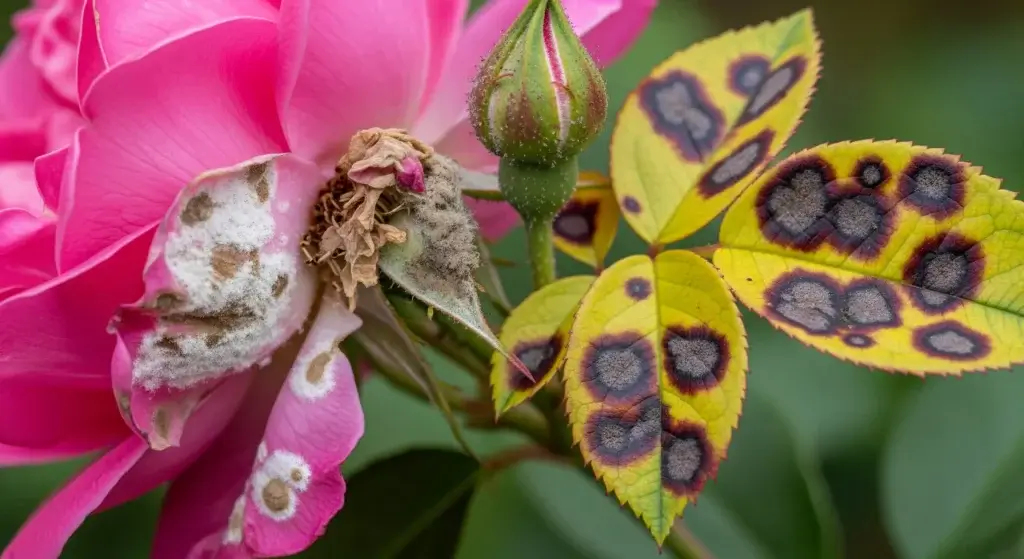
What it looks like: small wet spots that turn purple-brown with bullseye rings, yellow leaves starting at the tips, and in bad cases—no leaves left at all. It hangs out in old plant trash, so messy gardens basically invite it over.
Downy Mildew (Peronospora destructor)
Downy mildew is sneaky. It shows up in cool, damp weather and hits like a silent assassin.
Clues to watch for: pale yellow patches, fuzzy gray-purple stuff on leaves in the morning, twisted or collapsed leaves, and sad, undersized bulbs. In the worst cases, it can wipe out more than half your crop. Yeah. That bad.
Botrytis Leaf Blight (Botrytis squamosa)
This disease doesn’t attack the bulb directly—it starves it.
You’ll see tiny white spots that merge into dead patches, leaves dying early, and gray fuzz when it’s humid. Less leaf = less photosynthesis = smaller bulbs. It’s like trying to grow muscles while never eating protein.
White Rot (Sclerotium cepivorum)
Gardeners fear this one. And they should.
Symptoms include yellowing leaves, fluffy white mold at the bulb base, black pepper-like dots, and total plant collapse. The nightmare part? It can live in soil for up to 20 years. Once it moves in, it basically refuses to leave.
Fusarium Basal Rot (Fusarium oxysporum f. sp. cepae)
This disease plays the long game. Your onions look fine… until storage.
Watch for brown, rotting bulb bases, spongy bulbs, and pinkish-white fungus between layers. It loves warm storage conditions and turns your harvest into compost when you’re not looking.
Prevention Strategies: Your First Line of Defense
Cultural Practices
Implementing proper cultural practices is the foundation of fungal disease management in alliums:
- Crop rotation: Rotate alliums with non-host crops for at least three years (five to seven years for white rot). This breaks the disease cycle and reduces pathogen populations in soil.
- Proper spacing: Provide adequate spacing between plants to improve air circulation and reduce humidity around foliage. Crowded plants create ideal conditions for fungal development.
- Water management: Use drip irrigation or water early in the morning to allow foliage to dry quickly. Avoid overhead irrigation when possible, as wet foliage promotes fungal spore germination.
- Field sanitation: Remove and destroy infected plant debris promptly. Don’t compost diseased material, as many fungal pathogens can survive the composting process.
- Weed control: Maintain weed-free fields, as weeds can harbor fungal pathogens and compete for resources.
Resistant Varieties
Selecting disease-resistant varieties is one of the most effective and environmentally friendly management strategies.
Many seed companies now offer onion and garlic varieties with improved resistance to common fungal diseases. When selecting varieties, consider:
- Resistance ratings for diseases prevalent in your area
- Maturity dates that may help avoid peak disease pressure
- Storage characteristics if the crop is intended for long-term storage
Soil Health and Fertility
Maintaining healthy soil supports vigorous plant growth, which helps plants better resist and recover from disease pressure:
- Conduct regular soil tests to ensure proper nutrient levels
- Add organic matter to improve soil structure and beneficial microbial populations
- Maintain proper pH levels (6.0-6.8 for most alliums)
- Avoid excessive nitrogen, which can promote succulent growth susceptible to disease
Treatment and Management Options
Biological Control
Biological control agents offer an environmentally sustainable approach to managing fungal diseases:
- Beneficial microorganisms: Products containing Trichoderma species or Bacillus subtilis can suppress fungal pathogens through competition and antibiosis.
- Compost teas: Well-made compost teas containing diverse microbial populations can provide some disease suppression when applied regularly.
Chemical Control
When cultural practices and biological controls are insufficient, fungicides may be necessary:
- Preventive fungicides: Copper-based products and sulfur can provide protection when applied before infection occurs. These are particularly useful for organic production systems.
- Systemic fungicides: Products containing active ingredients like azoxystrobin, chlorothalonil, or mancozeb can provide both preventive and curative action.
- Rotation of fungicide modes of action: To prevent fungicide resistance, rotate between different fungicide classes rather than using the same product repeatedly.
Post-Harvest Management
Preventing fungal diseases doesn’t end at harvest:
- Cure bulbs properly before storage by maintaining warm, dry conditions with good air circulation
- Store bulbs at appropriate temperatures (32-35°F for long-term storage)
- Maintain low humidity in storage areas
- Regularly inspect stored bulbs and remove any showing signs of decay
- Avoid mechanical damage during harvest and handling, as wounds provide entry points for fungal pathogens
Monitoring and Early Detection
Regular crop monitoring is essential for early disease detection and effective management:
- Weekly scouting: Walk fields or garden beds at least weekly during the growing season, examining plants for early disease symptoms.
- Weather-based forecasting: Use disease forecasting models when available. Many fungal diseases have specific temperature and moisture requirements for infection, and predictive models can help time preventive treatments.
- Record keeping: Maintain detailed records of disease occurrences, weather conditions, and management practices to identify patterns and improve future prevention strategies.
Integrated Disease Management: A Holistic Approach
The most effective approach to managing fungal diseases in alliums combines multiple strategies in an integrated disease management (IPM) program:
- Start with resistant varieties suited to your growing conditions
- Implement cultural practices that reduce disease pressure
- Monitor crops regularly for early disease detection
- Use biological controls as a foundation for disease suppression
- Apply chemical controls strategically when needed
- Maintain proper post-harvest handling and storage conditions
Conclusion: Protecting Your Allium Crops
Fungal diseases are annoying, stubborn, and absolutely ready to ruin your onions if you let them—but they’re not unbeatable.
The secret isn’t fancy chemicals or last-minute panic. It’s prevention. Start clean, grow smart, and pay attention. Healthy soil, good spacing, and regular check-ins beat “uh-oh” treatments every time.
Think of it like brushing your teeth instead of waiting for a root canal. Catch problems early, act fast, and most disasters never happen. Whether you’re growing one garlic bed or a whole field of onions, the rule is the same: strong plants don’t get bullied as easily.