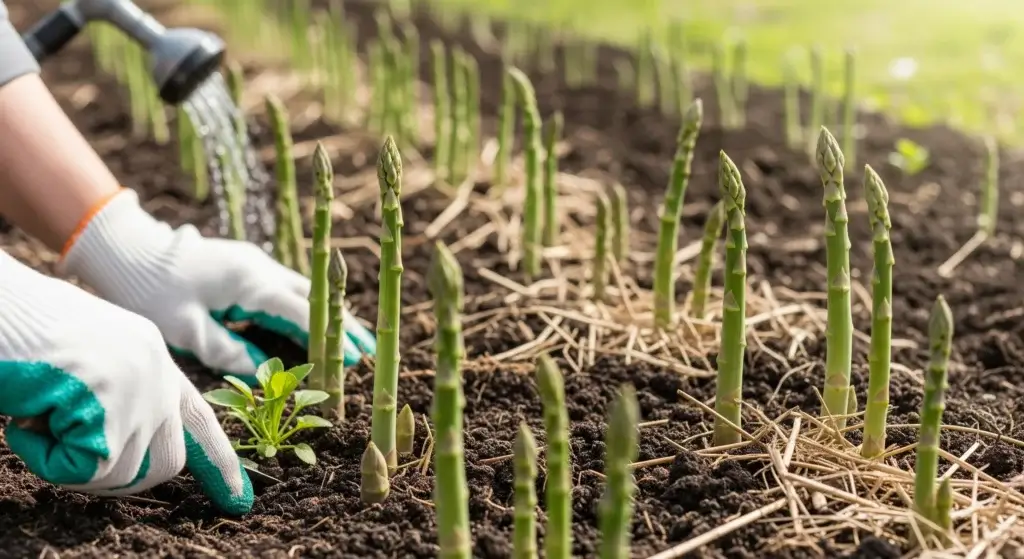
Spring is when asparagus goes full main character energy. After chilling underground all winter, those spears explode out of the soil like, “I’m back.” I still remember the first time I spotted them—tiny green rockets poking up overnight. It felt like the garden was flexing on me.
But here’s the deal: how you treat asparagus in spring decides whether it thrives for years or slowly gives up on you. This is the moment that matters.
Understanding Your Asparagus Plant’s Spring Cycle
Under the surface, asparagus has been hoarding energy all winter like a squirrel with snacks. Once the soil warms up, it spends that energy pushing out spears—the good stuff we eat.
But here’s the catch: every spear you harvest is energy spent.
Spring is a balancing act between enjoying the harvest and not draining the plant dry. Treat it right, and it’ll keep showing up year after year like a loyal friend.
Preparing Your Asparagus Bed for Spring
This is the cleanup montage of gardening. Spring hits, and asparagus is about to pop off—but only if you don’t leave last year’s mess in the way.
Think of it like clearing your room before a glow-up. Necessary. Non-negotiable.
Removing Winter Mulch and Debris
First move: clear out the junk. Old mulch, dead ferns, random leaves—gone.
I once skipped this step and, surprise, got sickly spears and bugs throwing a house party. Not fun. Old debris hides diseases and pests, so toss or compost it far away from your asparagus. Clean bed = healthy spears.
Soil Temperature Monitoring
Asparagus doesn’t care about your calendar—it cares about soil temp. When the soil hits about 50°F a few inches down, spears wake up.
A soil thermometer makes you feel like a garden scientist and helps you know when harvest season is about to start. Depending on where you live, that could be late winter or way into spring. Patience.
Weed Control: A Critical Spring Task
Weeds are freeloaders. Pull them early, gently, and by hand. Asparagus roots are shallow and sensitive, so don’t go in like a maniac.
Do this now, and your asparagus won’t have to fight for food later. Fewer weeds = bigger, happier spears.
Consider these effective weed management strategies:
- Hand weeding: The safest option for established beds, removing weeds before they set seed
- Shallow cultivation: Use a hoe carefully between rows, working no deeper than one to two inches
- Organic mulch: Apply after the soil warms, creating a barrier against weed germination
- Pre-emergent herbicides: Labeled products can be effective but should be used cautiously and according to manufacturer instructions
Fertilizing Your Asparagus in Spring
Asparagus is a hungry plant. Like “just got out of winter and needs a full meal” hungry. If you want thick, strong spears, you’ve gotta feed it right at the start of spring.
Timing Your Spring Fertilization
Feed early—before spears show up or right as they pop out. This is when asparagus is gearing up for growth and needs fuel fast.
A balanced fertilizer (around 10-10-10) works great, or go organic with composted manure or fish emulsion. Think of it as breakfast for your plants: skip it, and they’re cranky all season.
Application Methods
Spread fertilizer evenly over the bed, but don’t dump it right on the spears unless you want plant drama. Water it in so nutrients actually reach the roots.
Organic options that seriously deliver:
- Composted manure: Apply two to three inches in early spring, working it gently into the soil surface
- Fish emulsion: Dilute according to package directions and apply every two to three weeks during the harvest period
- Blood meal: Provides a nitrogen boost for vigorous growth
- Kelp meal: Offers trace minerals and growth-promoting compounds
Mid-Season Feeding
After you’ve finished harvesting for the season, apply another round of fertilizer to support fern growth and energy storage.
This post-harvest feeding is crucial for next year’s production, as the developing ferns photosynthesize and replenish the root system’s energy reserves.
Watering Practices for Spring Asparagus
Water is the difference between juicy, tender spears and sad, chewy ones. Trust me—I’ve learned the hard way. Spring asparagus needs steady moisture, not random splashes when you remember.
Asparagus wants about one to two inches of water a week. Don’t water a little every day—water deep so it actually reaches the roots.
Think long drink, not tiny sips. Soaker hoses or drip irrigation are clutch because they keep water where it belongs and not all over the leaves inviting disease.
Check the soil a few inches down with your finger. Moist? You’re good. Swampy? Back off. Too dry? Water now.
Nail this balance, and your asparagus will grow thick, tender, and proud.
Harvesting Spring Asparagus: Techniques and Timing
When to Begin Harvesting
Harvesting timelines depend on your asparagus bed’s age. Newly planted crowns require patience to establish strong root systems:
- First-year plants: No harvesting—allow all spears to develop into ferns
- Second-year plants: Light harvest for two to three weeks only
- Third-year and beyond: Full harvest season of six to eight weeks
This graduated approach, recommended by horticultural experts, ensures your plants develop the robust root systems necessary for decades of productive harvests.
Proper Harvesting Methods
Harvest asparagus spears when they reach six to eight inches in height and while the tips remain tight.
Once tips begin to open and appear feathery, the spears have passed their prime and quality deteriorates rapidly.
Use one of these harvesting techniques:
- Snap method: Bend the spear near its base until it naturally breaks at the point where tender tissue meets tough, woody stem
- Cut method: Use a sharp knife to cut spears just below the soil surface, being careful not to damage emerging spears nearby
The snap method is generally preferred for home gardens, as it automatically separates tender from tough portions and reduces the risk of spreading disease through cutting tools.
Harvest Frequency
During peak season, asparagus spears can grow several inches in a single day during warm weather.
Check your bed daily or every other day to harvest spears at their optimal stage. Regular harvesting encourages continued production and prevents spears from maturing into ferns prematurely.
Managing Common Spring Pests and Diseases
Asparagus Beetles
These guys are tiny but ruthless—orange and black little villains that show up in spring ready to wreck your plants.
They chew spears, lay creepy eggs, and multiply fast. For small invasions, just pick them off (gross but effective).
If things get serious, neem oil or spinosad works. Pro tip: ladybugs are your allies. Keep beds clean and don’t let wild asparagus hang around like an open invite.
Fungal Diseases
Cool, wet spring weather is basically a spa day for fungi—and bad news for asparagus. Watch for rusty spots, yellowing, or wilting.
Prevention strategies include:
- Ensuring proper spacing for air circulation
- Avoiding overhead watering
- Removing and destroying infected plant material
- Selecting disease-resistant varieties when establishing new beds
- Practicing crop rotation if possible
Slugs and Snails
These slimy night goblins love tender spears. Clear hiding spots, hunt them at night if you’re brave, or use iron phosphate bait.
Do nothing, and they’ll feast. Stay on it early and they won’t stand a chance.
Post-Harvest Care: Setting Up Success for Next Year
There’s a moment every spring when you have to stop harvesting—even though it hurts a little.
When spears get skinny and temps hit the 80s, it’s time to let them grow up. I learned this the hard way by over-harvesting and getting weak spears the next year. Lesson burned in.
Let the new spears turn into tall, wild ferns. Those ferns are basically solar panels, pumping energy back into the roots for next season.
Keep watering, toss on some compost or fertilizer, and stake them if storms start knocking them over. Strong ferns now = beast-mode harvest later.
Conclusion: The Foundation of a Productive Asparagus Bed
Spring care is the long game. Clean beds, kill weeds early, feed and water consistently, and know when to stop harvesting. Do this, and asparagus will keep showing up for you—year after year.
This isn’t a one-season crop. Treat it right, and it can feed you for 15–20 years. That’s kind of legendary. Put in the effort now, and future-you will be flexing with armfuls of fresh spears every spring.