Summer marks a make-or-break moment for asparagus. Once spring harvest is done, your plants aren’t chilling—they’re training for next year. Ignore them now, and future you will be sad, staring at skinny spears wondering what went wrong. I’ve been there. Learned the hard way.
Understanding Asparagus Growth Cycles in Summer
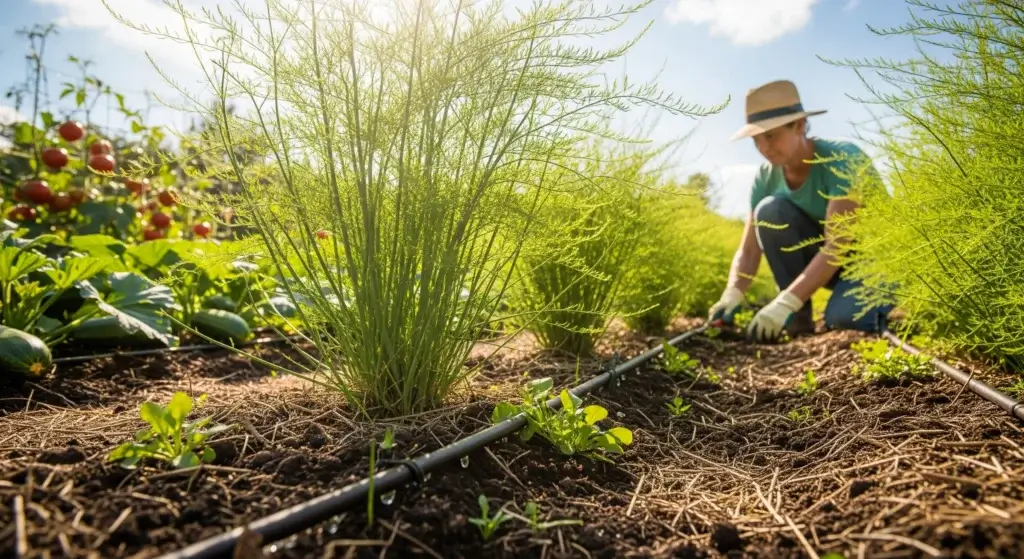
When you stop harvesting in late spring, asparagus flips modes. Instead of spears, it grows tall, feathery ferns that look fancy but are actually power factories. Those ferns make food through photosynthesis and stash energy underground for next year’s harvest. No ferns, no fuel.
From June to September, asparagus goes full beast mode—shooting up 4–6 feet and building massive roots. Think of summer as the plant’s gym season. Treat it right now, and next spring it comes back strong. Slack off, and your harvest will show it.
Essential Watering Practices for Summer Asparagus
Summer watering is not optional—it’s the whole game. I once skipped a hot week, thought “eh, they’ll survive,” and my asparagus never forgave me. Plants remember. Especially asparagus.
Consistent Moisture is Critical
Asparagus likes steady water, not chaos. Think “hydrated athlete,” not “desert cactus.” Aim for 1–2 inches of water a week. Soil should be moist, not swampy, or the crowns can rot and rage-quit.
When it’s crazy hot, water more often, not more at once. Deep roots = tough plants later. Keep it simple:
- Water early morning so it doesn’t vanish into the sun
- Use drip lines or soaker hoses, not sprinklers
- Check soil with your finger—if it’s dry down there, it’s thirsty
- Baby beds (1–2 years old) need extra attention or they fall behind forever
Summer Feeding: Nourishing Your Asparagus Investment
Feeding asparagus after harvest is like refueling after a workout. Skip it, and next year’s crop shows up weak.
Post-Harvest Fertilization
After your last spring harvest, feed with a balanced fertilizer (like 10-10-10) or composted manure. This powers fern growth, which is how asparagus stores energy. Pros often feed again mid-summer to keep the momentum going.
Keep it smart:
- Fertilize right after harvest, then again 6–8 weeks later
- Use balanced or organic options, not nitrogen overloads
- Keep fertilizer a few inches away from crowns
- Lightly mix it in and water well
Too much nitrogen makes plants look cool but perform badly. You want strong roots, not just tall drama.
Weed Management: Protecting Your Asparagus Territory
Weeds are freeloaders. They steal water, food, and sunlight like it’s their job. In summer, they grow fast, and asparagus crowns sit close to the surface, so going wild with tools can wreck your plants. I learned that after one overconfident hoe swing. Painful lesson.
Mulching Strategy
Mulch is your secret weapon. Lay down 3–4 inches of straw, wood chips, leaves, or grass clippings. It’s like armor for your asparagus bed.
Mulch helps by:
- Blocking weeds before they even show up
- Keeping roots cool when summer goes nuclear
- Locking in moisture so soil doesn’t dry out
- Feeding the soil as it breaks down
- Protecting roots from heavy rain and stomping feet
Any weed that sneaks through? Pull it fast, no mercy. Use a small hand tool for stubborn ones and be gentle—those asparagus roots are sensitive. Skip herbicides. One bad spray can wipe out years of work.
Pest and Disease Monitoring Throughout Summer
Asparagus is tough, but summer still throws enemies at it. The trick is paying attention. I’ve saved whole beds just by noticing “hey, that fern looks weird” early instead of ignoring it.
Common Summer Pests
The main villain is the asparagus beetle—small, shiny, and annoying. They chew leaves and lay tiny dark eggs like they own the place. Too many, and your plant can’t store energy. For small beds, grab them by hand. It’s gross, but effective. Bigger beds can use organic sprays like neem or spinosad.
Japanese beetles sometimes show up too. They’re flashy, green-bronze, and messy eaters. They usually do less damage, but if numbers explode, step in.
Disease Prevention
Hot and humid weather invites fungus. Rust shows up as rusty spots on ferns. Fusarium is worse—it turns plants yellow, floppy, and eventually dead. Not fun.
To keep plants healthy:
- Give them space so air can move
- Don’t soak the leaves when watering
- Remove sick plants fast
- Start with resistant varieties
- Keep plants strong with good water and food
Clean beds matter. Dead leaves and mess attract problems. Stay tidy, stay alert, and your asparagus stays alive and thriving.
Supporting Tall Fern Growth
Supporting Tall Fern Growth
By summer, asparagus ferns get tall—like awkward, wobbly teenagers. Four to six feet tall and zero balance. One strong wind and they flop. When they fall, they stop making food, and next year’s harvest pays the price.
Help them out. I’ve watched a storm wreck a whole bed overnight. Never again. Use stakes with string or wire along the row, or throw tomato cages or bamboo around them. The goal is simple: keep ferns standing so they can do their job.
End-of-Summer Cleanup Considerations
Do not cut green ferns. Seriously. I know they look messy. I know you want a “clean” garden. Fight the urge. Green ferns are still charging the plant’s battery for next spring.
Wait until they turn fully brown and crunchy after hard frost. Then cut them to the ground and remove them. This cleans up pests, stops disease, and lets your asparagus rest up for winter—ready to dominate next spring.
Special Considerations for Young Asparagus Beds
If your asparagus is new, hands off. I know it hurts watching spears pop up and not grabbing them, but trust me—picking early is like stealing money from your future self. First-year plants should just grow ferns. Second year? Still don’t harvest. Let the plant bulk up underground. By year three, it pays you back big time.
Conclusion: Summer Care Sets the Stage for Spring Success
Summer work decides spring results. Water, feed, weed, and protect your asparagus now, and you’re basically filling a savings account underground. Skip it, and next spring shows up broke.
Asparagus is in it for the long haul—15 to 25 years if you treat it right. Summer isn’t the boring off-season; it’s one-third of the deal. Put in the effort when it’s hot and annoying, and future you gets piles of fat, delicious spears. That’s a trade worth making.